Presidential hopefuls in Africa’s most populous nation have drawn up economic plans ahead of crunch polls in 2023 targeting unrealistic growth numbers for an economy gasping for breath.
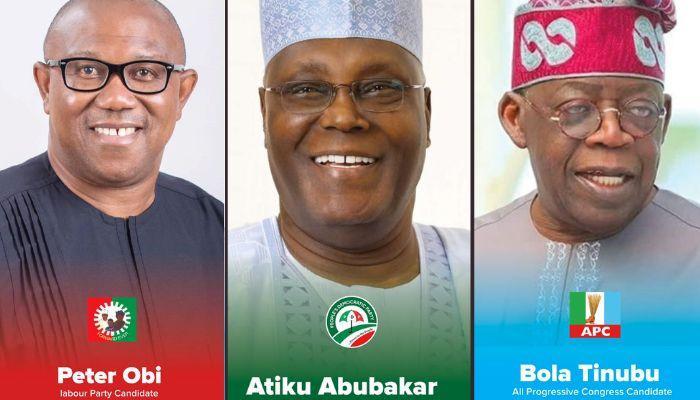
While Atiku Abubakar, the candidate of the main opposition Peoples Democratic Party, aims to grow Nigeria’s economy to $900 billion in four years, double the size in 2021 ($440.8 billion); Bola Tinubu, candidate of the ruling All Progressives Congress, plans to deliver an economy worth $780.9 billion within the same time frame, a 77 percent increase compared to 2021. Peter Obi, the candidate of the Labour Party, did not give a specific target but has promised in the past to replicate China’s growth trajectory in Nigeria.
Both presidential hopefuls may be targeting the impossible with average economic growth of over 10 percent per year, according to economists surveyed by BusinessDay.
“China, from 1960 to 2022, grew GDP above 10 percent only 13 times,” said Kalu Aja, an economist.

In 60 years, China, the fastest-growing economy in the world in that period, achieved 10 percent in only 13 years, which goes to show the impossibility for Nigeria to grow by 10 percent every year from 2023 to 2027.
Read also: Atiku, Obi, Tinubu’s energy plans conflict with reality
“To achieve 10 percent every year for the next five years is a tall order; it’s a lazy exercise to simply add 10 percent to past years,” Aja said.
Another economist polled in our survey said: “How many economies have grown by 10 percent annually for five years and how many were large? How many were not driven by an oil or major mineral find like Guyana?”
The economist, who did not want to be named, however, said: “A world record setting team could perhaps achieve that but I’m not sure that exists in Nigeria at the moment.”

The 2023 elections could be decided on two main fronts: the fragile health of the economy and rising insecurity, according to multiple polls done to ascertain what Nigerians want fixed as they select a new leader.
The economy also played a key role in the August 2022 elections in Kenya and several observers expect the same to happen in Nigeria.
The economy has contracted twice in the space of five years and that has caused poverty to deepen. Inflation is at a 17-year high and the jobless rate is the second highest in Africa after Namibia.
The country has also recently lost its title as Africa’s largest oil producer and has slipped to fourth due to massive oil theft, which has led to a drastic slump in foreign exchange earnings that has battered the naira and forced a record gap between the official and parallel market rate.
The three leading presidential candidates – Atiku, Obi and Tinubu – have a background as business people.
Expectedly, all three have put the private sector at the heart of their economic plans while promising to cut wastage in government spending, particularly the controversial petrol subsidy.
Their personalities may be the differentiating factor however. While Obi does demonstrate the virtues of a frugal man, Tinubu and Atiku are more flamboyant in their lifestyles.
Obi’s economic policy is centered around frugality and prudence, which he claims to epitomise.
In an interview, he recalled that as governor and even now, he flew strictly economy and travels light, with only a handful of aides. He stays in inexpensive hotels and wears inexpensive clothes. And, unlike other governors, Obi, a former governor of Anambra, a southeastern state, refused to sign a law that would guarantee himself a lifetime pension.
Obi was a successful businessman before going into politics in 2002. He was chairman of tier-two lender Fidelity Bank. He has also been linked with Next International Nigeria, one of Nigeria’s largest department stores; Chams Nigeria, Paymaster Nigeria, and Guardian Express Mortgage Bank, where he served as chairman.
Atiku is not as big on frugality. Observers say his ideology is more of liberal capitalism. He also places the private sector at the heart of his economic plans and promises the privatisation of government assets. That’s not entirely new for followers of the former Vice President. He supported the privatisation approach when he headed a national council on privatisation as vice president in 1999.
In his policy document, which he presented in September at a dialogue with the Lagos Chamber of Commerce and Industry, he said within his first 100 days in office, he would revive Nigeria’s ailing economy by creating a $10 billion economic stimulus fund that will invest in small and medium-scale enterprises.
Tinubu, who is campaigning on the back of what he achieved as governor of Lagos State in the early 2000s, is also a businessman with investments in oil and gas, media and real estate etc.
Tinubu’s manifesto, like Atiku and Obi, includes plans to eliminate multiple foreign exchange rates, reduce foreign borrowings and phase out fuel subsidies.
“Having combed the economic plans of the candidates, I see a lot of good policy initiatives but little on how they will be achieved which is the hard part,” another economist polled in our survey said.
“If there’s anything we have learnt from the outgoing administration, it is that talk is cheap,” the economist said.