Innovation is often associated with technology and the sciences. However, in recent years, innovation has increasingly emerged in an unexpected but critical space: human rights advocacy. In Nigeria, where issues such as police brutality, unlawful detention, forced evictions, and abuse of power remain prevalent, new approaches are becoming necessary to confront long-standing systemic challenges.
Traditionally, human rights advocacy in Nigeria has been driven through litigation, street protests, public petitions, and formal policy engagement. Renowned human rights activists such as Femi Falana, SAN, and others have played critical roles by representing victims in court, engaging state institutions, and amplifying injustices through legal advocacy and public commentary. These efforts have produced important victories. Yet, despite these interventions, human rights violations persist at alarming levels.
One major reason is often overlooked: ignorance. Many Nigerians simply do not know their rights, let alone how to enforce them.
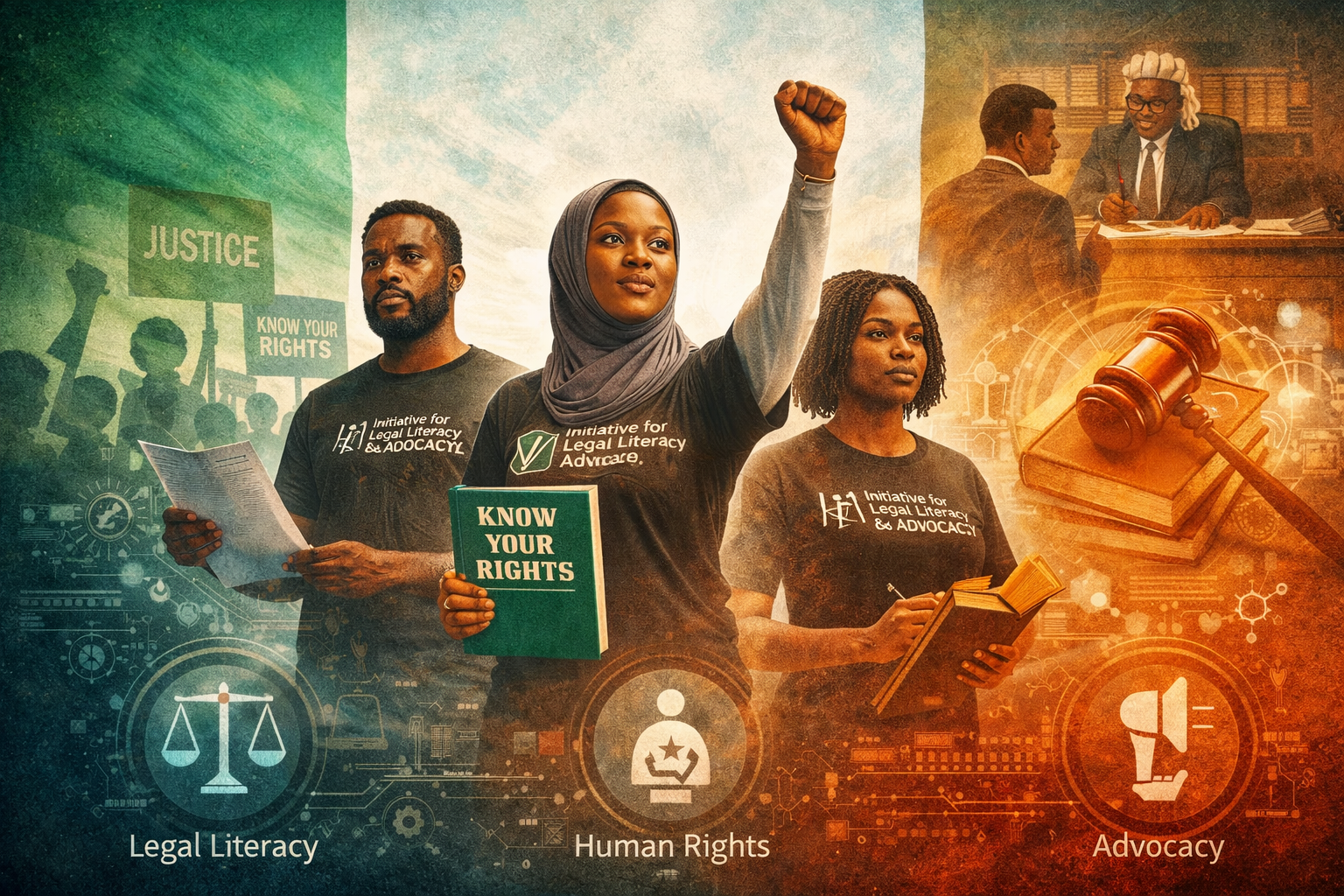
In response to this gap, a group of young Nigerian lawyers came together and launched the Initiative for Legal Literacy and Advocacy (ILLA) in 2015, also known as LawyerUp NG, a non-profit organisation dedicated to educating Nigerians about their human rights in simple, practical terms. Rather than focusing primarily on courtrooms or street protests, ILLA adopted a strategy that was initially considered unconventional and even ineffective by some observers.

Instead of taking the law to the streets or limiting advocacy to litigation, ILLA took the law to the media.
Through radio programs, television appearances, and most notably social media platforms such as Instagram, ILLA began breaking down complex legal rights into short, accessible messages that everyday Nigerians could understand and apply in real life. This approach was, at the time, widely viewed as strange. Many doubted whether legal education delivered through social media could meaningfully empower citizens.
The results, however, have been striking.
To assess the impact of ILLA’s work, we spoke to random individuals on the streets about their experiences. The responses revealed how deeply this model of advocacy has resonated with ordinary Nigerians.
One respondent, Mr A, explained:

“I did not even know that my landlord cannot just kick me out of the house without notice. I learned from ILLA’s Instagram page that a landlord must give proper notice, sometimes up to six months. That information alone saved me a lot of trouble.”
Another individual recounted a similar experience involving law enforcement:
“When I was almost unlawfully arrested, I asked the police officer if he had a warrant. I told him I would not go anywhere without one. He left me alone. I was shocked that it worked. I learned that directly from ILLA’s page.”
These stories illustrate the core insight behind ILLA’s mission. The organisation focuses on addressing what may be the most fundamental root cause of human rights abuse: lack of knowledge. By placing legal information directly in the hands of citizens, ILLA empowers people to assert their rights confidently and lawfully.
In a society where legal education is rarely taught in classrooms, places of worship, or workplaces, ILLA asks a simple but powerful question: why not teach people their rights where they already are?
By leveraging mobile phones, laptops, and social media platforms, ILLA has effectively brought the law to people’s faces, timelines, and daily conversations. This approach redefines how human rights education can function in a modern, digitally connected society.
Behind this innovative movement are dedicated professionals driving its vision and execution. The organisation was founded by Michael Agu, a lawyer with advanced training in human rights, including a master’s degree in human rights from Geneva, Switzerland. His leadership set the intellectual and ethical foundation for the organisation.
Supporting this vision is Sam Omotoso, who directs and leads ILLA’s content team. Through careful content design, he breaks down complex legal principles into simple, digestible formats accessible to individuals with no legal background. His work ensures that legal education is not abstract, intimidating, or elitist, but practical, relatable, and actionable.
Together, ILLA’s leadership and volunteers have demonstrated that human rights advocacy does not always begin in courtrooms or protest grounds. Sometimes, it begins on a phone screen.
By transforming social media into a tool for legal empowerment, the Initiative for Legal Literacy and Advocacy may have uncovered one of the most effective modern strategies for combating human rights violations in Nigeria. One post, one video, and one informed citizen at a time.