Judging a fish and a bird by their ability to climb a tree is a flawed measure of potential. Yet this is effectively how Nigeria assesses the academic prospects of millions of teenagers each year.
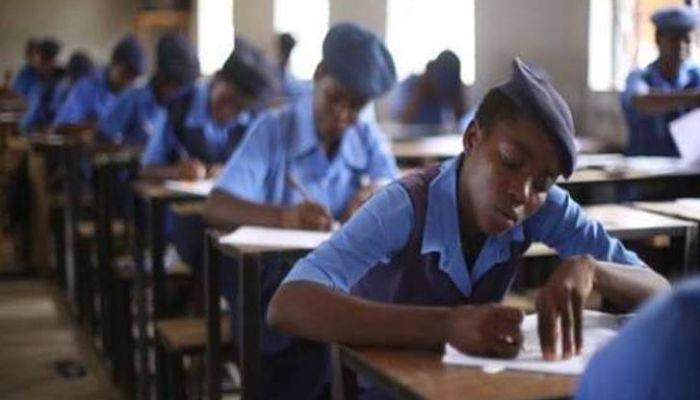
Three examinations, WAEC, NECO and the Unified Tertiary Matriculation Examination (UTME), serve as the country’s primary gateways to higher education and, by extension, social mobility. They are standardised, compulsory and unforgiving.
On paper, the system is meritocratic. In practice, it is anything but.
Students from elite private schools in Lagos and Abuja sit the same examinations as their peers in underfunded public schools across rural and conflict-affected regions of the north-east. The difference lies not in the questions set, but in the conditions of preparation.

While some schools boast teacher-to-student ratios of 1 to 30, functional laboratories and digital learning tools, others struggle with ratios of 1 to 60 or more, outdated curricula and chronic teacher shortages. The result is a competition in which some candidates begin close to the finish line while others run with structural disadvantages firmly in place.
The core flaw is Nigeria’s one-size-fits-all examination model. Standardised testing assumes broadly equal access to curriculum, instruction and learning resources. That assumption no longer holds. Educational inequality has widened alongside income inequality.
Students in well-resourced urban schools increasingly rely on digital platforms, private tutoring and AI-assisted learning. Their counterparts in many public schools are still taught with obsolete materials and limited instructional support.
The scale of the problem was laid bare by the 2025 UTME results. Fewer than 22 per cent of candidates scored above 200 out of 400. Of more than 1.9 million candidates, only about 420,000 crossed that threshold. This cannot be explained by a sudden collapse in student ability. It reflects deeper weaknesses in instruction, access and assessment. When failure becomes the norm, the system itself must be questioned.
Economic pressure further compounds inequality. Exam registration fees, textbooks and private coaching now place a heavy burden on families. For low-income households, the stakes are absolute. Failure often forecloses future opportunities. In such conditions, desperation corrodes integrity. Examination malpractice becomes less a moral lapse than a symptom of a system that offers few legitimate paths to success.

The shift to computer-based testing has introduced a new layer of exclusion. Digital literacy has become an unintended prerequisite for higher education. Yet access to technology is sharply uneven. While roughly 22 percent of households in Lagos and Abuja own a computer, ownership in states such as Bauchi or Jigawa ranges between 1.4 and 2.5 percent. Many rural schools operate without a single functional computer.
During the 2025 UTME, even accredited centres in urban areas reported power failures and system breakdowns. For students encountering a keyboard for the first time on exam day, the disadvantage is profound.
An exam-centric system has also narrowed the purpose of education itself. Where teaching quality is weak, learning becomes an exercise in memorisation rather than understanding. WAEC and NECO continue to reward recall over problem-solving or applied reasoning.
Students who can afford inflated all-inclusive registration fees, sometimes reaching ₦85,000, nearly three times the official rate, or who have the time to memorise textbooks are rewarded. Those who balance school with farm work, street trading or night-time study under kerosene lamps are not.
The human cost is rising. Persistent failure, extreme pressure and limited alternatives are taking a toll on young people’s mental health. The recent wave of poor outcomes should be treated as a national warning.
As long as learning conditions remain deeply unequal, national examinations will measure privilege more than potential. If Nigeria hopes to produce problem-solvers and nation-builders rather than exam survivors, it must invest in equalising preparation, not merely policing outcomes. That means sustained funding for public schools, serious investment in digital infrastructure, and an assessment system aligned with skills rather than circumstance.
Until then, the fish and the bird will continue to be judged by the same tree, and the results will remain predictably unjust.
Afolabi Razaq Olanrewaju is an educationist with over ten years of experience in tutoring and training students both locally and internationally. He is the founder and CEO of Excellence Academy and holds the ACA and ACTI professional certifications, as well as a B.Sc and an M.Sc in finance.