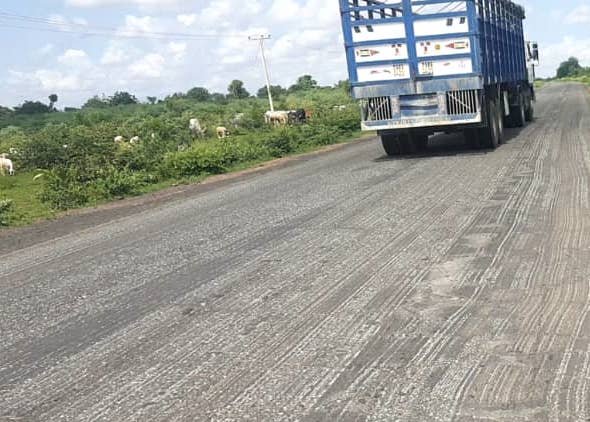
The Federal Road Safety (FRSC) recently commenced its “Operation-Safe-to-Load” initiative and declared that all articulated vehicles without minimum safety standards be barred from operating in the nation’s ports and tank farms from September . Many stakeholders have been working hand-in-hand with this leading regulatory agency to align their road transportation strategies with this programme.
The initiative was conceived earlier this year to address government’s concerns over haulage operations in the country as many deaths have occurred as a result of ill-maintained trucks hauling petroleum products across the country.
The FRSC released a report to corroborate this disturbing situation in 2018 when it revealed that Nigerians lost over N7.157 billion to road traffic accidents involving 116 petroleum tankers in the first half of 2018.
Corp Marshal of the FRSC, Boboye Oyeyemi, who disclosed this at a stakeholder forum in Abuja, stated that the figure quoted above does not include the number of persons killed, the cost of treatment of those injured; damage to the country’s road infrastructure; environmental impact and other collateral damages.

An in-depth study of the cause of these accidents has been linked to non-compliance of these truck operators with the minimum safety standards in the country. There are also other factors such as disregard of traffic rules, state of our roads, environment and competence of drivers amongst others.
In order to keep up with safety requirements and regulations and in line with its commitment to the highest safety standards, OVH Energy launched Operation Safe-to-Load initiative program which stipulates procedures guiding the loading and discharge of petroleum products from its terminals, storage facilities and retail stations. A detailed step-by-step approach is strictly adhered to from the process of truck injection into the system to truck usage.
These procedures which conform to the Major Marketers’checklist as approved by the FRSC include: a comprehensive truck safe-to-operate and daily safe-to-load inspection carried out on trucks before they are injected into the OVH Energy fleet database.
The safe-to-load is an automated process conducted on a daily basis prior to admittance of trucks into any of our loading facilities and 3rd party terminals. The exercise carried out annually to ensure truck key safety items too rigor to be captured in the safe-to-load process are comprehensively inspected with reports of findings also thoroughly implemented; drivers’ training/recertification, an annual exercise compulsory for all drivers facilitated by the FRSC; drivers’ medical assessment programme design to ascertain their fitness or otherwise; fleet renewal scheme, a systematic replacement plan for aging trucks in OVH Energy’s fleet; transporters’ assessment, a rationalization strategy to establish the competencies and capabilities of partner fleet management companies as a going concern.
Speaking during the recently concluded a forum for transporters in Abuja, Ayotunde Adewoye, Group Head Customer Service, OVH Energy, the licensee of the Oando retail brand, stated that the company’s investment in this venture is to enforce oversight, establish and implement guidelines that will improve efficiency for its transporters.

Adewoye notes that the sole objective is to build a sustainable operational excellence model for its fleet management processes that will deliver on OVH Energy’s commitment to safety on the long run. “We are very pleased to collaborate with the FRSC on this initiative as we believe this partnership will not only protect the lives of all road users be drivers or pedestrians but also increase awareness for the urgent need to create safer road conditions for all users in our country amongst all critical stakeholders”, he remarked.
Also speaking at the same event, Oyet Gogomary, Group Head, External Relations and Communications for OVH Energy commented that this whole drive is to reinforce commitment to and bring to life one of the Company’s corporate core values of Safety. As the leading marketer of choice, OVH Energy Marketing is committed to providing and delivering its trusted petroleum products through its retail stations safely. He stated that the company has built into its petroleum marketing value chain a safety mechanism which conforms to the highest safety standards in line with best practices.
It will be recalled that OVH Energy recently celebrated 100 berths at its Lagos midstream jetty with zero downtime, zero lost time injury, zero spills and zero total recordable case frequency (TRCF) in its less than 2 years of operations.
The practical, sustainable steps taken to ensure safety on our roads will have a far-reaching impact if all relevant stakeholders buy into this and create strategies to support its adoption and implementation.
MIKE OCHONMA
Ochonma is Transport Editor at BusinessDay