The argument as to whether economics should be regarded as an art or science was seemingly resolved long ago by majority of the professionals. The verdict: It should be regarded as a social science; even though it deals with measurable or systematic principles but because it impacts primarily on decisions of human beings in their environments which may not be reasonably predicted, its exactitude as a “pure” science may be compromised. It is trite that any economist worth the name making forecast/prediction that may ultimately transform to a policy usually has underlying assumptions as guide. It is therefore an impossibility to expect to see a “one handed” economist as some people are wont to suggest. On one hand, a particular outcome is possible based on certain assumptions while a different outcome may likely occur if some assumptions are varied, on the other hand!
As uncanny as an economist may be, there are certain issues that are beyond his realm. These are euphemistically couched as imponderables. Whether at micro or macro levels, they are ever present and crucially too! And how many economists can take the place of Nostradamus?
Consider any artisan whose income is derived through daily activities and has needs always mapped out to align with expectations from his daily income and suddenly there is a restriction in movements arising from a new development in town that his capacity to earn his income is severely affected. As an economist in his own right, how is he expected to juggle his needs that may range from anything from monthly house rent to feeding his family on daily basis against his now rested daily income stream?
Take it to another level. Consider an entrepreneur who has set up an SME outfit with borrowed fund from a bank backed naturally by a well written Business Plan detailing amortisation schedule and all warts. For effect, this outfit has its clientele base within Nigeria and few states in ECOWAS sub-region and suddenly the border is closed, thus diminishing its outreach and now Corona Virus aka COVID-19, to boot. Who factored in these disruptions which durations are best left to imaginations? How is his company expected to meet its obligations to its bank, creditors and other critical stakeholders including its employees whose continued employment (in a country already teeming with unemployed people) and thus means of livelihood are in serious jeopardy?

What applies to an SME, applies a fortiori to a bigger corporate whether quoted or unlisted, mutatis mutandis.
The narrative so far has been at the micro levels. Now let’s extend it to the macro height and take a good consideration of the big elephant in the house – the Nigerian state.
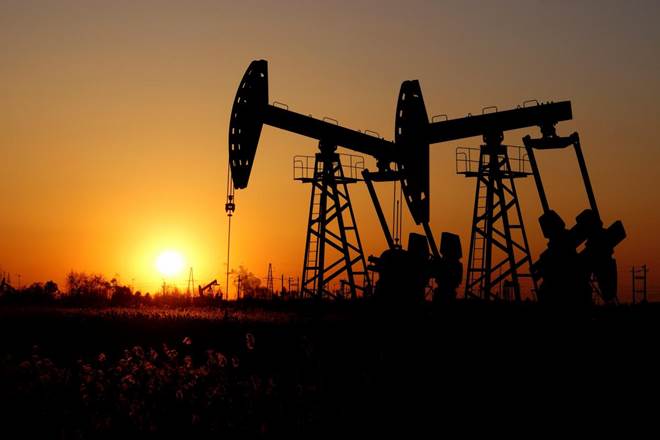
It is no longer news that COVID – 19 is currently ravaging the entire world (Nigeria inclusive). It is equally no longer a matter of conjecture that the mainstay of Nigeria’s economy – crude oil – is having a bashing in the international market. What’s more, it is no longer breaking news that the price of oil in the international market is currently trending at $20/barrel (as this article is being crafted), whereas the benchmark on which the 2020 budget is anchored on was $57/barrel (following adjustment by the National Assembly after the Executive’s initial proposal of over $60/barrel) and facing likely adjustment to about $30/barrel. Who saw this coming? Add to that the ego tiff going on currently between Russia and the Kingdom of Saudi Arabia which some commentators have chosen to call price war, then the picture becomes gloomier. As the Yankees will say: you ain’t seen nothing yet!
The question on the lips of Nigerians now is: how far is their country from another recession barely three years of exiting the last one? The answer to me is blowing in the winds!
Truth be said, imponderables are as eerie as anything one can fathom but unfortunately, they have more often than not, not been accorded the ‘due respects’ they deserve by economists and those entrusted with economic planning and management. Not few economists (including this writer) and commentators were aghast at the fixing of oil benchmark for the 2020 budget at $57/barrel at a time the international price of crude with its yo-yo dance was averaging $65/barrel. It was clearly overly optimistic!

The counter argument has been that since the issue of diversifying the Nigerian economy has been more of sloganeering than action and based on the fact that the country’s foreign earnings revolve around crude oil, the assumption of a benchmark not too far from the prevailing oil price at the time of budget preparation was justified. This stance aside not taking into reckoning the volatility in the international oil market, clearly violates the principles of conservatism and prudence which are time honoured concepts in basic accounting.
Granted it will be a herculean task predicting what imponderables at any given time might be, recognising their existence and ability to spring up anytime is the first step in containing them whenever they arise. The second step is assigning weighty weights to them. In building scenarios, different weights should be assigned to each case and the position of the worst-case scenario assumed. Inevitably, the worst-case scenario usually turns out to be the clincher; if the future outcome aligns with the worst case, the entity is in good stead but if better, it becomes a buffer. With that and applying the aphorism of ceteris paribus, a better result will always be assured instead of overly relaying on the latter to navigate through the unpredictable landscape of economic planning. This applies in equal measure at both micro and macro levels.
Emeka Okolo
Dr. Okolo is a Chartered Stockbroker and Management Consultant based in Lagos.