|
Getting your Trinity Audio player ready...
|
Civil Society Groups in the Niger Delta have linked the harrowing poverty in the region to the exclusion of women and the almost complete denial of their rights.
The Niger Delta, comprising Edo, Delta, Rivers, Bayelsa, Akwa Ibom and Cross River States, posts an unemployment rate that is noticeably higher than the national average, with about 43% to over 47% of the population living below the poverty line, according to experts.
A 2018 assessment by the Market Development in the Niger Delta (MADE) and Partnership Initiatives in the Niger Delta (PIND) indicated that the region experiences widespread multidimensional poverty, particularly among economically active poor and women, affecting millions across the six States.
The Civil Society Groups, who were speaking at the 3rd Annual Niger Delta Climate Change Conference, held in Port Harcourt from July 7 – 11, 2025, stressed that the denial of women’s rights and their exclusion from decision-making had denied the region robust engagement with development processes and opportunities.

Read also: Group outlines family planning benefits in advancing women’s rights, empowerment
They argued that women are at the center of socio-economic activities in the society – from farming, fishing, being breadwinners for the family and running nano-businesses, adding that “setting them free to play their natural role, equally sets the society free to develop.”
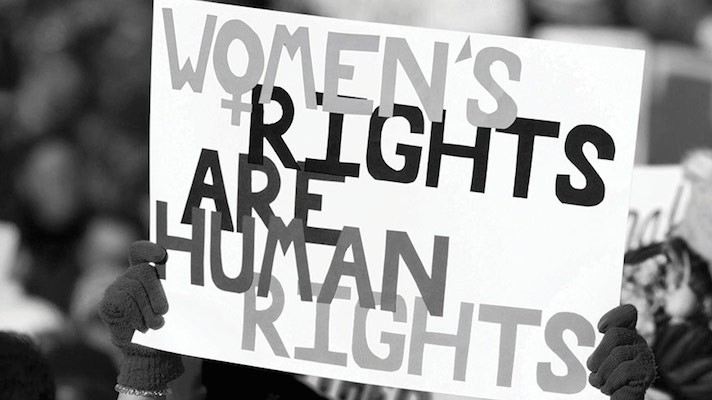
Emem Okon, Executive Director, Kebetkache Women Development and Resource Centre, who was speaking at the Women and Climate Change Session of the Climate Change Conference on July 11, 2025, noted that women’s rights are also human rights.
She said, “In the Niger Delta, over the past decades, women have been in conflict due to oil resource extraction, despite the significant roles that they play in the family and in the community.
“Because of the relationship that women have with the environment, they still have to go to the polluted environment to gather seafood, gather firewood, and still use polluted water for farming.

“For women farmers, the harvest is no longer possible. Some of their crops have been found to contain food with oil deposits in them. Women struggle to make ends meet despite the fact that they are environmental stewards.”
Okon, whose organisation is the lead body advocating for the rights of Niger Delta women, pointed out that, “When we say women’s rights, it’s not something different from human rights, because women’s rights are human rights. But why it appears as if women’s rights are different is because women often suffer violations of their human rights.”
She said that by recognising women’s rights, the society would actually be fulfilling the value that they place on women, arguing that this is important given that women are at the center of socio-economic development.
Okon said there are many frameworks at different levels, national, African and international, that empowers women, recognizes women’s rights and provides for the protection of women’s rights, and asked governments at all levels to either implement or domesticate such laws and agreements where necessary.
“Some of them are the National Gender Policy, which was last reviewed in 2021. The National Action Plan on Gender and Climate Change in Nigeria, which was adopted in 2021. The Declaration on the Elimination of Discrimination Against Women, which was adopted by the United Nations in 1967.
Convention on the Elimination of All Forms of Discrimination Against Women, which was adopted by the United Nations in 1979. The Beijing Declaration and the Beijing Practical for Action, which was adopted in 1995. The Optional Protocol of Women’s Rights to the African Charter on Human and People’s Rights, which was adopted in 2003 in Maputo, Mozambique.”
Constance Meju, Executive Director, Center for Gender Equity and Sustainable Development, said women are the main burden bearers of climate change, adding that Niger Delta women are under enormous stress.
“Because their land is no longer producing. Every day is flood. And herdsmen are not allowing them to farm in the small space that is left. When they are allowed to farm, what comes out of it at the end becomes harvest for thieves.”
“But beyond that, the government already has two policies that will drive whatever we are demanding and those two policies are the Nigerian National Gender Policy and the action plan, the Gender Action Plan against Climate Change. Let these two policies be domesticated at the state and the local government levels,” Meju said.
Friday Nbani Barilule, Executive Director of Lekeh Development Foundation (LEDEF), whose group organised the Niger Delta Conference, said the campaign for climate action and justice in the Niger Delta is “from step to step, we will see our vision through, to end the devastation and promote a comfortable and a beautiful environment.”
Nbani said the desire for a platform for Niger Delta people to ventilate their pains over the environment gave birth to the Niger Delta conference on climate change.
Michael Zilly Aggrey, who is Director of Projects and Operations, Zadok Foundation, and youth pastor at the Royal House of Grace Church, said one way of ending poverty in the region is by achieving food security. This can be done if governments at all levels and faith-based organisations join hands with civil society groups in working for an end to hunger.