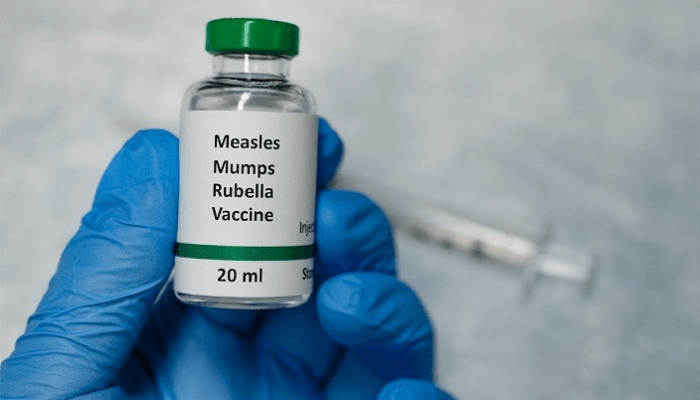
The Kwara Government has introduced the Second Dose Measles Vaccines into routine Immunization Schedule across the 16 local government area of the state.
Abdulrahman Abdulrazaq, state Governor, had while speaking at the flag-off of the campaign noted the immunization is part of the government quest to avoid preventable illnesses and deaths among vulnerable population,s especially children less than five years of age.
Abdulrazaq, represented by Adenike Oshatimehin, Commissioner for Information explained that Federal Government of Nigeria in collaboration with partners and donors introduced second-dose Measles vaccination into the country’s Expanded Program on Immunization (EPI) in Nigeria schedule in the 17 Southern states.
“Measles is an acute and highly infectious disease caused by the Measles virus. It is one of the leading causes of illnesses and deaths among children under five years of age.

“More than 17,000 measles cases is reported every year in Nigeria with thousands of cases never recorded. Available data from year 2000 to 2016 show that the use of measles vaccine has resulted in an 84 percent reduction in measles deaths.
“As part of the effort to attain global measles eliminations has developed a National Measles plan 2018-2028, this plan include introduction of second dose Measles vaccine (MCV2) into routine immunization,” he said.
According to him, a single dose of measles is not enough to attain at least 95 percent immunity, with more than 90 percent coverage needed to build confer protection on the community, adding that only 85 percent of children who receive first dose measles vaccines will seroconvert, necessitating an opportunity to revaccinate and protect the 15 percent who failed to seroconvert.
Read also: Ogun vaccinates U-5 children against measles, infectious diseases amid COVID-19 pandemic
Earlier in her address, Nusirat Elelu, executive secretary, Kwara State Primary Health Care Development Agency pointed out that the action plan is in line with the country’s immunization and Primary Health Care guiding document that is the National Strategy for immunization and PHCs system strengthening (NSIPSS).

Elelu recalled that before the introduction of measles vaccines in 1963, the disease caused an estimated 2.6 million deaths each year, as she informed that Measles vaccination prevented an estimated 21.1 million death globally, with an 80 percent decrease in deaths from an estimated 545,000 in 2000 to 110,000 in 2017.
She says 70 percent of cases of measles were recorded in sub-Saharan Africa, adding that recent data have shown re-emergence of measles in America.
The executive secretary of the Agency noted that in Nigeria over 17,000 measles cases are reported yearly with incidence, observed during the dry season, peaking from January to March and declining when the rains set in.
“Case fatality rates range from 1.9 percent in Southern states to 12.8 percent in the Northern states.
“Measles affects all ages and sexes in Nigeria, but it is noted that about 70 percent of measles cases affect mostly children less than five years old.
“This poor index is as a result of low levels of routine immunization coverage, which leads to the build-up of high proportion of susceptible un-immunized population and ultimately outbreaks,” she said.
Elelu stated that the introduction of the second dose of measles at 15 months of age is coming at the right time as we are approaching the season when diseases like measles and other respiratory infections have increased incidence.
The medical practitioner admonished mothers and caregivers to seize the opportunity to ensure that children below two years of age get vaccinated.