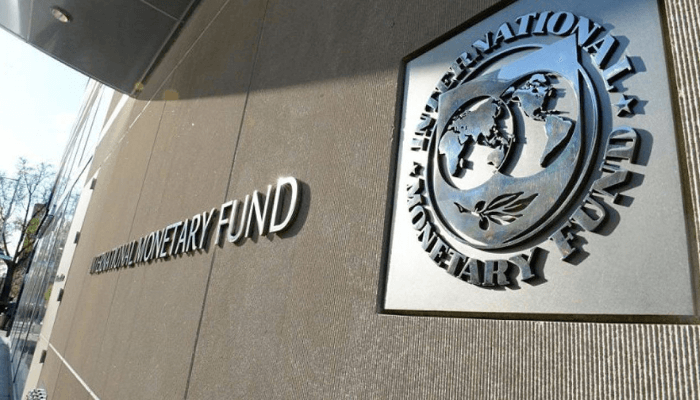
The International Monetary Fund (IMF) has advised supervisors, regulators, and financial institutions to be aware of the risks to financial stability stemming from a potential rise in geopolitical tensions and commit to identify, quantify, manage, and mitigate these threats.
It said a better understanding and monitoring of the interactions between geopolitical risks and more traditional ones related to credit, interest rate, market, liquidity, and operations could help prevent a potentially destabilizing fallout from geopolitical events.
In a new blog titled, ‘Geopolitics and Fragmentation Emerge as Serious Financial Stability Threats,’ seen by BusinessDay, the IMF said concerns about global economic and financial fragmentation have intensified in recent years amid rising geopolitical tensions, strained ties between the United States and China, and Russia’s invasion of Ukraine.
The Washington based Fund said financial fragmentation has important implications for global financial stability by affecting cross-border investment, international payment systems, and asset prices. This in turn fuels instability by increasing banks’ funding costs, lowering their profitability, and reducing their lending to the private sector.

Godwin Emefiele, governor of the Central Bank of Nigeria (CBN) said at the last Monetary Policy Committee (MPC) meeting in March 2023, that following new risks of financial contagion emerging from the scenario of failed banks in some advanced economies, members examined the possibility of shocks to the Nigerian banking system from these banks and concluded that the Nigerian banking system remains reasonably insulated from such likely contagion.
He said the CBN has been able to achieve this through stringent micro and macro-prudential guidelines that have ensured that individual banks and the banking industry in Nigeria have adequate buffers to ward-off global contagion. In addition to this, the MPC examined the possible impact of further policy rate hikes on the stability of the banking system and was convinced that further hikes would not adversely impact the stability of the banking system.
To develop actionable guidelines for supervisors, the IMF said policymakers should adopt a systematic approach that employs stress testing and scenario analysis to assess and quantify transmission channels of geopolitical shocks to financial institutions.
“In response to rising geopolitical risks, economies reliant on external financing should ensure an adequate level of international reserves, as well as capital and liquidity buffers at financial institutions,” the Fund said.
According to the IMF, policy makers should strengthen crisis preparedness and management frameworks to deal with potential financial instability arising from heightened geopolitical tensions. Cooperative arrangements between different national authorities should continue to help ensure effective management and containment of international financial crises, including through development of effective resolution mechanisms for financial institutions that operate in multiple jurisdictions.