Security experts say the huge resources channelled into the security sector annually by the Federal Government, have failed to produce commensurate results in view of the worsening security situation in the country.
The experts believe that the Nigerian situation ought to have witnessed an appreciable level of improvement if the monies that have gone into the sector have been judiciously used, noting that the allegations of fraud diversion may not be far-fetched.
Data from the World Bank indicate that Nigeria is the third country with the largest security budget in Africa, after Algeria and South Africa with $2.04 billion in 2018, and the largest in the West African region.
Available statistics also show that Nigeria has reportedly spent N6 trillion on security in the last 10 years. Even though the country’s budget is higher than other countries grappling with similar security challenges, latest report from Global Terrorism Index shows that Nigeria has not made much progress as much as other countries have.

READ ALSO: CSR: Steel maker builds multi-million naira office for NIMC
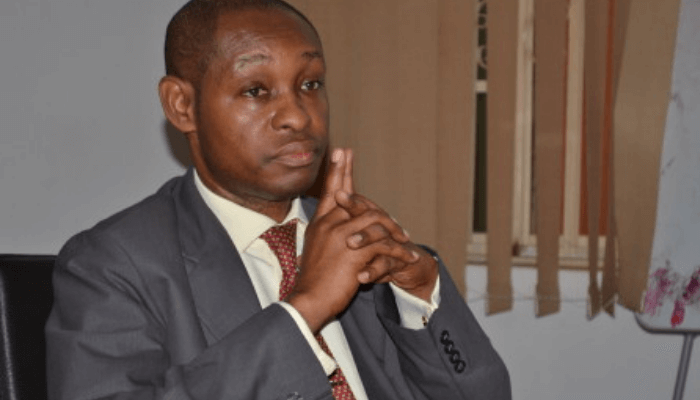
Eze Onyekpere, lead director, Centre for Social Justice, said Nigerians demand value for money as the military and security agencies have failed to deliver, raising questions which have raised the question of where the funds actually go to. According to him, there is no evidence yet to justify the judicious use of the billions of naira that have gone into the sector
Onyekpere said there was a need for proper oversight of the funds by the National Assembly, stressing that the citizens must also become active in holding government accountable.
The latest figures from the Global Terrorism Index (2019) ranked Nigeria as the third-worst country exposed to terrorism with no significant improvement seen since 2017. Among countries with similar security challenges, Nigeria’s death toll from terrorism increased, but the total number of deaths in other countries such as Mali, Somalia, and even Iraq and Syria fell.
A study by the International Centre for Political Violence and Terrorism Research Stable shows that Mali and Nigeria have experienced some of the bloodiest terrorist attacks carried out by Africa’s radical Islamists and other militant outfits.

These entities, including the Tuaregs in Mali and Nigerian Boko Haram, have displaced hundreds of thousands. Somalia is also battling the Al-Shabab a jihadist fundamentalist group based in East Africa. Data from the Institute for Economics and Peace, in 2018 Nigeria accounted for 13 percent while Mali and Somalia reduced by 3 percent and 4 percent respectively
Meanwhile, the Federal Government has increased the budget allocation for the security sector. The budget which was N190.65 billion in 2020 has now been raised by 11.3 percent to N212.32 billion proposed for 2021.
Another expert who spoke on the condition of anonymity also agreed that the results from what he described as ‘humongous investments’ have fallen short of citizens’ expectation. He said the situation was also an indication that security forces do not have an upper hand.
“Increasing the budget is a welcome development, the Federal Government is probably increasing the budget due to the disappointment from the security sector, but what is more important is its implementation. Do the funds reach the fighting forces?
“The Boko Haram insurgents are getting more sophisticated in intelligence gathering, training and are forming an alliance with global terrorist groups, like ISIS, ISWAP and even bandits.
“N10 trillion is a huge amount to be invested and we have not achieved a great result. The Federal Government is struggling; resources to other sectors have been slashed,” he said.