SIAKA MOMOH
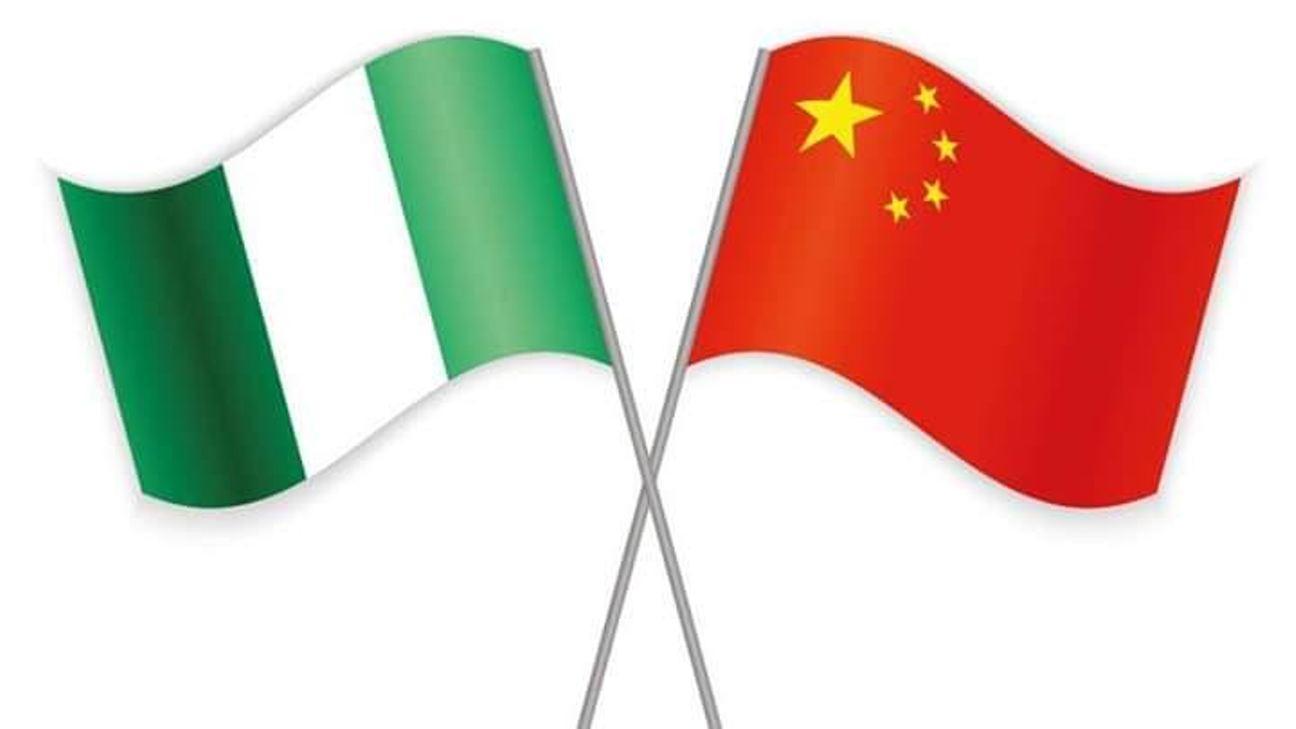
The summary of the China/Nigeria relations is that Nigeria have the opportunity to do more than just sell oil to China.
Busty Okundaye, a Nigerian, is president, UGC Technology and Management Firm with headquarters in China. UGC is an innovative engineering, global advanced technology/transfer and strategic management consulting Services Company that provides its multinational clients with timely, cost-effective and world-class quality services. The company is a major player in the increasingly complex and competitive global economy, starting with significant projects for General Motors, USA. Its major clients are Western, Asian, and African multinational corporations and governments, such as GM of China, Lear, First Auto Works, Dong Fang, Schlumberger, Keyser, etc.
Most of the company’s current projects are in the USA and China. Recent activities include inroads into rapidly developing markets such as that of Nigeria, South Africa, and India. And Okundaye, A Nigerian, is married to a Chinese. Busty Okundaye therefore came in handy as a subject of interview for this project.

We took off from the West grudge over Sino-African relations which are currently being fired from all cylinders, so to say. For him, that America and Britain feel threatened with the influx of Chinese to African economies including Nigeria should be expected. He said they had about 100 years to do all these things the Chinese are doing but they didn’t do it. He warned we have to be careful so that the same things that happened to us with the West would not happen now that we are having a relationship with the Chinese.We must have a strategy and a will to handle the influx of the Chinese into our economy. Our nightmare would begin if they do worse, he said.
He was emphatic on the subject of strategy. For him, it is the secret to success, secret to technology transfer. Malawi, according to him, has problem with the Chinese now. He recounted, Malawi is having problem with the Chinese because they did not put in place a strategy for relating with them. The contract Malawi signed with China did not specify that the companies being established in their country with the Chinese must have certain percentage of Malawians at the upper segment of the company’s work-force that Malawian employees could not just be cleaners, because at the level of a cleaner, they cannot influence decisions in the organisation. They could have specified for instance that the Chinese should not have more than 30 percent of their people in the executive cadre of the organisation, while the rest must be Malawians. You can say at the middle level, for instance, it should be a 50-50 ratio or 30 “70. Malawians did not do this. Anyone dealing with the Chinese must make such demand on them; the Chinese are not going to be the ones to tell you to demand that your people are given key positions because they are business people too.
This is an eye opener for Nigeria now that we are relating robustly with the Chinese.
He believes we have the technical background to take off from, that we have enough Nigerian engineers today, though they may not know what to do but they are engineers that can make high tech products such as a tape recorder; they have the foundation to build on. He said the Chinese engineers also had a similar problem at a point but got over because the strategy was on ground for them to learn from America. Okundaye was part of the American team that passed on technology to the Chinese.
Read Also: Nigeria targets 50% broadband penetration by 2021
Said he, It was very easy for us to teach them, and it was easy for them to comprehend the advance technology that we brought. We needed people with technical background to transform for technological growth, people well rounded in engineering, science, technology. Even those just coming out of school were able to comprehend the technology. When we explained it to them, figuratively overnight, they comprehended it. In the same manner, if here in Nigeria, we recruit graduates from the University of Lagos, and University of Nigeria, for instance, we can train them to realise our Vision 2020. We have enough money in this country to get to that level; I know that for a fact.

Raw materials
He argued we have an advantage since unlike the Chinese; we do not have the problem of raw materials in Africa. The Chinese are currently buying raw materials all across Africa, because they want to boost their productive sector. So it is raw materials demand in their country that is driving them into Africa. They need raw materials for manufacturing finished products. They don’t have. In Nigeria, we have most of these raw materials in abundance, in commercial quantities. And the money too.
What we need therefore are the right people, the right leadership with the right strategy to manage what we have on ground.
China’s economic reforms
China’s economic reforms started not too long ago. Busty Okundaye said as at 1970, there was no motorway in China, what we referred to as express way. It would be recalled that Nigeria commenced construction of express ways in the 1970s. Ogho Okiti stated it more clearly. According to him, the outstanding current economic progress in China we have all become accustomed to began in 1978 after Chinese leaders, led by Deng Xiaoping, concluded that the Soviet style system that had been in place since the 1950s was making little progress in improving the standard of living of the Chinese people and also failing to close the economic gap between China and the industrialised nations.
He argued that Chinese economic reform has been undertaken through a series of phased reforms. He said these reforms were designed to respond to pressing problems in the Chinese economy.
Leveraging
We can leverage on the Chinese success. China’s economic progress has benefited Nigeria over the last decade. China’s economic progress is driven by an energy hungry economy. So the Chinese need our oil and other natural resources like solid minerals and they have been buying these in large quantities. Nigeria has benefited from this in terms of high oil prices, improved terms of trade, and this has formed the basis of the reforms we undertook in the last five years.
However, according to Ogho Okiti, the economic growth that China contributed to can be more if we actually take lessons of economic growth and development from the country. He argued that the Chinese did the same, learnt from the economies that developed before it, and adapted the lessons to their own circumstances. So the Chinese made changes to their economy and defined its characteristics. You would recall that Busty Okundaye made the same argument earlier on.
The summary of the argument here is reform. Reform, nothing short of it. For Nigeria to begin to shake off underdevelopment and poverty, it must do more than sell oil to China and the world or depend on it for trade guarantees. The relationship must add to the basis for long term investment in education, research, and technology, while we identify and pursue economic policies that will respond to emerging changes in economic relationships around the globe. Government must move away from being the driver of the economy from the point of consumption but as active facilitators of the private investment and production, while encouraging the private investors to see the entire world as its market.
4:6. Importation and our local industry
Local plants engaged in the manufacture of foundry products are close to being shut down as Chinese and Taiwanese manufactured foundry products flood Nigerian market unchecked. Companies like Modern Foundry Products Limited (MFP) and Nigerian Foundry products Limited are currently a ghost of their former status, investigations have revealed.6 Hassan Jamarkani, managing director of MFP Limited, Lagos, lamented the unfettered freedom with which Chinese and Taiwanese products flood Nigerian markets, and have, with their low prices, crippled operations in the company. The costs of production of products manufactured locally far outstrip market prices of the imported ones. A considerable per centage of staffers have been laid off and products are now manufactured on orders, an operation which does not give the company a hope of survival.
Conclusion
From the discussion here, the conclusion can be drawn that the on-going Nigeria-China relationship has its good side and its bad side as well. The good side is that the Chinese are buying robust from us. We can leverage on the Chinese success. China’s economic progress has benefited Nigeria over the last decade. China’s economic progress is driven by an energy hungry economy. So the Chinese need our oil and other natural resources like solid minerals and they are buying these in large quantities. Nigeria has benefited from this in terms of high oil prices, improved terms of trade, and this has formed the basis of the reforms we undertook in the last five years.
However, the economic growth that China contributed to can be more if we actually take lessons of economic growth and development from the country. The Chinese did the same, learnt from the economies that developed before it and adapted the lessons to their own circumstances. So the Chinese made changes to their economy and defined its characteristics. It would be recalled that Busty Okundaye advanced the same argument. The Chinese gave the Americans one condition “they allowed them to bring in their technology under one condition “Chinese engineers paired up with them, understudied them. That was the strategy for transfer of technology. We do not have this arrangement with our Chinese business friends. We need it. We must have it. This is the leveraging in question.
The summary of the argument here is reform, nothing short of it. For Nigeria to begin to shake off underdevelopment and poverty, it must do more than sell oil to China and the world or depend on it for trade guarantees.