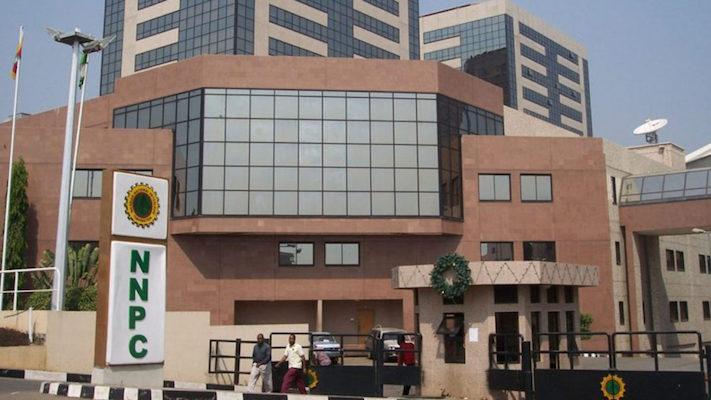
…Hits N8trn in June
The Nigerian National Petroleum Corporation Limited (NNPC) has reported a remarkable 98 percent surge in remittances to the federal government in the first half (H1) of 2025, reaching N8 trillion by June, in what industry experts describe as one of the clearest signs yet of the company’s evolving financial discipline and operational recovery.
This substantial financial inflow provides a much-needed boost to the federal government’s revenue, offering a stronger fiscal foundation for national development projects and budget implementation.
According to the reports, the statutory payments, which stood at N4.225 trillion in the first quarter (January to March), climbed steadily to N5.583 trillion by April and N6.961 trillion by May.

Read also: NNPC commissions 113km portion of OB3 Gas pipeline project
The June report, which captures payments up to May, shows a consistent upward trajectory. The most recent report for July confirms the cumulative figure of N7.965 trillion for the period of January to June.
Industry players said part of the increase in remittances is linked to ongoing market reforms in Nigeria’s downstream petroleum sector. The removal of petrol subsidies in mid-2023, though controversial, freed NNPC from the heavy financial burden of under-recovery payments that had previously eroded revenues.
“While subsidy removal triggered an immediate rise in fuel prices and public discontent, it also allowed the national oil company to operate more commercially, improve transparency in reporting, and channel a greater share of earnings into the Federation Account,” Aisha Mohammed, an energy analyst at the Lagos-based Centre for Development Studies, said.
Stronger oil, gas output

A closer look at NNPC’s operational data showed that improved oilfield performance was central to the revenue leap.
Crude oil and condensate production, a key metric for revenue generation, has seen a steady rise. From 1.56 million barrels per day (mbpd) in March, production figures have consistently increased, reaching 1.63 mbpd in May and a peak of 1.70 mbpd in July.
NNPC’s data show that average daily production climbed from 1.61 million barrels per day in April, 1.63 million bpd in May, 1.68 million bpd in June, before edging further to 1.70 million bpd in July above Nigeria’s OPEC quota of 1.5 million barrels per day.
The rebound also comes after years of underproduction that eroded the country’s capacity to maximise oil earnings. For much of 2022 and 2023, Nigeria consistently failed to meet its OPEC allocations due to rampant theft, pipeline sabotage, and underinvestment.
“We’re taking another look at optimising our costs, driving costs down. In the past three to six months, we have put up a roadmap to save about $3 billion, which I think by the end of December, we’re going to up that to about $4.5 billion, off our normal costs,” Udobong Ntia, executive vice-president, upstream, NNPC, said at an industry event monitored by BusinessDay.
He added, “That’s a lot of work being done in a six-month timeframe. And not just the oil companies, the contracting community as well. We often leave them out, but they do a great job to support the kind of venture that happens here.”
Read also: Court freezes ex-NNPC boss Mele Kyari’s bank accounts over fraud probe
In response to the exit of international service companies from Nigeria, which affected the country adversely, the NNPCL boss said the company would be engaging some industry leaders on how to bring back the foreign service firms.
Ntia stated, “In the next few weeks or so, we’ll be meeting with some industry leaders to agree on what the framework will look like for a return of a big construction company back into the space because we’re expecting a lot of things to happen. So, that framework is going to be set, and I’m really looking forward to the discussions around that.”
Gas production, sales: The unsung hero
Equally critical to the surge in statutory payments is the strong performance of Nigeria’s natural gas sector. NNPC’s figures show that gas production grew from 6.6 billion standard cubic feet per day (bscf/d) in February to 7.7 bscf/d by July, while sales averaged close to 5 bscf/d in June and July, marking one of the most robust outputs in recent years.
Gas is playing a dual role in NNPC’s improved financial profile: supporting domestic power generation while also earning valuable export revenue, particularly through LNG cargoes that benefit from strong international demand.
Fiscal lifeline for federation
The N8 trillion inflow represents the single-largest six-month remittance from NNPC since its transition into a limited liability company under the Petroleum Industry Act (PIA) in 2021. For a federal government grappling with persistent budget deficits, rising debt servicing costs and heavy subsidy reforms, the windfall provides both breathing space and fiscal flexibility.
Oil proceeds remain the backbone of Nigeria’s revenue base, accounting for about 65 percent of government income and over 80 percent of foreign exchange earnings.
The sharp rise in NNPC’s contributions has therefore bolstered monthly allocations to the three tiers of government, easing liquidity strains for states and local councils struggling to finance salaries and capital projects.
Finance ministry officials suggest that the uptick in NNPC inflows could help temper the pace of new borrowing in the second half (H2) of 2025, though analysts caution that structural fiscal pressures remain.
However, analysts caution that relying solely on NNPC’s stronger remittances may prove risky. While the first half (H1) of 2025 has been favourable, global oil markets remain vulnerable to geopolitical shocks, energy transition policies and price volatility. A sudden price slump or production setback could quickly reverse recent gains.
For instance, in July, NNPC’s profits dropped by 79.6 percent from N905bn in June to N185 billion in July.
Read also: Why NNPC should sell adequate crude to Dangote refinery in Naira, says NLC
The company’s July report highlights strategic priorities that include sustaining crude oil and condensate production, enhancing stakeholder collaboration, and fast-tracking major gas infrastructure such as the Ajaokuta-Kaduna-Kano (AKK) Gas Pipeline and Obiafu-Obrikom-Oben (OB3) Gas Pipeline.
Still, significant challenges remain. Oil theft, though reduced, has not been eradicated. Security in the Niger Delta remains fragile, while investment inflows into upstream projects remain below pre-2020 levels.