An analysis of cash-flow into Nigeria’s electricity supply industry paints a disturbing picture of a sector losing on average over N40 billion monthly due to poor collection and weak technical facilities, BusinessDay can report.
Power generation companies (GenCos) generate about 3,600 megawatts (MW) out of which 100MW is dispatched to Niger Republic, Togo and Ajaokuta Steel, leaving 3,500MW which, at the average monthly tariff of N32 per kWh, should yield N80.5 billion monthly.
According to contracts signed by industry players, GenCos through the Nigerian Bulk Electricity Trading Company (NBET) should receive N52bn, the Transmission Company of Nigeria (TCN) should get N17bn, but the regulator has cut out 50 percent from their tariff because the Federal Government is funding it, and the balance of N20bn should go to the DisCos.
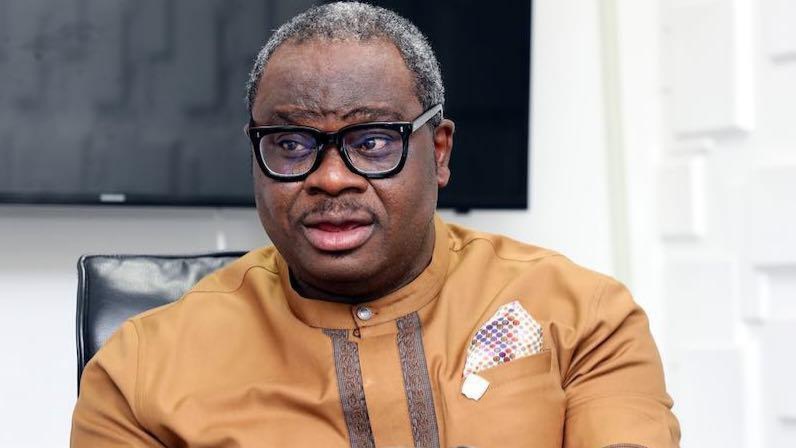
“But the numbers don’t add up,” said Kester Enwereonu, director at Enugu DisCo. “This is the bane of the Nigeria electricity supply industry.”

Read also: We have powers to tackle security challenges- Presidency
DisCos cumulatively collect an average of N40 billion monthly out which the Central Bank of Nigeria, which tracks their collections, removes N3 billion as first-line charge to repay the Nigeria Electricity Market Stabilisation Facility (NEMSF), a loan it disbursed to the market in 2015, and other legacy debts; N2 billion goes to the Federal Inland Revenue Service (FIRS) for Value Added Tax (VAT); N8.5 billion is paid to TCN on the average while the Nigerian Bulk Electricity Traders receives N12 billion to pay GenCos, and DisCos get N14 billion.
This situation is largely caused by the inability of DisCos to recover all the money for power generated and tariffs that do not guarantee a commercial return, analysts say.
“All the parameters that fed into tariffs including exchange rate, gas prices and inflation changed, but prices remained the same. This was a major problem,” said Chuks Nwani, an energy lawyer based in Lagos.
However, in real terms, it is a bit nuanced. Power generated daily sometimes falls lower than 3600MW. For example, in the fourth quarter of 2019, the regulator said electric energy generated was 8,101,193MWh or 90,013.25MW a month, which comes to around 3,000MW daily.

But the same pattern of losses is replicated every month as many consumers remain unmetered. According to data from the Nigerian Electricity Regulatory Commission (NERC), of the 10,374,597 registered electricity customers, only 3,918,322 (37.77 percent) have been metered as at the end of the fourth quarter of 2019.
Thus, 62.37 percent of the registered electricity customers are still on estimated billing which has contributed to customer apathy towards payment for electricity, according to NERC’s report.
But here is where it gets sticky. There are roughly 10.4 million customers in a country with over 20 million buildings and facilities connected to the electricity network, DisCos say.
“Out of the 10.4m customer accounts, more than 20 percent are inactive. Thus, less than 8m customers are paying for electricity consumed by over 20m consumers,” Enwereonu said.
Worse still, of the barely 8m active customers, only 4m are metered, the rest are on estimated billing. Out of the 4m metered customers, 50 percent of the meters are old, outdated, and compromised, according to DisCos.
Thus, while 4m customers ostensibly pay for the electricity they consume, the remaining 4m unmetered customers are meant to pay for electricity consumed by them and the other 12m consumers (who are not yet customers in the books of the DisCos) for the books to balance.
The Federal Government has spent over N1.3 trillion in bailouts to the sector within the last three years, but this is unsustainable. Over N480 billion is required yearly to cover shortfalls due to tariffs, collections and technical losses, an uphill task for a government staring down at a fiscal crisis due to a slump in oil prices and COVID-19.
The alternative is to raise tariffs by 100 percent, meaning that tariffs will double to between N60/kWh and N98/kWh for customers. This could trigger massive protests across the country where 80 percent are poor. The Federal Government cannot risk popular outrage in a country where everyone is angry about everything.
“Thus, as an immediate cure, a mix of increase in tariff by, say, 50 percent, and subsidy by the Federal Government of the balance of 50 percent seems to be the most realistic option in the prevailing circumstances,” Enwereonu said.
NERC had raised the tariffs by at least 30 percent but moved commencement to next month due to COVID-19. Analysts say a bold plan to meter every electricity user should be a priority.