Tunde Adebayo still remembers the moment he lost faith in Nigeria’s university system. It was his third year at the University of Lagos, and for the second time in his academic journey, a nationwide strike had brought his education to a grinding halt. “I felt like I was stuck in limbo,” he recalls. “No classes, no certainty—just endless waiting.”
For students like Tunde, Nigerian universities were once the gateway to success, promising world-class education and a future filled with possibilities. In the 1960s and 70s, institutions like the University of Ibadan and Ahmadu Bello University were the envy of Africa, producing some of the brightest minds in medicine, law, and engineering. Professors were among the highest-paid professionals in the country, and Nigerian graduates were sought after globally.
But today, the story is different. Underfunded, overcrowded, and plagued by instability, the nation’s tertiary institutions are a shadow of their former selves. Frequent strikes, outdated curricula, and a brain drain of top academics have left students disillusioned and uncertain about their futures.
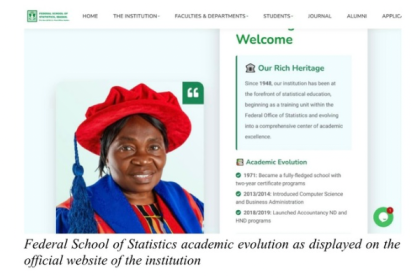
The history of university education in Nigeria can be traced to the Elliot Commission of 1943, which led to the establishment of University College Ibadan (UCI) in 1948 as an affiliate of the University of London. The system flourished in the post-independence era, with premier universities such as Ahmadu Bello University, University of Ibadan, University of Ife (now Obafemi Awolowo University), University of Lagos, and the University of Nigeria, Nsukka, becoming hubs of academic excellence.

At their peak, Nigerian universities attracted top scholars from across the world. The government provided robust funding, ensuring that professors were well-compensated. In the 1970s, a Nigerian professor’s salary was second only to that of the Chief Justice of the Federation, an indication of the prestige attached to academia.
The decline began in the 1980s when Nigeria’s economy took a downturn, driven by falling oil prices and mismanagement. As government revenue shrank, funding for universities suffered. Successive military regimes, many of which had little regard for education, further eroded the system’s integrity. Universities were subjected to political interference, while academic dissent was met with repression.
To regulate admissions and promote equal access, the government established the Joint Admissions and Matriculation Board (JAMB). However, the lack of strict oversight led to inconsistencies in admission standards, compromising academic quality. Universities, once renowned for their competitiveness, began admitting students based on quotas rather than merit.
By the 1990s, the effects of underfunding were glaring—dilapidated infrastructure, outdated libraries, and laboratories ill-equipped for research. The prestige once associated with being a university lecturer dwindled, as wages stagnated and working conditions worsened. Many top scholars left for better opportunities abroad, leading to a severe brain drain.
Today, Nigerian universities face a host of challenges from inadequate funding to outdated curricula.

Despite these challenges, some students have found ways to turn adversity into advantage. Tunde Adebayo, once frustrated by endless strikes, discovered his passion for renewable energy during a prolonged school closure. “The ASUU strike of 2019 was tough, but it led me to intern at a solar energy firm. That experience inspired me to start GreenVolt Solutions, focusing on sustainable energy.”
Similarly, Yusuf Olatunde, a graduate of Actuarial Science, found purpose during one of the extended academic breaks. “During those strikes, I started tutoring Mathematics and Commerce to WASSCE students. That experience opened my eyes to the education crisis in Nigeria. I later founded Edulog, a tuition centre that helps students keep learning even when universities shut down.”
According to Emmanuel Nnadozie, a professor of Economics, the Nigerian government alone cannot sustain the financial burden of tertiary education. “Globally, universities are diversifying their revenue streams. While some countries, such as Denmark and Norway, maintain a fully government-funded model, others like the U.S. and the U.K. balance public and private funding. Nigeria must find a model that works for its realities.”
Experts suggest a multipronged approach to revitalising Nigeria’s university system. First, increasing government funding is crucial to meeting international education benchmarks and improving overall quality. Additionally, fostering public-private partnerships (PPPs) can encourage corporate sponsorships, endowments, and research funding, providing much-needed financial support. Granting universities greater autonomy would enable them to generate and manage their own funds more efficiently, reducing over-reliance on government allocations. Finally, comprehensive curriculum reform is essential to aligning academic programs with evolving industry needs, ensuring graduates are well-equipped for the job market.
Nigeria’s university system, once a beacon of excellence, now struggles under the weight of neglect and mismanagement. However, the resilience of students and educators alike demonstrates that all hope is not lost. With strategic investments, policy reforms, and collective effort, Nigeria’s ivory towers can once again rise to prominence. The future of the nation depends on it.