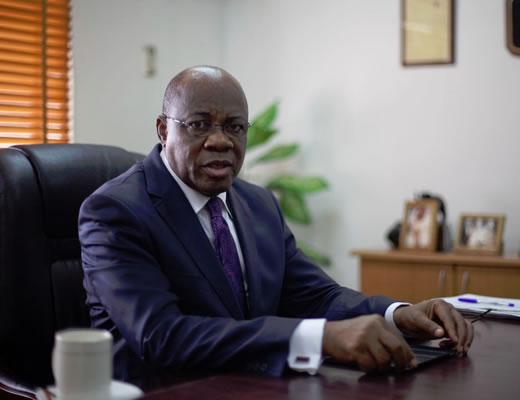
Olisa Agbakoba, a senior advocate of Nigeria (SAN) and former president of the Nigerian Bar Association (NBA), is a businessman. He is also a maritime lawyer and passionate about the nation’s economy. Long before the economy slipped into recession, like Nostradamus who saw tomorrow, Agbakoba had been raising the alarm on a likely prostrate economy. In this interview with ZEBULON AGOMUO, Editor, he recalls the steps taken by some world leaders to pull their countries out of recession and depression. He insists that there is only one way President Muhammadu Buhari administration could pull Nigeria out of the present economic quagmire and that is by “bouncing the economy”. Excerpts:
You have been talking about recession and warning that Nigeria risked going into it (recession); now that it has happened, how would you describe the situation?
For very long time, I had been repeating the warning that Nigeria was slipping into a recession. You know it’s like a guy who has this metabolic syndrome which is what I think Nigeria has. Metabolic syndrome means that you had, say, diabetes, complicated with hypertension and heart disease. And when you have all of these three illnesses, I’m sure you’ll take your malignant situation seriously and do something about it. So, Nigeria has had a decline in economic fortunes which is measured by quarterly performances. For Q4 2014 we’ve been going downhill. So, one would have thought that type of figures would call attention to policy makers that something is wrong.
But with this recent announcement by the National Bureau of Statistics (NBS) in its Q2 announcement, it confirms that Nigeria is now in recession because we’ve got two successive negative contractions. We have this complicated, endemic malignant metabolic economic syndrome. And to say that and proffer no solutions doesn’t help. The biggest culprits in our present predicament have been the banks.
When America suffered the Great Depression in 1930s, the banks were busy speculating and trading but the President Franklin Delano Roosevelt said, no, you can’t do that. And he got Congress to pass a law, strictly restricting what banks can do.
What’s the role of banks in all of this?
This morning (Tuesday, September 6, 2016) the special adviser to the Central Bank governor in his speech on Channels, he was talking as if he is the MD of the bank – they’re investing in agriculture, they’re doing rice; they’re doing wheat… And I said, does this guy know what he’s talking about? The work of a commercial bank is to lend but if you don’t regulate (even in your own profession), if you don’t regulate any profession, they will go hay wire. So the problem is that the CBN needs to have more cohesion in regulation and the truth is that it is not easy. So, in the UK, their own CBN created a special supervision agency called the Potential Regulatory Authority. You’ll wonder that with all the money that the CBN pumped into the system – Airline intervention funds; electricity intervention funds – the banks don’t lend them to the sectors that they are meant for at the rate required, which is single digit. The banks lend them as ordinary commercial loans to the big cartels, the big industrial cartels, thereby starving the very people for whom the loans were intended. So, it is no wonder that the system is bleeding. No nation can afford not to regulate. In Kenya, they passed a legislation regulating lending rate to single digit.
I am not in support of doing that for Nigeria, but has it occurred to you that the Federal Government of Nigeria is the biggest generator of money, yet they cannot control the rate at which money is lent, so they put the money in the banks and the banks lend it right back to government at very high rates; which is very ridiculous. So, in order to now deal with that problem, the government had to throw away the baby with the birth water by depriving banks of liquid cash called the Treasury Single Account (TSA), but that’s not the solution because the TSA funds are sitting idle doing nothing. But what the government should have done is to tell the banks this is our money, we are giving it to you; but lending rate is 3 percent. When the British government found that it was difficult to get on to the mortgage ladder for school leavers they set aside 20 billion pounds and picked four banks to do the lending; instructing them not to exceed 3 percent. That’s how you stimulate the economy. So, our biggest challenge is the financial sector thing. Apart from that the second big challenge we have is that we don’t have a body of economic advisers. Can you tell me if you know any? The only body constitutionally recognised in Nigeria is the National Economic Council and they meet once in a while (made up of former CJN, former presidents of Nigeria, all the state governors, the vice president of Nigeria) and that is a body that absolutely has no business directing the affairs of the economy.
So, we need to have a council of economic advisers – a mix of people – experienced people who have read econometrics, statisticians, etc – they are the ones who plan the model of the economy. That absence is part of the reasons we have no cohesive economic policy. We also need to create a situation in which fiscal, monetary and trade policies are clear. I don’t understand how Central Bank thinks that without printing dollars that it can control the forex. It can’t. Diasporean returns into Nigeria every year is in excess of 20 billion dollars; where does it go? It is round-tripped because the CBN claims that it can regulate. The Central Bank needs to do what is called Quantitative Easing. Quantitative Easing means easing the pressure at which people access money. The lending rate today is between 20 and 30 percent and the reason for that is that the Monetary Policy Rate (MPR) which is the base rate set by the Central Bank is 14 percent. So, the Central Bank is telling the commercial banks, you can go to 20 percent. But the base lending rate by the Central Bank should not be more than 4 to 5 percent. Another point is, what is the strong reason why banks cannot do single digit? It got so frustrating for President Uhuru Kenyatta of Kenya that he said I am going to legislate it; if you don’t want to do business forget it. Some professions carry with them a certain public trust responsibility.
Your profession journalism is key because there’s nobody who will own a newspaper house and thinks he can control the editorial policy. Yes, he’s going to make money, he’s not going to make money at the cost of telling lies. Law is another one; medicine (a doctor cannot say to a patient, if you don’t pay, I won’t treat you). So banks have that kind of public trust responsibility to assist the government grow the economy. Of course, government may not be able to do this, unless there is a raft of relevant financial services institutions and laws. So, people have no access to loans. Forty years as a lawyer, no bank has given me a dime; yet. I have borrowed heavily from British banks. So, there is something wrong if a person at my level can’t access cash. So, who are the people accessing cash because you need cash to grow business. If the tomato seller can have access to 10 thousand naira credit and all of that, that will be good for the economy. We need a law compelling banks to do banking works not the way it is being done. Part of the challenge is that our political parties are not strong enough. When parties bring out strong policies, not just party talk; but real policies, you see things working well. In my view the naira will still fall more. What is our problem with numeric value of naira when we have no productivity? There are always implications in whatever decisions we make like in taking up the base rate. It is supposed to slow down inflation but the other implication is that it will dry up the money supply. All this is compounded with the Central Bank’s misreading of policy. The Central Bank is trying to defend the dollar but it’s not our currency. What the Central Bank is supposed to be doing is to push productive value of the economy. If you do so then it doesn’t matter what the rates are. Government has no business being in business whether in school, or banking. What we need to do is anyone who has foreign currency should sell in the market at the billing price.
How, in your opinion, would Nigeria get out of the recession?
So, if we have to get out of this recession, I recommend what President Roosevelt did in America during the Great Depression. He summoned Congress and did a great proclamation and said we have to fix this economy. So, I will appeal to our President to not consider this Emergency Power Act that is being proposed, for a number of reasons. I don’t know if you’ll recall that when we had this recessionary trend under President Shehu Shagari, the Economic and Financial Stabilisation Act was passed which is almost the same as this proposed emergency power act; but it failed. It is not in an Act; it is in policy; it is in trade policy. If your trade policy is ambivalent and uncertain- that someone like Erisco, Africa’s largest tomato manufacturer, has N60 billion worth of tomato sitting in his warehouse because it is cheaper to import it, because trade barriers are so low, why would you want to manufacture tomatoes here? You buy from outside and sell it cheap. And that’s the problem. In the maritime sector, the Cefa (CFA) to the naira has crashed so the recession being felt in Nigeria has spread to Benin Republic because Benin was giving us about 75 percent of our Tokunbo cars. Yet, we have a port but nobody wants to use Nigeria’s port because the bribe you’ll pay is equivalent to the cost of the car; and there’s no road in Apapa, the major seaport. The bridge in Apapa is almost collapsing.
So, why would anybody want to use the port? Now, if we are growing the economy of Benin Republic by contributing 25 percent to their own economy, you can see the damage that we are suffering.
So, all these leakages simply require a strong President. Another thing is when you go to the hospital and the doctor determined that you are anaemic, there’s only one thing he has to do; he has to give blood transfusion. So, how can a government present an austerity programme? An austerity programme means putting money in the system. That’s the oxygen. So, MPR puts money; interest rates for Treasury Bills are almost 20 percent; so banks prefer to buy treasury bills; they are not going to give you money when they are not sure you’ll pay; so they just go and put all their money in TBills, government Bonds; sovereign bonds and all that. Now, if they do all that it would mean there’s nothing to lend to the real sector. So, again, government must be clear as to what policy it wants to pursue. There is only one way out of recession, that is a massive bounce; that’s the only way. You have to bounce the economy and when you do so – because when Margaret Thatcher was doing her austerity measures, she used monetarism- (monetarism means that you use tight money to control inflation) but the problem with that is that when we control the inflation and there’s a liquidity squeeze, you could have a problem. But in Thatcher’s case she had a huge project – the privatization project – so that gave the economy a bounce. In Nigeria, am sure you know that the Niger Delta is crying for money?
You also know that the South East is crying for money; so we have public works to spend on, and also electricity. That’s what Roosevelt did. Roosevelt discovered that merely printing more money would not help; he required to create a productive base; so he used the Tennessee Valley Authority – a huge project that employed a lot of people. So the President needs to bring everybody back to work. You’ll be surprised when Julius Berger and other construction firms are given road and other contracts and are instructed to mobilise massive workforce to site; you will find that the economy will slowly begin to revive. But unfortunately, I don’t see these things happening; and if it doesn’t happen, we will be looking at a very long term because a recession circle is about three years; but great economists, like former finance minister of Greece can make it. We can recover by Q2 2017, but that requires us to apply the best possible measures.
In what ways does the Emergency Power being proposed for the president defer from what Roosevelt and others did in times of their own depression?
It differs in the sense that there’s a conception by policy makers here that emergency power will mean that they can jump-start the economy; so that very notion is wrong. Others who had dealt with recession like Thatcher, didn’t pass any law, saying give me emergency powers or the examples that I have given. What you need is to identify the right policies; that’s number one; – either fiscal, monetary and trade. When you have identified these policies, you must have the right people who understand how to move forward; you also identify what is it you want to do – that’s the public works programme, so that you can lift the economy.
When you pump money, there will be a surge; it is also possible that when you pump money it will go down. So, it is very critical that the interlocking policies work well; otherwise if you pump in say – in fact, if I were the President’s adviser, I would pump in about 50 trillion dollars. You may ask, where would he get it from? And the answer is to be found in some of the writings of Hernando de Soto. Foreign aids have not helped anybody but the total number of housing stock in Nigeria is about 7 trillion dollars but it is dead capital. It is dead capital because if I want to take a loan from our banks and they ask me where is your collateral and I gave the address (number) of my house; okay where’s you document? I don’t have; I don’t have because the governor has not signed the C-of-O. So, it is useless. So I have always said you must index the housing stock to capital so it becomes fungible (moveable). When I buy a house in the UK, the moment I am doing so, it is already registered in the land registry. Prime Minister David Cameron at the time was not signing my C-of-O; it is the Land Registry. So, there’s a movement of cash and commodities; it’s swelling in such speed that you see money.
What is needed is swift action. You know that people measure the president’s performance by the 100 thing; it came from Roosevelt. He passed 100 bills in 100 days; of course.
What I recommend is, rather than asking the President to go for Emergency Power Act, he should pass the equivalent of the Act that Roosevelt passed through the Congress in the 1930s. You must lend this ways. You must lend in this particular direction (after all we licensed you)- the real sector, 20 percent; this sector this, and the rates are these. That’s the only way you can have banks conform. Why is it that in spite of the recession the banks are declaring billions and billions of profit; how come they are not going down? It is because they collect all our money and lend it at impossible rates. They collect all our money and give it to a few people and the rest are left un-helped. We need the banks to do banking work, not trading. If I went to the bank today with a government guaranteed LPO (Local Purchase Order) for the supply of 100,000 metric tons of premium petrol, they will jump at it. That’s what they want. But if I went the bank to say I need to import machinery for manufacturing, I hope you know Innoson closed down and a couple of telecommunication companies are thinking of leaving because of tax and unfavourable trade conditions. So, it is clear that we have a problem but we just can’t be looking at the problems; we need to look at solutions.
But some people say the Emergency Power Act is needed to make procurement quicker?
If the emergency powers will speed up things like procurement, good, but if it is to strip the National Assembly of its constitutional authority to appropriate money that is not possible, I myself will even go to court (to challenge it) because it is in the constitution, except you amend the constitution. So, Emergency Power Act the way I see it is simply to allow some of the processes to go quicker, but you recall that the minister of finance created an efficiency unit in her ministry. Mrs. Thatcher, when she started her programme to lift Britain out of their economic problem, created an efficiency manager in her office who had direct access to her. I am not sure that the Act will do what we think it will do. It is what the President determines. He has all the powers to get what he wants done. If the President says, I want this procurement approved in 24 hours, if it is not done then am gonna chew your ass. It must be done. The Bill doesn’t do anything. It is the political will the president exerts that I think is more important.
ZEBULON AGOMUO