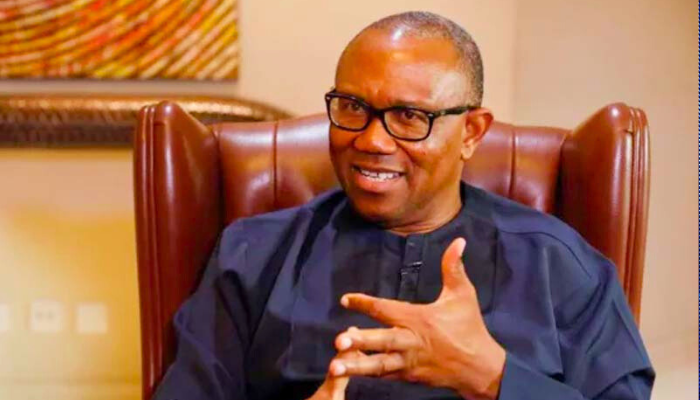
Nigeria must provide access to quality education, healthcare and empower small businesses to stem the tide of poverty in Africa’s top oil producer, according to Peter Obi, the former presidential candidate for the Labour Party in the 2023 elections.
In a post on X Tuesday, Obi decried the worsening poverty that’s pervading the country, a situation that is expected to continue till 2027, as per World Bank report, stating that the widening poverty levels require “urgent and deliberate action.”
“We must reassess what truly matters. The decisions we make—what we build, fund, and focus on—must align with the pressing needs of the people,” Obi said.
The former Anambra governor called on the government to “urgently redirect our national focus and address the root causes of poverty”, a situation that he described to have been caused by “years of misplaced priorities.”

He criticised the government for prioritising “wasteful spending” rather than investing in critical sectors that would spur economic growth and engender development in a country that is witnessing a steep decline in per capita income and a weakening purchasing power.
Read also: Peter Obi: Poor JAMB results reflect decades of neglect in education sector
Nigeria is confronting its worst cost-of-living crisis in a generation after the government embarked on a series of reforms to kick-start an economy that’s at the verge of collapse.
Without adequate safety nets, especially for the vulnerable, poverty levels in the country spiked from 104 million in 2023 to 129 million last year, according to the World Bank.
“We have continued to prioritise wasteful spending on non-developmental projects such as conference centres, government houses and lodges, guest houses, and fleets of official vehicles—instead of investing in human capital, education, and healthcare, which are the true legacy projects capable of transforming a nation,” he said.

The latest World Bank report which Obi cited shows that Africa’s most populous nation now has more than 75 percent of its rural population below the poverty line. This is just as 41.3 percent of the country’s urban population is now also entrenched in poverty.
Read also: Sanwo-Olu knocks Peter Obi for “de-marketing” Nigeria abroad
While the multilateral bank reported that about 30 percent of the country’s population was in poverty five years ago, the number has more than doubled now, reflecting a sharp decline in living standards and consumer power.
“This shows that poverty is no longer just a rural crisis—it has become a national emergency,” he said. “These facts confirm that poverty in Nigeria has worsened significantly—and this is no coincidence.”
Obi however urged all the tiers of government to prioritise critical areas of development, particularly investment in health, education, and poverty alleviation to crush the menace in the country.