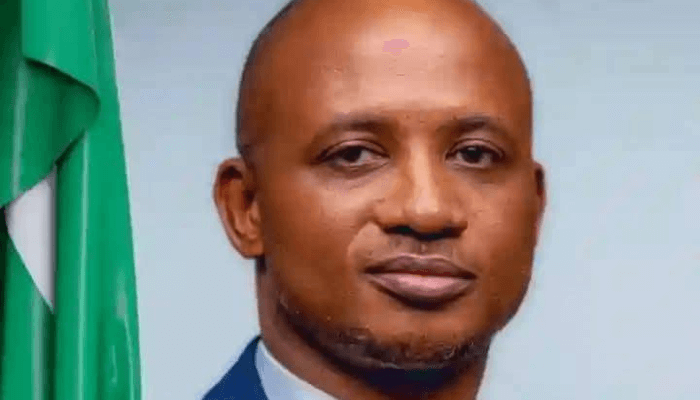
Governor Umo Eno of Akwa Ibom State is transforming the health sector and restoring confidence in public healthcare services. His administration has upgraded primary healthcare facilities, constructed and equipped secondary healthcare centres and has declared a state-of-emergency in the health sector. The governor is releasing counterpart funds for health programmes involving Family Planning, Nutrition and Malaria. Recruitment of more health workers is currently ongoing. A health insurance scheme which has expanded access to affordable healthcare has since been launched; a lot has indeed, happened in the health sector since his assumption of office in 2023. Ekem Emmanuel John, a medical doctor, and commissioner for Health, disclosed the development at an interview session with journalists recently. ANIEFIOK UDONQUAK, who was at the briefing, brings the excerpts:
Can you take us through the number of new healthcare facilities so far constructed by the state government?
We have constructed four General Hospitals, we have commissioned six of the Primary Healthcare Centres, and there are about 14 others that are under construction. There is provision for equipping the new primary healthcare facilities being constructed by the state government but the equipment has not yet arrived. As of today, work has been completed but we are waiting for the equipment, which has been ordered to arrive. We commissioned one General Hospital and it is fully functional. The place is very busy now and they have saw more than 600 patients in December alone, this is huge because this particular hospital is something that Governor Umo Eno does not get enough credit for. We know how long this hospital was abandoned since 2009. Two administrations left before him but in his usual manner being a man of peace, he invited the contractor and asked why the project was abandoned, ‘why are you in court with the state government,’ and the man had lots of stories. However, we got a new contractor to complete the project despite the former contractor being fully paid by the state government. I am happy that Ukanafun people are enjoying the benefits of that project and not just Ukanafun people, people as far as Abia State come to the hospital to receive care This is one of the achievements of Governor Umo Eno and this is truly a people-centric achievement and the hospital is properly equipped.
How have the reforms improved new patients’ patronage of healthcare facilities?

In 2023, it was 23,208, it moved to 68,000 in 2024, a marginal increase. From 68,000, it moved to 481,000, almost 400 percent increase in new patients visits. Now, this is a reflection that the reforms and the increased supervision are beginning to restore public confidence in our facilities. Again, the 481,000 new patients’ visits include 129,000 from health insurance, you can see how the entire health system is one single puzzle. You just need to fix them and connect them. Our hospitals last year did a total of nearly 4000 surgeries. That is a very significant achievement. Many teaching hospitals will not be able to march that. While our new patients’ attendance increased by 700 percent, the deaths in our hospitals in 2023, all our general hospitals put together recorded 499 deaths and then it moved sharply to 616 in 2024, 23.4 percent increase, but when our new patient inflow moved drastically by700 percent, deaths dropped by 14 percent. Then when you go to maternal mortality, there has been a steady decline. Thank God, our women cannot continue to die during child birth. Sadly, our women still go to Traditional Birth Attendants. Women should be made to be aware that it is immaterial how a child is born, what is important is the safety of the child and the mother. that they should go to hospitals for safe deliveries.
How is the ministry responding to complaints from patients and members of the public who may feel unsatisfied with services?
We have established the office of the health ombudsman in September 2025. Every week, reports of the ombudsman are received. Every week, we receive reports from the health ombudsman, he has not failed once to send me his weekly report. That office is directly under the office of the Commissioner for Health; so, he reports directly to me. This underscores our interest in resolving complaints, because we realise that we are in service, we are just like a hotel, transport company, with a regular point of conflict and because we want to be proactive, we would not put that office under the office of the Permanent Secretary, I put it under my office, he reports directly to me, let me know the complaints, so that we can assign people that can resolve those complaints and if those complaints are not resolved, we will ask questions and nobody in fairness wants to be in that position of answering questions from the commissioner , that is why that office was put under the commissioner’s office but with 167 phone calls received as public complaints, only 37 of those complaints were health related. During the year 2025, we had the following disease outbreaks, cholera, diphtheria, mpox and measles but many people did not hear about it because we have developed emergency preparedness system, the template was already there for us, this has allowed for early frontline detection, faster response and improved practices. This is something we are proud of that we were able to nip all of these in the bud before things got out of hand.
What is the ministry doing to expand the frontiers of knowledge in the health sector?
Before I came, there was no research hub in the ministry. We have established a research hub; we believe that the ministry of health should have a research hub as a professional ministry. While doing projects, monitoring services, collating activities, it must also be looking into patterns of diseases and data so that we understand what is peculiar to Akwa Ibom, and if we can analyse the data collated, in another ten years, we can predict patterns of diseases. Scholarship thrives when research is supported, it is almost a new vista of knowledge and that is why we have established a research hub in the ministry of health.

How does the state emergency medical service and ambulance system work?
In 2025, the emergency ambulance medical service was established March 1, 2025, in 10 months, 2500 emergencies were attended to; 1799 of those emergencies stabilised; 708 of those transported to different hospitals. Under 12 minutes, the ambulance service can respond to any emergency. Our goal was to pick anybody within 30 minutes, but we found out that our ambulances were picking people seven minutes, 12 minutes, 13 minutes. So, this year, we have reduced the goal that people should be picked between five to 20 minutes. We are hopeful that as the fleet expands and we can position the ambulances in several different places, we should be able to shorten the response time. It is not about the number of ambulances; it is about the manpower to man the ambulances as we know that there is a challenge of human resources for health but we are addressing it in the best possible way we can.
The health insurance scheme was launched in 2024, tell us about the progress so far?
The Akwa Ibom Health Insurance Agency enrolled 170,000 lives covered by the insurance and out of those, 29,000 are civil servants, and 78,000 dependants of those civil servants are also covered. Included in that figure are 68 retired permanent secretaries. That shows that we are beginning to evolve a situation where who serves the government on retirement can be protected. Through the health insurance, a total of 481,000 engagements were made, 126,000 persons had medical consultants free of charge. And 1,606 surgeries were performed for the people of the state, 1012 vaginal deliveries were carried out, out of the 1,606 surgeries, 489 were caesarean sections. Under the scheme, we have three healthcare facilities, private, primary healthcare centres and secondary health facilities, there were 8200 referrals from primary health centres to secondary health facilities.
There is a noticeable absence of a General Hospital in Uyo, the state capital, is there any plan to change this situation?
A general hospital is still useful. We cannot have too many general hospitals; we are working towards that and it would be my pleasure that it happens while I am here and while Governor Umo Eno is here. But we do not build hospitals because of revenue in mind. The revenue that hospitals generate in the public sector cannot even pay salaries. In the long run, the Treasury Single Account (TSA) is best for the state. There may be issues initially in its implementation, but gradually, it will be solved. But in the long run, it will be better for the state; I want you to come back in 2028 to check the revenue profiles of the hospital’s management board after two years of TSA.