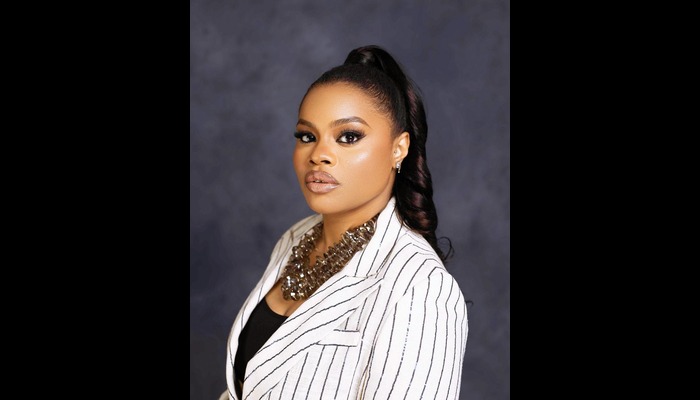
Adefarayola Deborah Olugbemisola is a recognised leader in business transformation and digital strategy. She is the CEO and Founder of Fael Ltd, a UK-based consultancy focused on IT and digital business transformation, business separation, and integration strategy across public and private sectors. With over two decades of experience, Deborah has worked on large-scale projects for government departments and multinational corporations in highly regulated environments.
Her approach to transformation is guided by three principles: clarity of purpose, operational discipline, and human-centred design. She explains, “Transformation must never be driven solely by technology. It must be strategically aligned to business outcomes, compliant with regulatory obligations, and designed around real user needs.” She begins every project with a strategic blueprint that aligns legal, operational, and digital objectives, ensuring stakeholders are clear from the start.
Deborah stresses the importance of governance and agile delivery models. “Transformation is not just infrastructure. It’s about people and outcomes.” She embeds governance structures, agile teams, and business-led change control to ensure solutions are efficient, meaningful, and widely adopted.
Her role in the UK Government’s Brexit programme involved navigating intense complexity and pressure. The programme required replicating EU-managed capabilities across departments under tight deadlines. Deborah’s work focused on translating policy into technical and operational outcomes. She used agile frameworks and scenario-based architectures to manage legal and technical demands. She states, “The success came from treating technology not as a support tool, but as an active enabler of political and economic continuity.”

For Brexit delivery, Deborah recognised the inefficiencies of manual reporting and fragmented data, leading her to conceive and implement the DEFRA Command for Sovereign Transition (DCST), a first-of-its-kind AI-powered digital platform that revolutionised cross-government Brexit preparedness.
The DCST served as a real-time command hub, integrating a Mandate Matrix, translating complex EU legislation into actionable, department-specific deliverables; a Readiness Dashboard with RAG status tracking, providing ministers and leaders instant visibility; an Interdependency Engine, forecasting ripple effects of delays across departments; an Impact Map, deploying predictive AI to simulate policy slippage consequences; and an Audit & Evidence Locker, ensuring full transparency and accountability.
The system’s success was so profound that DExEU adopted it as the Central Command for Sovereign Transition, deploying it across all UK departments to coordinate the final Brexit transition seamlessly. Deborah’s innovation not only safeguarded against operational collapse but also set a new standard for crisis-scale governance.
Looking ahead, Deborah sees artificial intelligence and automation reshaping public services and financial institutions. She expects AI to move from efficiency tools to strategic assets. “We will see AI-powered case routing, benefits optimisation, fraud detection, and intelligent routing of citizen enquiries,” she says. In finance, AI will transform fraud detection and customer onboarding.
Read also: How Nigerians are redefining citizenship to navigate global tax challenges – David Lesperance

However, she highlights that trust is essential. Organisations must build AI systems that maintain transparency, explainability, and comply with regulations. “Organisations that treat AI as a standalone feature will fall short. Those that embed AI within digital cores, process intelligence layers, and compliance systems will lead,” she adds.
Her experience across different sectors has taught her to adapt leadership and transformation strategies based on the unique regulatory and cultural context. “Adaptability begins with contextual listening and ecosystem mapping,” Deborah explained. “What stays constant is my focus on technical governance, agile architecture, and cross-functional leadership—regardless of the domain.”
Her journey began under the Highly Skilled Migrant Programme in the UK. Deborah emphasises the importance of opportunity and support for global talent. “Global talent flourishes when given real opportunity, meaningful recognition, and an enabling environment,” she says.
She urges organisations to create clear leadership paths and fair promotion systems. Governments should provide immigration programmes that support people to lead and build businesses. “I started as a migrant, and today I support government departments and global companies on national and digital strategy. That journey has shown me that when people are given a fair chance, they don’t just do the job—they make a lasting impact.”
Finally, Deborah speaks about the legacy she wishes to leave, particularly for African and female tech leaders. Her impact rests on three pillars: Excellence, Access, and Diligence. “Excellence means delivering at the highest level. Access matters deeply, especially for women. I want more women—especially African women—to see themselves in decision-making spaces,” she says.
Diligence ties it all together, requiring focus and integrity to create sustainable results. She concludes, “Digital transformation is not just a technical field—it’s a leadership space. It’s about designing systems that shape how people live, work, and access opportunity.”
Deborah’s firm, Fael Ltd, is known for designing and implementing enterprise-wide digital transformation solutions, focusing on intelligent automation, strategic change, and scalable technology frameworks. Her leadership has consistently led to operational improvements, risk reduction, and enhanced digital capability for clients operating in high-stakes environments.