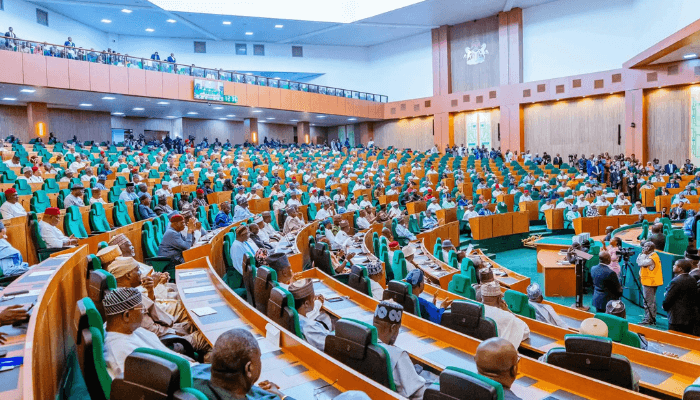
For three days, Nigeria’s House of Representatives threw its doors open, literally. From July 8 to 10 , the lower chamber of the National Assembly in a bid to win citizens’ trust hosted what it called an “Open Week,” allowing citizens, civil society organisations, students, and members of the media into its activities.
Abbas Tajudeen, Speaker of the House of Representatives, had promised a more transparent, people-centered parliament, an arm of government widely viewed by many Nigerians as distant, self-serving, and unaccountable.
The Open Week which is the brain child of the 10th Assmebly, and a novel initiative, was seen as a bold step, even though attendance did not meet expectations, as the average Nigerian was hardly seen throughout the event. But it was seen as a good opportunity for citizens to engage lawmakers that represent them.
But again, in a country like Nigeria, where trust in public institutions is all time low, symbolic gestures won’t be enough. Nigerians, while applauding the move, are however skeptical, and will remain so, until they feel the impact of this perceived openness.

Read also: House of Reps in tangle over constitutional amendments
Their skepticism is not far-fetched, it is largely due to long-standing trust deficit. And until, Nigerians can feel the impact, the House of Representatives open week will remain mere optic.
Abdullahi Abubakar, sharing his view on X platform said, “Hope it will give way to new Nigeria. We also hope you people will actualize our dream of having conducive atmosphere of without hardship and insecurity that’s making food production low due to banditry.
Bello Alkammawa wrote, “House of Representatives’ 2nd Open Week is a significant step towards transparency and accountability. By engaging citizens and showcasing legislative achievements, Speaker Abbas Tajudeen is fostering a people-centric approach.”
Hannah Patrick said, “The open week is commendable, but the Reps must work on their corrupt selves first.”
Over the years, allegations of budget padding, opaque allowances, and unresponsive representation have left many Nigerians disillusioned. In online forums, street debates, and even among civil society groups, the House of Representatives is frequently described as bloated and out of touch.

The real test for the House is whether it can translate this public-facing initiative into deeper reforms in the way it operates.
Some signs are promising. During the Open Week, the House promised to do more, and even state houses of Assembly and the Senate has promised to adopt the initiative.
This could be a good start at the state level, where oversight functions are often compromised by executive interference, and where transparency is practically non-existent. In many states, budgets are passed without scrutiny, committee reports are never published, and plenary sessions are held behind closed doors.
By modelling a transparent and open legislative process, the House of Representatives may have inadvertently set a new benchmark for what citizens should expect, not just in Abuja but across Nigeria.
Transparency is not a one-way street. If Nigerians want more open and accountable governance, they must engage.
Observers believe that if the House wants to shed its image as a rubber stamp or a chamber of self-interest, it must now commit to sustained transparency, institutional reform, and responsive lawmaking. And if the Senate and state assemblies are watching, and they should be, they would do well to follow suit.
Because accountability is not a favour to the people. It is the very job lawmakers were elected to do.