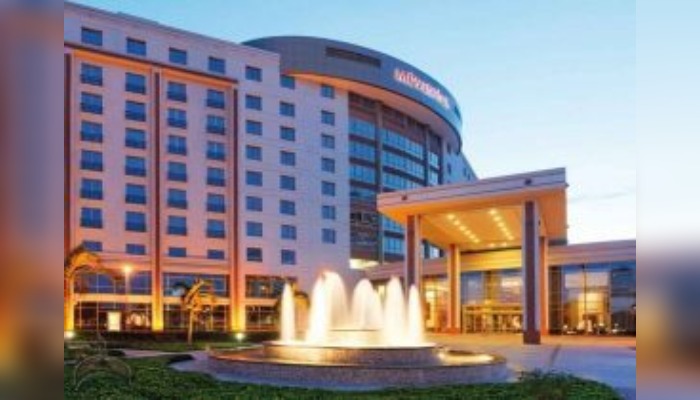
With multiple taxes paid to the three tiers of government across the country amid high cost of daily operations, some Nigerian hoteliers are on the verge of closing down their business as the present tax regime gulps about 10 per cent of their revenue, leaving them with little or nothing to run the business.
In Lagos alone, over 15 hotels have been redeveloped into real estate and private schools as the profit margins were not big enough to pay all the 24 taxes across Federal, state, local governments and agencies, and also sustain the business.
Some of the taxes include company tax, consumption tax, value-added tax, hotel license, and personal income tax, environment impact assessment, parking permits, wastewater charges, land use charge, radio and TV permitted, signage fees and security among others.
According to Business Day’s investigations, an average 50-room hotel in Lagos pays between N500, 000 to N2 million monthly for over 24 taxes, while the government is still mulling the introduction of new taxes.
Speaking to BusinessDay, Olasunkomi Badmus, a hotelier and member, Hotel and Personal Services Employers’ Association of Nigeria (HOPESEA), noted that the association had earlier asked the Lagos State government to reduce some of the taxes, exempt them from the payment of Consumption Tax on Drinks and Foods and, or reduce it from 5 per cent to 2.5 per cent, but no action has been taken in that regard.
READ ALSO: Logistics firms squeezed by multiple taxes in Lagos
“Most hotels use over 10 per cent of their revenue to settle the many taxes, failure of which you face some penalties and even sealing of your hotel. I do not like signing cheques for taxes, especially when we are providing almost all the incentives and amenities we need to operate on a daily basis. Imagine paying LAWMA for the waste you dispose of yourself or security to police that never look your way during an emergency”, Badmus lamented.

The hospitality/tourism industry contributed about 4.8 per cent to Nigeria’s Gross Domestic Product (GDP) in 2016, according to data from the National Bureau of Statistics (NBS).
Obidike Osakwe, another hotelier, decried the fact that the many taxes are pressurizing hotels to increase rates and furthering the perception that Nigerian hotels are overpriced.
“The economic downturn is really biting harder and we are left with the option of increasing our rates and passing it to the guests. But there is no money anywhere, the guests are also crying and we cannot increase prices to run ourselves out of business, so we are rather sacrificing now for not increasing rates according to the economic reality”, Osakwe said.
Explaining a typical scenario, Osakwe said, tax officials visited a hotel that just opened after a fire incident that kept them out of business for five months and still asked after taxes for the months the hotel did not open.
READ ALSO: No multiple taxations in Nigeria but multiplicity in the interface between taxable entities —LIRS
International brands across the country are even worse hit as their cost of operation is increasing amid the need to maintain the brand’s standards.
In a recent interview, Mark Loxley, general manager, Southern Sun Ikoyi Hotel, noted that besides maintenance and other operating costs, purchasing food items has increased over 13 per cent since the recession, yet the hotel managed the increase and sustained standards without necessarily passing them totally on to guests.
Adeniyi Olokun, secretary, HOPESEA, said government agencies need revenue as hotels do, but adopting a model that would offer relief to hoteliers would cater to the interest of both and enable hotels to maintain their facilities, employ more people and add value to the society.
“There are too many taxes out there to pay and they further deplete the lean profit and funds needed to upgrade hotel facilities and services. Of course, every business needs to make a profit before maintaining facilities and even paying taxes,” he said.

On what should be done to remedy the situation, the stakeholders insisted that the hotel sector is labour and capital intensive, and should be better treated by the government.
Ayo Olowoporoku, partner, Hotel Support Service Limited, noted that government should streamline and constitutionally strengthen a sole hospitality regulator across the country to ensure the standard and harmonized tax regime because multiple taxations became prominent after Nigerian Tourism Development Corporation (NTDC) lost the case in a federal court to Lagos State for the regulation of hospitality outfits in the state.
In his response to the many calls by hoteliers across the state, Akinwunmi Ambode, governor, Lagos State, assured recently that his administration would take necessary steps to eliminate any incidence of multiple taxations in the State, especially at the local government level.
OBINNA EMELIKE