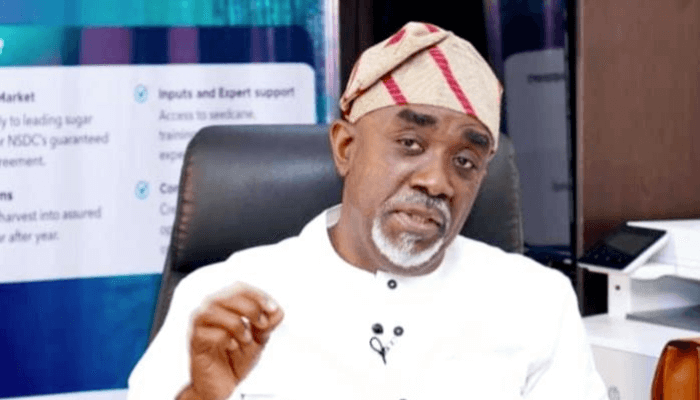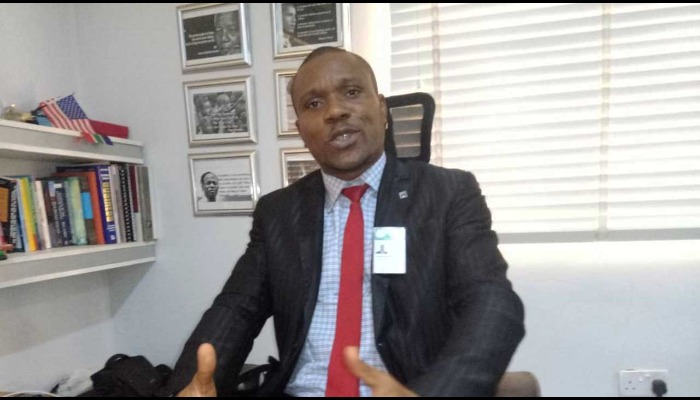
Humphrey Akanazu, is the country manager, Rome Business School (RBS) Nigeria; with its headquarters in Rome, Italy. The Nigerian extended campus which is located in Yaba, Lagos, was established on January 12, 2016. In this interview with NATHANIEL AKHIGBE, among another issue, Akanazu speaks on the school’s ideology and its ambition to impact positively on Nigerian entrepreneurs. Excerpts:
The Rome Business School is into managerial training, offering master’s degrees in different areas and also an MBA. What more can you tell us in this regards and your mission in Nigeria?
Our MBA is modular and takes one year from start to finish. Even though you can start anytime, you have to finish on time. We are here to impact on Nigerians and upskill them. Our mission is focused mainly on training entrepreneurs, raising managers. We want to make CEOs, MDs, entrepreneurs out of the youth. Our target market is made up of citizens who may be professionals or entrepreneurship aspirants. We try to mould them to be managers and better managers for a better world; MDs, CEOs and also great entrepreneurs. And on the international level, we try to network them with entrepreneurs from other countries.
READ ALSO: Fashola beating a new path in higher institutions infrastructure

So, how do you do this networking?
We have an alumni platform were we create LinkedIn accounts for all our alumni, featuring all their LinkedIn details. So, if you go to our alumni on LinkedIn, you will see the pictures and details of every student that has passed through Rome Business School both here and elsewhere. When you click on it, you can begin to network with any alumnus. In fact, one of the things we have noticed is that in the recent past some of our students by networking have actually met with one another when they travelled to other countries.
Is this networking a kind of culture in the school curriculum?
If you read our ethics, you will see that it is a multicultural institution. One thing we promote so much in Rome Business School is multiculturalism. And also we value so much our social activities where we meet and interact with each other. In Rome Business School there is no white, no black, no European, no African; everybody is one and we relate with one another. I schooled there. I did my masters in marketing and communication in Rome Business School, Rome, before I continued with my PhD in Spain. So I know what I’m talking about. The benefit is too much. For instance, I have students that I know in Cameroun. Whenever I go there, I meet them and they take care of me. Some of them who are professionals call me when they see businesses we can do together. In fact, I have gotten two investors since I came back to Nigeria through the Rome Business School who are Italians. I have used these contacts to get two companies now in Nigeria. I have also helped some of my secondary school mates here in Nigeria who didn’t have the opportunity to have the international experience that I have. I have some student alumni in the UK and Canada who I have connected with my friends here in Nigeria who are now doing their PhD or other degrees. Even if they are not directly useful to me now, I have used the contacts to help some of my friends and it will still be useful in the future.
READ ALSO: CIPM, Rome Business School partner on human capital development in Nigeria

One of the aims of the Rome Business School is to close the gap between the academic world and the job market. Now, you look at the Nigeria situation where there is this popular saying that our graduates are not employable. What role do you see your school playing in making Nigerian youths employable?
We are already doing it. In fact, the MoU that we signed last week on how to promote entrepreneurship and empowerment among the Nigerian youths is one of them. There is a programme we created called start-up entrepreneurship and corporate innovation. We know that these two aspects of employment are what the youths need. You are either self-employed or you are employed in an organisation. Self-employment that is entrepreneurship and corporate innovation is being employed in an organisation. However, being relevant in that organisation where you are employed makes you innovative. So what we try to do is to bring practicality in the programme. It is meant for freshers from higher institutions and people who want to start new professions. The programme is all about giving the freshers the skills that they will need and use to face some challenges that they would meet either in the labour market or in the business environment. One of the major modules we treat in this programme is ‘Doing Business in Nigeria’. It may look funny that ‘how can I be in Nigeria and be learning how to do business in Nigeria’? But when we did it the first time, most of the participants said, ‘wow we did not know this’. What did we do? We searched for those entrepreneurs and professionals who passed through some rigorous times that after it is now either senior managers or successful entrepreneurs. Some of them started on their own without any help or loan, spending most of their time on the streets but today, are now successful businessmen and senior professionals. So, we invited them to talk to participants on how to survive the business environment in Nigeria. The business environment in Nigeria is very different. That is what most of these students don’t know. It is a different ball game doing business as a student and as a graduate. As a student, someone can easily pity you and give you some money, but as a graduate, people expect you to perform. So, if you do not have these skills, Rome Business School has created this programme to impact these skills on them. There is something about our case studies especially in our MBA, we don’t usually use case studies of Europe, America and other countries. We try to write our own case studies based on our experiences in Nigeria. During our group discussions, participants raise issues and challenges they have met in their businesses, work areas and departments and debate on it. So the facilitator draws case studies from these experiences. From the questions, researches and investigations we do during this training we will be able to get some solutions to solving the problem. Hence, we try to implement practically the culture of bridging the gap between the classroom and the labour market. We are also doing Taxation Law, as you know, the Nigerian Government is clamping down on tax defaulters.
In the Nigerian education system we have researches done by students at various levels that are not transmitted to industries where they are needed. What would you be doing differently? For instance, in many Nigerian institutions, these researches are stockpiled. They are not distributed to industries where they are needed for decision making and implementation. How does Rome Business School intend to do something different with regards to getting researches to industries where they are needed?
You know our home economy and system here is somehow complex. One thing we believe in Rome Business School is to create platforms that will enhance the implementation of most of the ideas we create. There is a platform we created called, ‘Family Business and Sustainability Initiative Program’. We had a conference on family business last year at Four Point. What we did was bring together indigenous family business owners through the platform where we discussed the challenges of raising a family business in Nigeria and Africa, sustainability issues, and succession planning. We then created a database of people you can reach out to. So when these family business owners come for breakfast meetings, they are looking for solutions to problems. We then brought these research findings as solutions to their problems which they bought into. You need to create a platform. So if the institutions begin taking these steps, I believe researches will not be gathering dust in the libraries. When I was doing my PhD, there was something we created. I researched on the psychology of entrepreneurship where we evaluated the attitudes and values of students and luckily I was granted the permission to evaluate Nigerian university students. From that research, we created what we called ‘University Entrepreneurship’. What does it mean? Universities are built in communities; they are not built-in the air. The researches should hence reflect what the communities these universities are situated in can produce; raw materials that can come from that community and solutions to some challenges the community is having. If you research on such solutions, World Bank, DFID, international organizations, the Federal Government of Nigeria can sponsor it. These would serve as important and viable researches instead of researching on war or other things that may not benefit the immediate community. That is what we call University Entrepreneurship. I believe that researches should reflect what will benefit the community and what the community can contribute to the economy. Researches should help the community.
READ ALSO: Postgraduate advance studies: Rome Business School Nigeria offers scholarships
Nigeria is a country where you sometimes wonder if our leaders at all levels are reading ideas being propounded here and there on how to move the nation forward. What are you doing to influence policymakers and what is your relationship with for instance, the Ministry of Education and those that are concerned with what you are doing? How do you intend to make the government see the researches that would be coming out of Rome Business School?
Like I said earlier, Nigeria is a complex society. Nigerians even in the ordinary setting like to see before they believe. What we are doing is to, first of all, perform some of these things we are talking about and we can then use them as examples and success stories to government institutions, telling them that these researches can be replicated in other areas to help elevate the economic standards of the communities, and institutions. About the relationship with government institutions – we are still new here. We are doing things so that people will know us. When people see what are doing, I believe they will start asking, “Who are these”? That is when we can have the opportunity to discuss and negotiate with them. Our focus now is letting our work speak for us.
The Lagos Business School and other business schools in Nigeria have been handy in training people for entrepreneurial purposes. Do you see them as partners in progress or competitors with whom you must compete to get your own share of the market?
First of all, I don’t see them as competitors. We are all here to help and enhance capacity building, skills and build the potentials of the Nigerian people especially the youths. And the population is much, so no one institution can handle it. Even the state and federal can’t handle everything. We need more business schools even so that everybody can be reached. If everybody gets the necessary information they should get about what we are doing in these business schools, convincing someone to register for his master’s degree and even an MBA won’t be difficult because they will know the value these things will bring to them. So I don’t see them as competitors. In any way, they all have their own niche market.
Lastly, why must Nigerians choose Rome Business School and what are the entry requirements?
Our selling point is mixing affordability with quality. You can afford our programme and you still get certification quality. We are ISO certified. It is not just on paper, our facilitators are high-level industry men. With ISO certification, you use our certificate anywhere in the world; but then, it is affordable, compared to what is obtainable elsewhere in Nigeria. But you go to some business schools and at the end of the day you don’t even get quality training after the rigour you went through. But we make our programmes simple and flexible for Nigerians to participate. Entry level depends on the programme. Usually, it should be your HND or normal university degrees (BSc and MSc), for our masters’ programme; either an MBA or Master’s Degree in some of the courses we run. But you don’t need a university degree to do a skill acquisition programme with us. What you need is some level of understanding, in knowledge, at least, your articulation in understanding some concepts for you to run the programme; and we bring it down to the understanding of the participants.