|
Getting your Trinity Audio player ready...
|
Social listening for Wednesday 28 May 2025
A. “Cannot visit Nigeria in December with London-Lagos @£10-000-£15000 for two weeks”
I’m a Nigerian, yet even I can no longer afford to visit Nigeria in December (2025).
I have just checked flights for December. From 19th December to 3rd January, British Airways is charging £10,200 for economy and £15,400 for premium economy for a family of four.

That’s the cost of taking my wife and two young boys to my home country. Not a private island. Not a five-star luxury cruise. Just Nigeria.
This isn’t just about the money. It’s about what we’re losing.
My wife is English. My boys are mixed-race. And I want them to know where their father comes from. I want them to taste suya from the roadside, hear the music in Lagos traffic, sit on grandma’s lap and listen to stories that aren’t on Netflix. However, I can’t justify spending £10,000–£15,000 on a two-week trip. Can you?
Meanwhile, Ghana, Kenya, Rwanda, and even smaller African countries have made tourism a serious business. They have national carriers, subsidised flights, hotel packages, and clear diaspora strategies.
Nigeria? No national airline; no tourism board strategy; no incentives; no price control. Just high fares and silence.

During Detty December—the one chance we have to flood the country with diaspora love and spending—we watch tickets triple in price. Instead of encouraging us to return, we’re being priced out. Again.
So, I’m asking openly:
• Where is Nigeria’s national airline?
• Where is the tourism plan?
• Why are we making it so hard for diaspora families to reconnect?
• How can our children be proud of a country they can’t afford to visit?
This isn’t just about flights. It’s about identity, culture, and future generations.
We can do better. We must do better because I want to come home. I want my children to know their roots. But Nigeria is making that dream feel impossible.
Please fix it. Start the airline. Build the tourism industry. Welcome us home. Because no Nigerian family should need a second mortgage to see their motherland.
If you are a lover of Nigeria, please share this until it gets the attention of the Government. They should do something about this.
#FixTourismNow #NigeriaDiaspora #DettyDecember #BringUsHome #StartTheAirline #NigeriaMustRise.]
No name supplied.
Responses:
1. What has happened to Air Peace? And in this era, is someone advocating for price control? -Chukwuma Nwokoh.
2. The lamentation over airfare to Lagos for Christmas is loud. However, he is invited to observe the massive homecoming traffic to the Southeast, which tells a different story. This is the Igbo bragging right; despite steep transportation costs—by air or road—thousands of South Easterners will make the journey home for the December holidays.
This seeming contradiction highlights a deeper cultural and emotional reality: for many Igbo people, December is not just a festive season. It is a sacred tradition of reunion, identity, and belonging. It is only those who want to waste money in Lagos that will not save to make it home.
It could also mean that the Detty December will become a fad that soon fizzles out. The difference is clear. While Lagos offers glitz, concerts, and nightlife, the Southeast offers roots, family, village meetings, and ancestral reconnection. The heavy traffic on the Onitsha-Owerri road or the Enugu-Abakaliki corridor tells a story of priority and sacrifice. People will complain about the cost, yes—but they’ll still pay. They will endure delays, bad roads, and long queues at motor parks because being home for Christmas is non-negotiable.
Ultimately, the tears over Lagos-bound airfare are more about the pinch of inflation and less about actual deterrence. When it matters most—like December in the East—people show up, cost notwithstanding. The packed buses and booked-out flights to Enugu, Owerri, and Umuahia prove it: homecoming will beat Detty December every time.
-Ogbuagu Anikwe, publisher of Enugu Metro.com
B. Meta Takes Down Sowore’s Facebook Page Following Alleged Mass Reporting By ‘Obidients’.
Meta, the parent company of Facebook, has reportedly taken down the official Facebook page of Nigerian human rights activist and former presidential candidate, Omoyele Sowore. This removal occurs amid a rising wave of political tension between Sowore and fellow former presidential aspirant Peter Obi.
Although neither Sowore nor Obi directly mentioned one another in a series of posts on X (formerly Twitter), the content and context of their messages made the targets of their criticisms unmistakably clear.
The dispute reignited after Sahara Reporters, a media platform founded by Sowore, published a report alleging that Peter Obi had sought a private meeting with President Bola Tinubu in Rome. The report claimed that the meeting was intended to discuss a ₦225 billion debt linked to Fidelity Bank, which Obi once led. Obi swiftly denied the allegations, describing the report as “baseless, malicious, and entirely false.” He clarified that his only encounter with President Tinubu in Rome occurred briefly during the Vatican event, specifically at the inauguration mass of Pope Leo XIV.
The fallout intensified when Obi, without naming Sowore, labelled him a “blackmailer” and “self-proclaimed blackmailer-in-chief” in a follow-up post, indicating a deepening rift between the two political figures.
Shortly after the exchange, Sowore’s Facebook page was reportedly taken offline following a coordinated mass reporting campaign that is believed to have been led by supporters of Obi, commonly referred to as the ‘Obidients’.
Neither Meta nor any representatives of the Obidient movement have issued official statements concerning the takedown. This situation underscores the increasingly tense atmosphere within Nigeria’s online political sphere, where social media platforms have become vital battlegrounds for public opinion and political rivalry.
The incident also raises serious concerns regarding freedom of expression, digital censorship, and the increasing tendency to weaponise online reporting mechanisms for political gain.
c. FG is suing Natasha Akpoti-Uduaghan on behalf of Godswill Akpabio and Yahaya Bello
The Attorney-General of the Federation filed a criminal defamation suit on Thursday, 22 May 2025, against Senator Nataha Akpoti-Uduaghan and in defence of Senate President Godswill Akpabio and former Kogi State Governor Yahaya Bello.
The Department of Public Prosecution filed the three-count charge before Justice C.N. Oji of the High Court of the Federal Capital Territory (FCT).
The Federal Government accused Senator Akpoti-Uduaghan of making assertions intended to damage reputations, in violation of Section 391 of the Penal Code Law and punishable under Section 392 of the same law.
Section 391 (1) of the Penal Code provides: “Whoever by words either spoken or reproduced by mechanical means or intended to be read or by signs or by visible representations makes or publishes any imputations concerning a person, intending to harm or knowing or having reason to believe that such imputation will harm the reputation of such person, is said to defame that person.”
Under Section 392, any person who defames another shall be punished with imprisonment for a term that may extend to two years, or with a fine, or with both.
The first count centres on a televised interview Senator Akpoti-Uduaghan granted Channels Television’s political programme, “Politics Today”, aired on April 3, 2025.
In the interview, the senator had accused Akpabio of plotting to assassinate her, allegedly in collaboration with former Governor Bello.
Responding to a question during the live interview, Akpoti-Uduaghan had said: “It was part of the meeting, the discussions that Akpabio had with Yahaya Bello that night, ehm… to eliminate me.”
She claimed that the withdrawal of her official security detail by the Senate upon her suspension was a deliberate plot to make her “vulnerable to attacks,” suggesting an orchestrated attempt on her life.
The Federal Government argued that such public statements were made with knowledge or reason to believe they would damage Akpabio’s reputation.
In the second count, Akpoti-Uduaghan told the same television audience that a plan to assassinate her was not to be carried out in Abuja but in Kogi State, under Bello’s watch.
She claimed to have reported the threats to the Inspector General of Police.
Senator Akpoti-Uduaghan responded to the suit. First, she said she only learnt of it via the media. In a subsequent interview, she pledged to meet the government team in court.
D. The “excitement” over Burkina Faso’s Ibrahim Traore
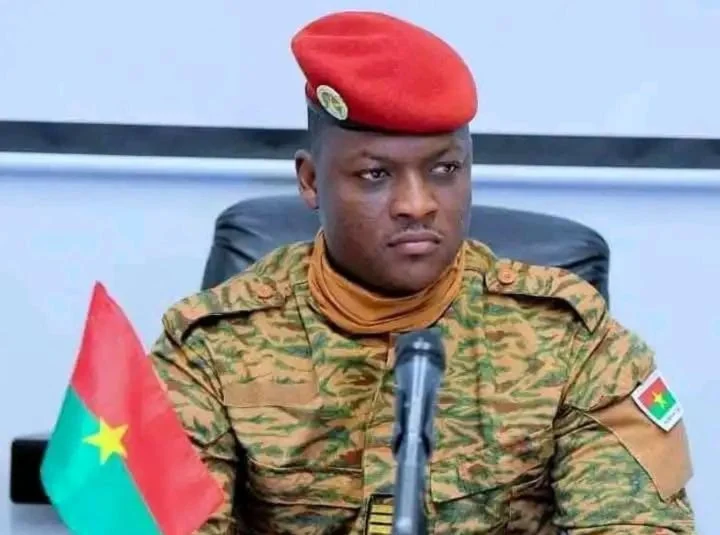
Burkina Faso leader Ibrahim Traore is generating buzz on social media, showcasing two contrasting sides. Many memes, videos, and articles celebrate him as an authentic African redeemer from the clutches of imperialism. Critics perceive a knave wielding clever propaganda over the suffering in Africa and its historical grievances.
A prominent Western media outlet, the Financial Times of London, offered its perspective on May 22, 2025. The Financial Times article titled “The cult of Saint Traoré: how a Russia-backed junta leader became…” (published May 22, 2025) explored how Burkina Faso’s military leader, Captain Ibrahim Traoré, has garnered significant global support, fuelled by widespread anger over democratic dysfunction and Western interference in African affairs
Key points from the article include:
• Global Support Rooted in Anti-Western Sentiment: Traoré’s rise is partly driven by frustration with what many perceive as Western meddling and failures of democratic governance in Africa. His stance against former colonial powers, especially France, resonates with a broad audience disillusioned by neo-colonial influence.
• Russia-backed Regime: The article highlights Traoré’s junta’s alignment with Russia, including the introduction of Russian paramilitary forces and economic policies that emphasise state control over natural resources, such as gold mining. This pivot away from Western alliances is a defining feature of his leadership.
• Cult of Personality and Media Strategy: Traoré has cultivated a strong personal brand, amplified by social media and Russian media outlets, portraying himself as a revolutionary and pan-Africanist leader. This image has attracted admiration not only within Burkina Faso but across Africa and among diaspora communities globally.
• Challenges and Controversies: Despite his popularity, Traoré’s regime faces significant challenges, including ongoing jihadist violence and criticism for authoritarian measures such as restricting dissent and nationalising foreign-owned assets. The article notes the tension between his revolutionary rhetoric and the realities of governance under military rule.
Nigerian columnists and commentators offer a nuanced and often divided perspective on Burkina Faso’s military leader, Captain Ibrahim Traoré, reflecting a blend of admiration, caution, and concern regarding his leadership and its implications.
Positive Perspectives and Admiration
• Some Nigerian voices widely see Traoré as a symbol of youthful, bold leadership breaking away from the old African political elite. His rise at age 37 and his pan-Africanist rhetoric resonate strongly with many young Africans, including Nigerians, who are frustrated with traditional governance failures and neo-colonial influences.
• Some Nigerians, including public figures such as actress and politician Hilda Dokubo, consider Traoré to be evidence that a country’s fate is dictated by its leadership. Social media portrayals of Traoré fuel this admiration as a fearless reformer who challenges Western powers and seeks to restore national dignity.
• Nigerian commentators like Colins Nweke highlight Traoré’s potential to offer lasting renewal for Burkina Faso, noting his nationalist stance and efforts against terrorism and neo-colonialism as appealing to Africa’s youth.
Critical Views and Concerns
• Despite the admiration, Nigerian analysts also caution against the risks of Traoré’s military rule. Malik Samuel, a senior researcher at Good Governance Africa, warns that the increasing support for Traoré in Nigeria risks normalising military coups as political solutions and threatens democratic stability.
• There is concern about the disinformation and propaganda campaigns that have elevated Traoré’s image in Nigeria and beyond. Some Nigerian commentators warn that much of the positive portrayal is shaped by misleading or false social media content, which could undermine objective understanding and lead to unrealistic expectations.
https://www.vanguardngr.com/2025/05/disinformation-fuels-support-for-burkina-junta-leader-in-nigeria/.
https://businessday.ng/columnist/article/captain-ibrahim-traore-the-myth-and-the-man/
• The extension of military rule in Burkina Faso, suspension of the constitution, and severing ties with regional bodies like ECOWAS raise alarms about authoritarianism and long-term instability, issues Nigerian columnists emphasise as cautionary lessons for the continent.
Where do you stand, dear reader? Is Ibrahim Traore an African hero or villain, real or a fluke?