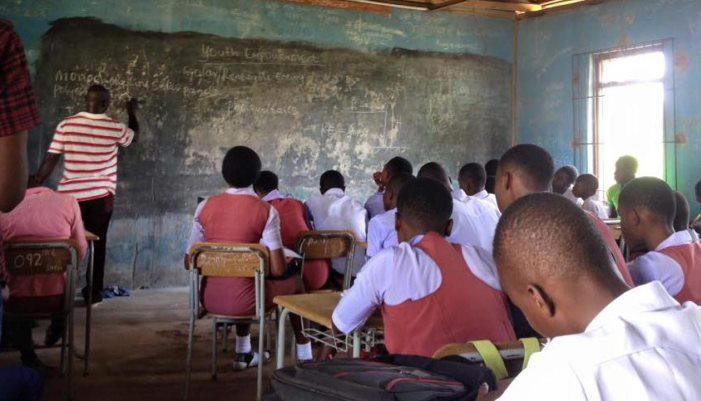
Awapikin, a Nigeria-based initiative has called for holistic and inclusive education reform to accommodate children from low-income families across Africa.
“Awapikin’s vision is much larger; it is about ensuring that every African child has the environment, the tools, and the belief in themselves to thrive,” Toheeb Dele-Balogun,
founder, Awapikin said during a recent media parley in Lagos.
According to him, the initiative is dedicated to championing holistic development of Africa’s youngest generation through education reform.

He added that Awapikin is built on a conviction that Africa’s most complex challenges such as poverty, inequality, insecurity, and underdevelopment are rooted in a failure of quality education, and that the most powerful point of intervention is childhood.
“If we are serious about solving Africa’s problems, we must be serious about what happens to our children in their earliest years. Everything else flows from that,” Dele-Balogun stated.
According to him, Awapikin has distributed school essentials in Lagos and states since its establishment in 2019. “We are not waiting for perfect conditions. We started with uniforms because that is what we can do today.” Dele-Balogun stated.
He disclosed that benefiting schools include Ajibola Ayedere Primary School, Ikosi; Oluwalogbon Nursery and Primary School and Ikosi Senior High School; Tanke LGEA School ‘A’ and Government High School, Adeta, are benefiting schools in Kwara.
According to him, Awapikin’s model is designed to intervene at multiple pressure points in the education sector.

He added that such intervention addresses both the visible and invisible barriers that keep children, especially those from low-income homes, from reaching their potential.
“That is why Awapikin works across a range of educational needs including quality learning experiences, reimagining play; school uniform provision; teacher support; and community economic integration.
“Research and field observation consistently show that improved school morale correlates with better attendance, reduced dropout rates, and a measurable decrease in early pregnancy among adolescent girls,” he stated.
According to Dele-Balogun, the name ‘Awapikin’ is drawn from the Pidgin expression for ‘Our Children’. He described the initiative as a deliberate choice that signals collective ownership and responsibility.
He disclosed that the initiative is also inviting the support of Nigerians, Africans, and global partners in its growing work across the continent.
Dele-Balogun stated that the initiative welcomes individuals, corporations, diaspora communities, and organisations who share the belief that investing in a child’s education today is the most powerful investment Africa can make in its future.