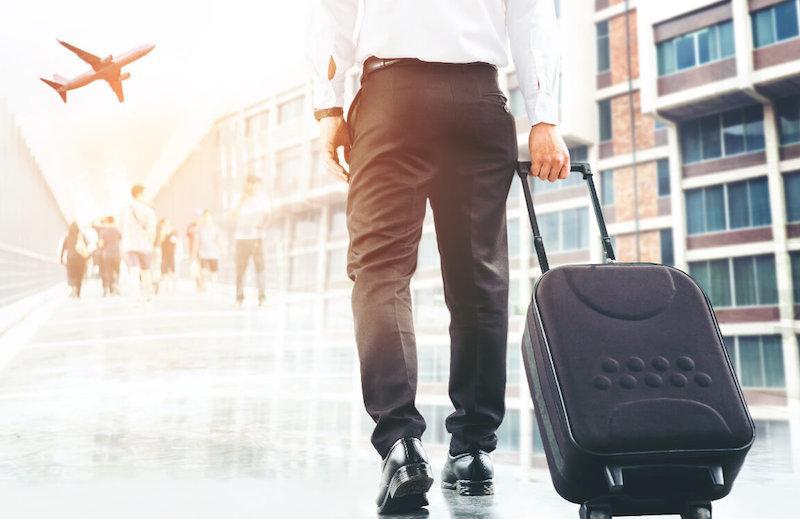
Business travel usually refers to those going on short trips and usually (but not always so) involves staying in good standard accommodation. Good preparation for a business trip leads to less stress, is better for your health, and it is also a sign of an organised and alert mind.
The businessperson who is able to think ahead and prepare well for a trip benefits both themselves and the company they represent positively. Allow yourself time to adjust on reaching your destination, especially if you are flying across time zones.
If you travel frequently, it is advisable to have a regular checkup. Checking your weight, blood pressure and cholesterol levels is always good practice.
Allow plenty of time to prepare

Make a schedule of the intended trip. It helps to have a checklist in your scheduler of items needed for the trip. Start as early as possible.(Dont forget your toothbrush). With proper pre-travel planning, you will be mentally and pyschologically prepared to deal with stresses of frequent travel.
Have your Flight plans and all necessary details in writing (seperate from your phone organizer) eg hotel address and booking code, important phone numbers etc. Get information on the area you are visiting, for example Brazil were there are recurring outbreaks of Dengue fever which you can protect yourself from with the proper advice.
Getting your visa early and awareness of local laws and culture is usually helpful. Plan to visit your family Doctor or Travel Clinic nearby to discuss your travel health needs. If vaccinations arecompulsory for your destination, your vaccine card should be attached to your passport if possible so as not to loose it. (Rubber band or staple)
Dealing with Fears
Any fears you might have in regard to travel, at your destination, on route or with regards to loved ones being left behind ideally should be sorted out at home in a relaxed and calm environment.

Stomach Upsets and Diarrhea
These are very common. Contaminated food and water is a major cause of illness and care is especially important when eating out and in countries where local hygiene is poor but also be carefull in developed countries were you can also get diorrehea eg the Noroviruse (Winter Viruse). Certain spices or oils in food as well as alcohol can also lead to stomach upsets. You should consider taking an anti-diarrhoeal preparation with you.
Sunburn
This is possible for fair skinned Nigerians and is preventable. Limit your exposure and cover up especially aroud noon when the sun is at its greatest intensity. Suncream may be neccesary in some cases depending on activity.
Accidents
Unfamiliar surroundings and alcohol consumption often result in accidents. Sharp objects and discarded glass on beaches can injure your feet. Take special care crossing roads and beware of sea currents when at the beach.
Jet Lag and Tiredness
A recent study in the USA indicated that performance can be lowered by as much as 20 percent when travelling across time zones. Rest before travel is necessary for optimum performance and limiting activities on arrival will help. These problems may be underestimated and affect business efficacy. Some medications exist that can aid you if necessary. Consult your Doctor. If on regular medication, such as diabetic drugs, watches should remain on home time until you are able to adjust your medication to local time. Exercise has been proven to improve productivity, so get active on arrival as soon as possible. If your need also take short naps. It will help refresh you.
Loneliness
Cultural differences, family problems at home or losing touch with head office can cause anxiety. Many of these difficulties can be overcome with experience and sympathetic support from family and friends. Personnel and occupational health departments should take this into account.
Unsafe sex
Casual sex and failure to use a condom with new partners, particularly with professional sex workers, puts you at risk of serious infections including HIV/AIDS.
Culture Shock
This is a very real problem even for short-term travellers. Family or social problems at home and psychological problems, including alcoholism make adapting to a new and different culture difficult. Maintaining contact with family and friends may also be complicated because time differences between continents may cause communication difficulties. A situation that is exciting and welcome to one person may be daunting to another. Problems encountered may include adjusting to a different climate, religious and cultural differences, changes in living standards and different social amenities. Other problems such as language differences, coming to terms with poverty and begging, and compulsory movement restrictions for safety or political reasons. Being patient rather than critical is helpfull.
Vaccinations
For most Nigerian business travellers you will need some off the regular travel vaccines, but first of all make sure your National Child hood vaccines are up to date.
Some vaccines you may need depending on your Destination include
Yellow Fever: This is mandatory for some countries so check before you travel. It may be advisable to take it especially if you are visiting certain rural areas in some countries.
Meningococcal Type A, C, W135 & Y vaccine (Quadrivalent Vaccine).
Hepatitis B Vaccine: Especially if sexual risk taking is anticipated or if possible contact with blood due to risky behaviour resulting in injury.
Japanese B encephalitis: sometimes advised for those travelling in Asia (India and beyond) especially in rural areas.
Rabies vaccine: Especially in countries were Rabies is present and if you will be a day or two from medical facilities if a bite occurs. (Rabies immunoglobulin is scarce and thus the vaccine may be a wise decision).
Influenza vaccine: especially in certain age groups and certain chest conditions is recommended. The winter season for the Northern hemisphere is Flu season and April to November is Flu season for the Southern hemisphere.
Other vaccines may be necessary depending on your destination, lifestyle, accommodation and transportation etc.
Insurance needs
Hospitalisation can be costly so keep your health travel insurance up to date. If possible it should cover repatriation home (Though you may have a return ticket.) especially when visiting areas with inadequate medical facilities. You may need special cover for certain high risk activities.
Insect bite prevention These days it would seem, as the planet gets warmer insect born disease are on the increase and because insects cause all the types of diseases like, Malaria, Dengue, various forms of encephalitis e.g. Japanese B encephalitis, Yellow Fever, Filariasis , plague insect bite avoidance should be practiced both day and night in certain destinations. Please consult your travelconsultant.
You can use Insect repellents, Mosquito nets (Impregnated with insecticides), and air-conditioned rooms, knock down sprays, Long sleeved light coloured shirts/blouses and long dresses/trousers protecting your body from bites especially at night.
Besides, insect bites can result in unpleasant and occasionally serious local reactions. The bite can be sore, itchy or give nasty swellings, cellulites and abscesses.
Malaria Prevention: Nigerians and long term expatriate residents may have variable levels of immunity to malaria, but it may still be advisable depending on your destination and type of activity you are going to do to take effective anti-malarial therapy. A day or more lost due to illness may ruin your trip. Also practice mosquito bite prevention methods. Repellents, clothing etc, this also help prevent other insect borne diseases.
First Aid Kits: It is wise to carry along a properly stocked first aid kit for small emergencies.
On Board: When on board the plane, try to avoid alcohol. This can worsen dehydration in the already dry cabin air and increase your risk of DVT (deep vein thrombosis). Drink plenty of water and fruit juices. Still water is preferable to sparkling water (Carbonated water).
Avoid stimulants like caffeine until you have had a full night’s sleep at your destination. Exercise regularly on long flights to help your blood circulation. (Airlines have useful information in their on board magazines) If you are on medication for example diabetic medication, maintain your departure time till you arrive your destination. Sleep and miss movies if you must. DVT is a popular topic and if you are at risk for it (Your doctor should let you know if you are at risk) take the necessary precautions.
The risk applies to any form of travel where you are routed to one place for hours. Exercise at least every hour on long journeys, good measured fitting hosiery (in flight stockings and socks) willencourage circulation. Wear loose clothing. Consult your family doctor or travel consultant.
On Arrival: If possible schedule meetings so you can rest before the meeting so you can be at your best. Warm showers are helpful but avoid hot baths. Hot baths may relax the body making it hard to get going again. Expose yourself to bright light, adjust your watch to the local time, and try to adjust as soon as possible to local food and sleep patterns.
Returning Home: this also has its challenges but basically gives yourself time to rest and have quality time with the family.
Current outbreaks
It is always good to be aware of the current outbreaks of disease (e.g. Ebola in the Congo), violence, natural disasters or civil unrest at your destination. Also, like in the UAE (Dubai & Co) certain prescription drugs & over the counter drugs are not allowed into the country.
Make sure your Mobile phone is fully topped up and can roam at the destination country.
Future articles will be advisories on specific topics. The next being the – travelling with a Heart Condition.
The Travel Clinic
Dr. Ade Alakija
Medical director- Q-Life Family Clinic