A growing economic shift across major African commercial hubs is forcing traders, workers and households to rethink how they manage money as foreign exchange volatility reshapes daily life.
From Lagos’ Alaba International Market to Balogun Market and Computer Village, many traders now price goods in naira but calculate their margins in dollars, closely tracking exchange rate movements before restocking.
Financial experts are of the opinion that this signals a reality that foreign exchange literacy is no longer a specialist skill but an essential tool for economic survival.
Read also: Naira stability drives fivefold jump in Julius Berger’s FX gains

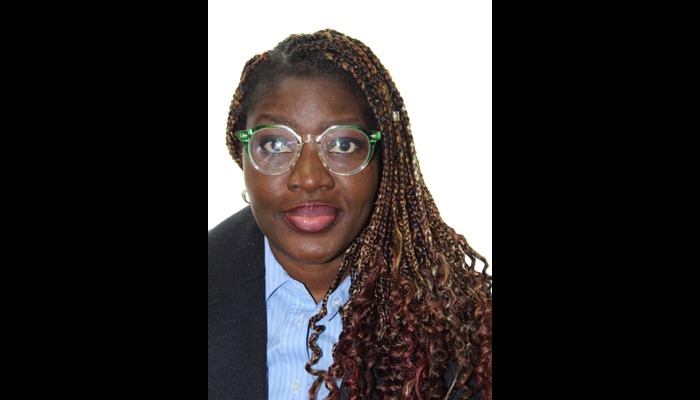
Olaide Adepoju, a Cross-border payments expert with over a decade experience managing multimillion-dollar FX and treasury portfolios across Europe, Asia and Africa has warned that Africans are already participants in the global money economy even if it is unknowingly.
“If you earn, spend, save or run a business in Africa, you’re already part of the global money market. The question is: do you understand it enough to protect yourself?” she said.
As currency volatility hits households and businesses, the daily financial activities reveal the extent of exposure.
Examples are families who pay school fees abroad, subscribers of international digital platforms, freelancers receiving foreign income and import-dependent businesses all face direct impact from currency swings.
In Nigeria, rapid naira depreciation has wiped out savings, disrupted family budgets and forced businesses to revise prices frequently.

Amid rising uncertainty, many Africans are turning to stablecoins especially USDT and USDC as a protective measure.
Analysts say stablecoins have become emergency reserve assets, helping users preserve value, receive international payments with minimal losses and pay suppliers abroad without unpredictable conversion risks.
Adepoju describes stablecoins as a ‘breathing space’ for individuals and small businesses navigating currency pressure.
Tailors sourcing fabrics in Turkey, software developers working with overseas clients and small retailers buying goods from Asia increasingly rely on stablecoins to cushion FX shocks.
She also noted that ventures with strong currency strategies are scaling more effectively. Decisions around pricing, revenue storage, cross-border settlement and even salary payments now hinge on smart FX management.
“Many African businesses are profitable on paper but lose value simply because conversions are done at the wrong time,” she said.
Experts also caution that the most significant challenge is not volatility itself, but poor understanding of how FX systems work.
Many still confuse bank rates with market rates, ignore liquidity factors or fail to leverage multi-currency accounts.
Adepoju stated that businesses frequently lose money because they operate solely in local currency or convert impulsively without awareness of global payment infrastructure.
“The world will not slow down for Africa to learn. We either understand how money works now, or we get left behind,” she warned.
Read also: Naira remains stable despite 25.2% decline in weekly FX inflow
Adepoju encourages Africans to start with the basics such as study exchange rate patterns, use transparent payment platforms, diversify savings across currencies where necessary and adopt stablecoins responsibly for cross-border transactions.
Africa has entered a new economic era driven by digital commerce, remote work and globalised financial flows.
In this environment, FX literacy has shifted from optional knowledge to a daily survival tool.
“Africa’s future depends on FX literacy. The future belongs to the Africans who understand their money both locally and globally,” Adepoju noted.