|
Getting your Trinity Audio player ready...
|
The Nigerian economy recorded its fastest growth in about a decade in the fourth quarter of 2024 on the back of key reforms, especially the exchange rate reforms instituted by the Central Bank of Nigeria (CBN).
The World Bank says Nigeria is also making strides in restoring macroeconomic stability and helping channel more resources towards human capital, social protection, and infrastructure development. Analysts said CBN’s inflation fighting measures, and transparency instituted in the FX markets are key in achieving lasting macroeconomic stability.
The Washington-based lender tipped exchange rate reforms as one of the key elements that drove Nigeria’s fastest economic growth in 2024 in its latest biannual Nigeria Development Update launched on Monday.
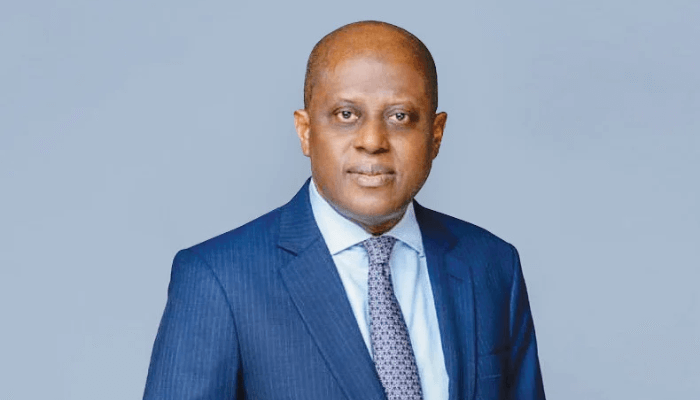
The reforms, driven by the Olayemi Cardoso-led CBN unified all exchange rates into the Investors and Exporters (I&E) forex window. One of the gains of the move was a strong 4.6 percent year-on-year growth in the fourth quarter of last year.

Based on the exchange rate reforms, all applications for medicals, school fees, Business Travel Allowance/Personal Travel Allowance, and SMEs are not processed through the I&E window. The operational changes to the foreign exchange market also include the re-introduction of the “Willing Buyer, Willing Seller” model at the I&E Window.
While these reforms have delivered progress, the apex bank has continued to assure domestic and global investors that it will continue to rebuild Nigeria’s economic buffers and strengthen resilience.
For instance, to tackle the pressing challenge of inflation, the CBN acted decisively by raising the Monetary Policy Rate by 875 basis points to 27.5 percent in 2024—an essential move to contain inflation and restore stability.
In the foreign exchange market, over $7 billion in unfulfilled commitments and a fragmented FX regime characterized by multiple forex rates, had encouraged arbitrage opportunities. The apex bank not only cleared the backlogs, but instituted transparent measures that made it difficult for such to build up again.
Read also: FX reserves rise as CBN activates multiple channels to bolster inflows

World Bank lauds reforms, expects economy to grow 3.6%
The World Bank’s lead economist for Nigeria, Alex Sienaert, disclosed that there was a 4.6 per cent year-on-year growth in the fourth quarter, including continued expansion in early 2025 based on high-frequency business indicators with the lender expecting Nigeria’s economy to grow 3.6 percent this year.
Sienaert commended the Nigerian government for implementing macroeconomic reforms that have stabilised the economy. However, he pointed out that more efforts are needed to ensure that this growth is inclusive, particularly through expanding cash transfer programmes for the vulnerable populations in the country.
He added that international experience shows that the public sector alone cannot generate sustainable economic growth and jobs. He stressed that public resources remain limited and that a successful strategy for Nigeria would involve positioning the public sector to both provide essential services—such as human capital development and infrastructure—and create an enabling environment for the private sector to thrive.
“Nigeria is no exception, particularly since public resources remain constrained. A useful strategy is to position the public sector to play a dual role as a provider of essential public services, especially to build human capital and infrastructure, and as an enabler for the private sector to invest, innovate, and grow the economy,” Sienaert said.
Nigeria’s foreign exchange reforms have created a market-reflective, unified and stable exchange rate, allowing the central bank to rebuild official reserves, now exceeding $37 billion, Sienaert added.
“That’s significant because this is the cushion the economy has against external volatility,” he said.
The World Bank also said Nigeria’s economy needs to grow at a rate five times faster than its current pace to achieve the $1 trillion target by 2030 as well as address the country’s rising poverty levels.
On his part, Cardoso addressed the role of the Central Bank in safeguarding economic stability, particularly in the foreign exchange market. “We will continue to protect the economy. With that comes a need to be proactive,” he remarked.
He expressed confidence that the ongoing policies will lead to a moderation of inflation and interest rates over time, stressing the importance of financial inclusion, and noting that the CBN is committed to supporting the fintech sector and improving access to finance for all Nigerians.
Cardoso’s CBN journey to stability
Upon assuming office in October 2023, the apex bank under Cardoso leadership prioritised reforms to rebuild Nigeria’s economic buffers and strengthen resilience.
Inflation, which had surged to 27 percent, was one of the most pressing challenges, partly driven by excessive money supply growth. While the GDP growth had stagnated at a meagre 1.8 per cent over the previous eight years, money supply expanded rapidly, averaging about 13 per cent growth annually.
This imbalance not only fueled inflation but also contributed to a significant depreciation of the naira. Besides, inflation creates uncertainty for households and businesses, acting as a silent tax by eroding purchasing power and driving up living costs.
To tackle the pressing challenge of inflation, the CBN acted decisively by raising the Monetary Policy Rate by 875 basis points to 27.5 per cent in 2024—an essential move to contain inflation and restore stability.
Read also: CBN, portfolio investors still dominate Nigeria’s FX turnover – World Bank
$7 billion FX backlogs cleared
In the foreign exchange market, the country faced a backlog of over $7 billion in unfulfilled commitments and a fragmented FX regime characterized by multiple forex rates, which had encouraged arbitrage opportunities.
This regime stifled much needed foreign investment, and led to the depletion of our external reserves which fell to $33.22 billion in December 2023. It must also be understood that the cost of the FX subsidy regime is estimated to far exceed that of fuel subsidies.
The apex bank has also undertaken critical reforms to unify Nigeria’s exchange rate, eliminating distortions and restoring transparency. This unification has enabled it to clear the outstanding foreign exchange obligations, giving businesses—ranging from manufacturers to airlines—the confidence to plan and invest in the future.
To further enhance the functionality of the foreign exchange market, the CBN introduced an electronic FX matching system, which has proven effective in other markets.
With these developments came positive Fitch Ratings on Nigeria’s economy, signaling positive fallout from the reforms.
The global rating agency said that from exchange rate unification to reduce arbitrage in the markets, introduction of electronic FX matching platform and a new FX code to enhance transparency and efficiency in the market as well as deployment of monetary policy tightening to keep inflation on check, the Central Bank of Nigeria (CBN) has demonstrated commitment to achieving sustainable economy growth and exchange rate stability.
Already, the latest Fitch rating moved Nigeria’s long-term foreign-currency issuer default rating (IDR) from negative to stable, meaning that the country stands a better chance of attracting foreign investment, borrowing money on international markets at better interest rates, and boosting investor confidence.
Fitch also applauded the government’s commitment to policy reforms implemented since its move to orthodox economic policies in June 2023, including exchange rate liberalisation, monetary policy tightening, and steps to end deficit monetisation as well as fuel subsidies removal.
“These have improved policy coherence and credibility and reduced economic distortions and near-term risks to macroeconomic stability, enhancing resilience in the context of persistent domestic challenges and heightened external risks,” the agency stated.
Transparency, stability boosting inflows
The apex bank recently took strategic steps to enhance transparency and boost market confidence with the inauguration of the Nigeria Foreign Exchange Code (FX Code) in Abuja. The FX Code has so far ignited naira stability at both official and parallel markets.
Cardoso, recently launched the FX Code, emphasising integrity, fairness, transparency, and efficiency as critical pillars for driving Nigeria’s economic growth and stability.
He emphasised that the FX Code was built on six core principles: ethics, governance, execution, information sharing, risk management and compliance, as well as confirmation and settlement processes.
These principles, he explained, aligned with international standards while addressing the unique challenges within Nigeria’s foreign exchange market.
The CBN has stated that while every effort has been made to ensure that the FX Code comprehensively addresses various aspects of market conduct and practice, it is not intended to be exhaustive.
Beyond the foreign exchange market, the FX Code forms part of the CBN’s renewed focus on compliance across the financial sector. Its six guiding principles, alongside 52 sub-principles, were designed to become the benchmark for conduct across all participating institutions.
Besides the FX Code, the apex bank also introduced the Electronic Foreign Exchange Matching System (EFEMS), which has proven effective in other economies in enhancing the functionality of the foreign exchange market.
The EFEMS was meant to check forex market distortions, eliminate speculative activities and instill transparency. The EFEMS, which is commonplace in developed and developing markets offers real-time information on currency rates, trading volumes, and market activity.
More dollar inflows coming
As part of its efforts to boost diaspora remittances and support naira stability, the CBN recently announced the introduction of two new financial products designed to serve Nigerians living abroad.
The Non-Resident Nigerian Ordinary Account and the Non-Resident Nigerian Investment Account was created to streamline remittances, encourage investments, and foster financial inclusion among Nigerians in the diaspora.
It said, “The Central Bank of Nigeria is pleased to inform the general public of the introduction of the Non-Resident Nigerian Ordinary Account and Non-Resident Nigerian Investment Account targeted at Nigerians in diaspora.” The initiative is also expected to provide a secure and efficient platform for managing funds and investing in Nigeria’s financial markets.
Since the beginning of this year, eligible NRNs have continued to get the opportunity to own any of the Non-resident Nigerian accounts. The Non-Resident Nigerian Ordinary Account was designed to facilitate remittances by allowing non-resident Nigerians to remit foreign earnings into Nigeria and manage funds in foreign currency or naira.