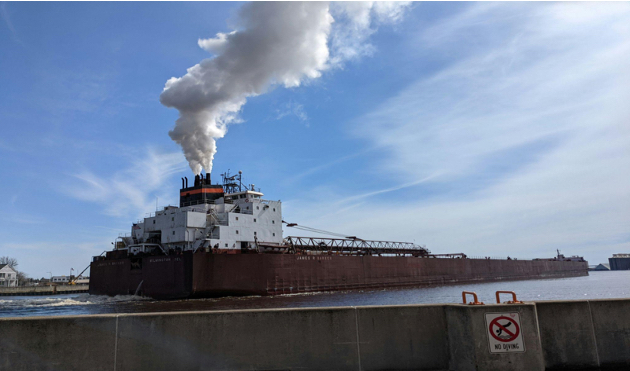
The global shipping industry faces relentless pressure to maximise fuel efficiency while reducing emissions. As companies invest heavily in advanced hull designs and sophisticated propulsion systems, one crucial component often gets overlooked in favour of these more visible innovations: marine lubricants.
Many operators still view lubricants as just another maintenance line item; something essential for keeping engines running, but hardly worth strategic consideration. This perspective, however, misses a significant opportunity. The composition, quality, and behaviour of marine lubricants can dramatically influence fuel consumption, engine longevity, and environmental performance in ways that directly impact the bottom line.
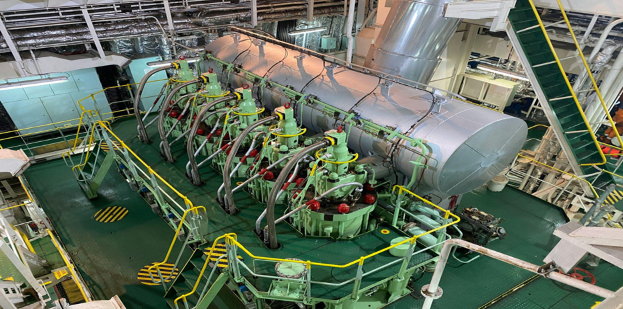
Consider the reality of modern shipping operations; vessels operate under extreme loads for thousands of hours, often in harsh conditions that would challenge any mechanical system. In this environment, lubricants do far more than simply prevent metal-on-metal contact. Whether it’s trunk piston oils in medium-speed four-stroke engines or cylinder oils in two-stroke crosshead systems, these fluids are engineered for multiple critical functions: reducing friction, cleaning internal surfaces, dissipating heat, neutralising acidic by-products, and protecting components from wear.

The relationship between lubricants and fuel efficiency is more nuanced than many realise. Viscosity plays a central role. If the lubricant is too thick, the engine works harder to circulate it, burning more fuel in the process. Too thin, and wear accelerates, leading to reduced compression, inefficiency, and potentially catastrophic failure. But viscosity is just the starting point. The additive packages, base oil quality, thermal stability, and oxidation resistance all influence combustion dynamics, deposit formation, and how cleanly the engine runs.
When properly matched to engine type and operating conditions, the right lubricant actively contributes to fuel savings while extending time between overhauls. For large vessels operating on thin margins, these efficiencies can literally determine whether a voyage turns a profit or loss.
The Bio-lubricant Opportunity
The maritime industry’s growing focus on sustainability has also opened new opportunities in bio-lubricants. While mineral-based oils still dominate, regulatory pressure and environmental consciousness are driving adoption of alternatives derived from vegetable-based esters or synthetic biodegradable compounds. These bio-lubricants are already making inroads in auxiliary systems like stern tubes, deck machinery, and hydraulic circuits, where the risk of environmental contamination runs highest.
The advantages are compelling: enhanced lubricity, lower toxicity, and rapid biodegradability that aligns with global regulatory frameworks like the U.S. EPA’s Vessel General Permit and EU Ecolabel requirements. However, broader adoption in primary propulsion systems remains challenging. Issues around oxidative stability, high-temperature performance, and compatibility with existing seals and bearings need resolution before bio-lubricants can fully compete with conventional alternatives.
What’s particularly interesting is how digitalisation is transforming lubricant management from a reactive maintenance task into proactive performance optimisation. The days of running equipment until something breaks are giving way to data-driven approaches that monitor lubricant condition in real time. Modern vessels now employ sensors and analytics platforms that track viscosity drift, contamination levels, and thermal degradation before they translate into engine problems.

This shift enables some impressive operational improvements. Marine engineers can now adjust cylinder oil feed rates based on fuel sulphur content and engine load, reducing both oil consumption and liner wear while maintaining emissions compliance. With careful monitoring, vessels that traditionally change oil every 1,000 hours can safely extend intervals to 1,400 or even 1,600 hours, representing a 40-60% improvement in uptime and efficiency.
The strategic implications extend beyond individual vessels. Progressive shipping companies are beginning to view lubricant management as a competitive advantage rather than a cost centre. When combined with sustainable lubricant choices, this approach transforms operational efficiency while building environmental credentials that increasingly matter to charterers and cargo owners.
For regions with strong agricultural sectors, there’s an additional opportunity to develop local bio-lubricant supply chains. Converting indigenous resources into profitable lubricant inputs creates circular value chains that reduce import dependency while supporting sustainable shipping practices. It’s an approach that makes particular sense for developing maritime economies looking to build industrial capacity.
Strategic Implementation
The path forward requires more than just technical solutions. It demands collaboration between lubricant manufacturers, marine engineers, and regulatory bodies to develop testing protocols that reflect real-world operating conditions. Pilot programmes and field trials will be essential for validating performance claims and building industry confidence in new formulations.
Perhaps most importantly, the industry needs to recognise that lubricant technology deserves a seat at the strategic planning table. As shipping grapples with decarbonisation targets, digital transformation, and evolving regulatory requirements, the fluids that keep engines running smoothly represent one of the most accessible paths to meaningful improvement.
The marine sector has always been conservative, and the costs of failure at sea are simply too high to take unnecessary risks. But the evidence is mounting that smarter lubricant choices offer genuine value without compromising reliability. From condition monitoring systems that prevent unexpected failures to bio-based alternatives that reduce environmental liability, the technology exists to make real improvements today.
Modern lubricants have evolved far beyond their traditional role as simple protective films. They’re becoming active contributors to fuel efficiency, emissions reduction, and operational reliability. For marine engineers and fleet managers willing to engage with these developments, the opportunities are substantial. The question isn’t whether lubricant technology will play a larger role in maritime efficiency, it’s whether individual operators will position themselves to benefit from this evolution or watch from the sidelines.