The term “subsidy” is an incentive offered by the government of a country in order to reduce the price of a commodity to make such a commodity affordable for its citizens.
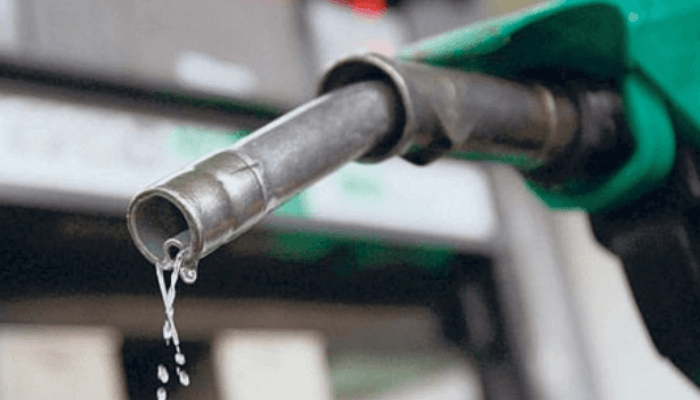
The Nigerian government fixes the price of petrol below the global price therefore the government has to use its resources to bridge the gap, this policy is known as “petrol subsidy.”
Proponents of fuel subsidy argue that the welfare gains of eliminating fuel subsidy will play a vital role in ensuring that government will be able to channel revenue generated into other developmental projects beyond subsidy payments.
However, the majority of the people from less developed countries are against it, majorly on the ground that subsidy removal will only serve as an avenue to siphon and divert public funds while others are against it on the ground that removing subsidy will lead to an increased level of inflationary pressure.

For instance, a report by the Brookings Institutions reveals that “there are a number of corruption risks associated with fuel subsidies, on a macro level, politicians can use fuel subsidies to win or maintain popular support for their regimes and sometimes those subsidies are crucial for their political survival.
“At the same time they often defer needed reforms toward sustainability and diversification, furthermore, the administration of fuel subsidy programs can be a locus for petty corruption including the direct diversion of funds and the creation of smuggling enterprises.”
While the IMF reveals that “the absence of public support for subsidy reform is in part due to a lack of confidence in the ability of governments to shift the resulting budgetary savings to programs that would compensate the poor.”
Over the years, policies aimed at removing fuel subsidy have been met with stiff opposition and has sometimes led to widespread public protests. For instance, in the year 2021, the IMF offered some recommendations that Nigeria needs to remove subsidy for the country to maintain both fiscal and monetary balances following the aftermath effect of the global pandemic.
The government thereafter announced its plan to fully remove subsidy by 2022 and revealed that fuel price may sell for N340 per litre by 2022. This did not go down well with Nigerians, especially going by the fact that the current administration once condemned fuel subsidy removal by the administration of Goodluck Jonathan on the ground that it is an enabler of corruption.

Following this decision, some high profile Nigerians have come out to counter the justification for the postponement of fuel subsidy removal that the major reason while government suspended its intention is not necessarily because the government needs more time to reduce the adverse effect of the pandemic but because it is a pre-election year which will jeopardise the chances of the ruling party.
Unveiling the politics of fuel subsidy removal
Between August 2005 and December 2011, petrol was sold for N65 per litre however on the 1st of January 2012, less than a year after the general election, the previous administration removed fuel subsidy thereby increasing the price of petrol to N140 per litre which represented a 49% rate of increase from the previous price of N70 per litre.
The argument for subsidy removal was that fuel subsidy had hitherto been used as a means of siphoning funds by the rich as the rich use more fuel than the poor. The government also argued that revenue generated after the subsidy has been removed would be used to provide infrastructural facilities which would be beneficial to all. However, no explanation seems to be enough as Nigerians took to the street to protest against this action.
Also, the opposition party (ACN) as at then also joined the protest on the account that there was a fall in global oil prices therefore removing fuel subsidy was baseless as Nigerians would not be able to benefit from the price reduction.
Following the widespread protest which lasted for 2 weeks, the government was forced to reduce the price to N97. However, by February 2015, a few weeks to the election, the pump price of petrol was reduced to N87 per litre. In January 2015, a few months after the general election, the Nigerian government reduced the pump price of petrol from 97N per litre to 87N per litre. From N87 per litre, the current administration increased the price of petrol to N146 on May 11, 2016, even though it was an ardent critic of fuel subsidy removal.
The many questions
The major arguments for the removal of fuel subsidy has to enable the government save for more pressing needs as revenue generated after the subsidy has been removed would be used to provide infrastructural facilities which would be beneficial to all. However, it is disheartening that this motive has been defeated by the high level of corruption that has continued to defeat the positive side of fuel subsidy removal.
Seven years after the ouster of the previous administration, there’s barely anything to show that government has saved anything even despite the price increment. In fact, after the election and re-election of the present administration, most of the indigenous projects carried out have been funded from external borrowing under the allegation that the previous administration left little amount of funds in the nation’s coffers which breeds the question of what really happened to the revenue generated from the price increment?
This endemic issue of corruption and mismanagement of funds has left Nigerians with no other option than to lose faith in the ability of the Nigerian government to manage the nation’s resources properly. The issue is if fuel subsidy is eventually removed, what is the tendency that the revenue generated would still not be embezzled?
Also, there’s not much evidence that the welfare of Nigerians has been better off since 2015 when the pump price of fuel increased to N147 as the nation still continues to depend on large chunks of foreign loans.
For instance, Nigeria’s human development index as of 2007 when the pump price of fuel was sold for 65N per litre was 0.478, by 2015 when fuel subsidy was removed the HDI increased to 0.526.
Presently, Nigeria’s HDI stands at 0.539. It should be noted that the lower the HDI the better the welfare of a country’s citizens. The implication of this is that Nigerians were better off in 2007 than in 2015 when the government was earning more from subsidy removal.
Presently, a lot of reactions and outrage has been expressed by Nigerians especially on the account that no government has found it important to rehabilitate its moribund refineries which would have been a more efficient and sustainable means of saving the nation from persistent reliance on subsidy.
Read also: 10 key projects Nigeria can fix with N3trn subsidy spree
Nigerians are also of the view that the major reason why the government reconsidered its step to finally remove subsidy by 2022 is because of its closeness to the 2023 general elections.
In reaction to this, the government revealed that the major reason for its postponement is to reduce more vulnerability to the already gloomy economy and not necessarily to garner more support for the forthcoming election.
There’s hope on the other side
Fuel subsidy should not be used as a means of amassing wealth by the people in the realm of power neither should it be used as a campaign strategy nor should it be used as a means to discredit the credibility of a particular administration.
Evidently, all major economic indicators point to the fact that even after fuel price have been increased, there seem to be no better living standards by Nigerians which makes the decision to keep removing fuel subsidy highly questionable.
Despite the abundance of resources that abounds in the country, it shouldn’t be that the first thing that comes to the mind of the government when it is in dire need of revenue is to remove subsidy. Nigeria will never be free from the cycle of fuel Subsidy removal if it can think beyond oil.
The way out of this puzzle is to develop local industries in order to reduce the rate at which the country depends on foreign products and currency.
The Nigerian government needs to embark on massive economic reforms by employing the best capable hands; more expansionary fiscal and monetary policies need to be put in place to attract investment and the government should be bold enough to embark on massive economic reform through fiscal federalism.