|
Getting your Trinity Audio player ready...
|
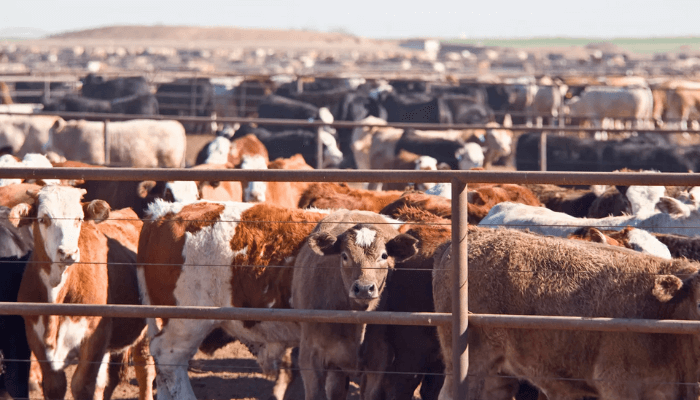
There is a certain grace to the high plains of Vom in Plateau State. The mornings are crisp, and the evenings are gentle. In the hush of dawn, you can hear the distant lowing of cattle—majestic Holstein Friesians grazing on lush pastures that roll like green ocean swells under the Jos sky. This land, rich with history and potential, is home to Integrated Dairies Limited (IDL), a company with a bold dream wrapped in the simple pleasure of milk.
And in the heart of this dream lies Farmfresh, IDL’s flagship dairy brand—a brand that isn’t just feeding Nigerians but also feeding a vision: a Nigeria that produces what it consumes, and eventually, exports what it perfects.
A Country of Drinkers, Not Milk Makers
Nigeria consumes approximately 1.6 billion litres of milk annually, according to the Federal Ministry of Agriculture. Yet, over 70% of this is imported, mainly in the form of powdered milk from Europe and Asia. This dependency costs Nigeria more than $1.5 billion each year in foreign exchange—a staggering leakage for an economy that cries out for self-reliance.

But the question is not just economic; it is existential. Why should a nation with vast arable land, over 20 million cows, and a dynamic youth population still be hooked to milk imports? Why, in a country where malnutrition contributes to nearly half of all deaths in children under five, do we struggle to provide locally produced, nutrient-rich milk to our people?
The Vom Vanguard
Integrated Dairies Limited was established in 2003, long before “Made-in-Nigeria” became a buzzword and well before agriculture was rediscovered by policymakers as a path to economic salvation. It began with a simple but profound idea: Let’s build a vertically integrated dairy ecosystem—from grass to glass.
Today, on over 550 hectares of pristine Plateau grassland, IDL has successfully raised and maintained a herd of over 500 high-yield dairy cows, producing up to 10,000 litres of milk daily. This milk is not shipped abroad or powdered in foreign plants. It is processed on-site into Farmfresh milk and yoghurt products trusted across homes, schools, and stores in Nigeria.
But even more remarkable than the product is the process.

Read also: Firm taps cooperatives, others to drive dairy self-sufficiency in Nigeria
Each bottle of Farmfresh carries the DNA of a value chain:
The pastoralist who supplies feed.
The veterinarian trained in Jos.
The food scientist refining flavour and shelf life.
The sales rep creating market access from Vom to Lagos.
This is not just dairy. It is development in motion.
Building the Naira, One Cup at a Time
If Nigeria could replace just 50% of its imported milk with local production, it would save over ₦600 billion annually—money that could be reinvested in education, infrastructure, and healthcare. But Farmfresh isn’t waiting for policy miracles. It’s proving, through real results, that dairy localisation is possible, profitable, and people-powered.
Over 180 direct jobs have been created at Integrated Dairies, ranging from agronomy and animal husbandry to processing and logistics.
Over 500 indirect jobs have sprouted across the supply chain—from feed growers in Plateau to cold truck drivers on Nigerian roads.
Women make up a growing percentage of Farmfresh’s distribution network, reflecting the company’s focus on inclusive empowerment.
In 2020, Farmfresh received the Mandatory Conformity Assessment Programme (MANCAP) quality certification from the Standards Organisation of Nigeria, solidifying its commitment to excellence. In 2022, it was endorsed by the Nigerian Medical Association for its role in delivering safe, fresh nutrition to Nigerian families.
The Cold Chain Challenge—and the Quiet Triumph
One of the biggest bottlenecks in Nigeria’s dairy industry is infrastructure: power, cold storage, and transport. Most local producers struggle to get milk to market before it spoils. But Integrated Dairies invested early in a state-of-the-art cold chain system, ensuring that every Farmfresh product retains its freshness, taste, and nutritional value—even in the heat of Nigeria’s markets.
By doing so, it has set a standard—not just for quality, but for possibility. It has shown that with the right investment and the right heart, Nigerian agribusinesses can overcome legacy constraints.
More Than Milk: A Cultural Reclamation
There is something deeply cultural about dairy in Nigeria. In Fulani communities, ‘nono’ (fermented milk) is both food and tradition. Across the Middle Belt, yoghurt is offered to guests as a sign of welcome. Milk isn’t just protein—it’s identity.
Farmfresh honours that heritage while modernising it. It merges the old with the new, the pastoral with the professional, the familiar with the future. And in doing so, it gives Nigerians a product they can believe in—not just because it’s good, but because it’s ours.
Exporting Confidence, One Sip at a Time
In the not-too-distant future, there is no reason why Farmfresh cannot be on the shelves of African supermarkets in Accra, Nairobi, and Kigali—even in diaspora stores in London or Houston. Nigerian dairy has the potential to become an export story, just like Nollywood or Afrobeats. But first, we must build at home.
Integrated Dairies is already exploring regional distribution hubs and export-ready packaging. Its research and development (R&D) team is developing new flavours, longer shelf life, and sustainable packaging to meet global standards. The dream is not just to feed Nigeria, but to make Nigerian milk the pride of Africa.
A New Standard of Nigerian Excellence
In a world where dependency is easy and excuses abound, Farmfresh is choosing a harder, nobler path—the path of building, scaling, and sustaining. It is quietly rewriting what it means to produce locally and think globally.
If Nigeria is to survive the storms of currency devaluation, youth unemployment, and rural poverty, it must bet on companies like Integrated Dairies. Companies that produce what we need, empower who we are, and export what we love.
Farmfresh is not just milk.
It is resilience.
It is pride.
It is Nigeria—fresh, full-bodied, and ready for the world.