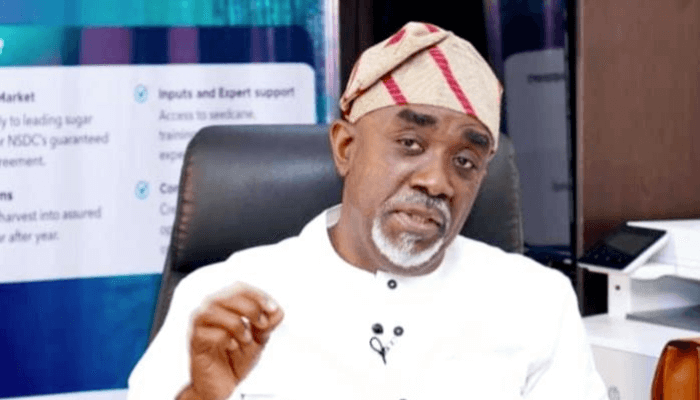
As STREAM Insight marks its 15th year’s anniversary, in this interview with WASIU ALLI, Adewale Opawale, the managing director of the research firm, shares with BusinessDay the secrets that have kept the company running and waxing. Excerpts
Looking back, what inspired the founding of the company in 2010?
STREAM Insight was born out of a deep passion for evidence-based development and decision-making. In 2010, we saw a significant gap in how data was being used—or not used—in shaping business strategies and social interventions, especially across Africa. We believed that if we could build a firm rooted in contextual intelligence and integrity, we could bridge that gap and help clients make smarter decisions.
What was the research industry in Nigeria like when STREAM Insight started?

It was quite traditional and somewhat rigid. Many research firms operated with very standard, “one-size-fits-all” methods. The integration of local context was often missing, and there was a clear disconnect between data and real impact. We came in with a different mindset—agile, adaptive, and purpose-driven—to merge social research depth with market research precision.
What are the key milestones or turning points that significantly shaped STREAM Insight’s journey?
There are quite a few. Our first nationwide social impact study in 2012 opened doors to development partners. In 2014, we launched our first cross-border project in Ghana, and by 2017 we had operational presence in over 10 African countries. The launch of our digital data platform in 2020, during COVID-19, helped us stay resilient. More recently, our work on supporting health interventions and supporting foreign business investors across Africa has been particularly defining. I recall STREAM Insight receiving The African Quality Service Award in 2014 in recognition of unique service in social research. In the same 2014, we were interviewed by the prestigious New York Times. These moments were truly redefining.
Were there moments in the early days when you doubted whether the company would survive? How did you push through?
Absolutely. I think every entrepreneur faces that at some point. In the early years, especially around early 2011, we had very few clients, some cash flow issues, project and staffing challenges. But what kept us going was our belief in the mission and believing in our value proposition.

What core values have guided the organisation over these years?
Three main ones: Integrity, Curiosity, and Impact. We’ve always maintained that data must serve a purpose—it must be truthful, relevant, and transformative. We also value humility; we learn from every client, every community, and every challenge.
STREAM Insight started in Nigeria—how did the expansion across Africa unfold?
It was both organic and strategic. Some of our Nigerian clients had operations in other African countries and invited us to support them. We also collaborated with local partners and experts in each country to co-create research strategies. From there, word spread about our ability to deliver credible insights across diverse contexts.
How has your leadership and team formation evolved since the inception?
In the beginning, I was wearing multiple hats—leading field teams, writing proposals, even troubleshooting laptops. But over time, we’ve built a strong leadership structure with seasoned directors, agile project teams, and a robust back-office. I’ve learned to delegate, mentor, and trust the team more.
If you could go back in time, what advice would you give yourself or your founding team?
Document everything. Celebrate small wins. And never underestimate the power of strategic partnerships. I’d also tell myself: “Don’t rush growth—build it to last.”
In layman language, what exactly does research do? What types of research are available?
Research simply helps us understand “what’s really going on.” It answers questions like: What do people think? Why do they behave a certain way? What needs are unmet? There’s quantitative research (numbers and statistics), qualitative research (deep stories and insights), and increasingly digital/AI-powered research.
How does research support brands to grow and how does research help projects thrive?
For brands, research identifies what customers want, how they perceive your product, and what needs to improve. For social projects, it helps target the right communities, measure what’s working, and course-correct when needed. Without research, you’re flying blind.
Could you tell us the different sectors and categories of clients your research supports?
We work across development, public health, education, finance, consumer goods, agriculture, and governance. Our clients range from NGOs, to banks, fintech startups, FMCG brands, and even government ministries. STREAM Insight is known for combining social and market research. How do you balance the two, and what sets you apart in this space?
We see them as two sides of the same coin. People don’t live in compartments—they buy products, vote, raise families, access healthcare. We combine social depth with market pragmatism. What sets us apart is our ability to navigate both village halls and boardrooms.
How would you describe the current research landscape in Nigeria, and how does STREAM Insight fit into it?
It’s evolving rapidly. There’s more demand for local relevance and faster turnaround. At STREAM Insight, we bring the agility and tech of new-era research, without losing the rigor and nuance that high-quality work demands.
Conducting research across Africa can be complex. How does your team ensure credibility and quality across different countries and cultures?
We invest heavily in local partnerships, in-depth training, and context-aware tools. Every project begins with immersion—we don’t assume, we ask. And we have a multi-layer quality control system that includes validation, back-checks, and data audits.
How do you localise your research tools and methods for different African markets while maintaining global standards?
Localisation starts with language, but goes deeper into norms, sensitivities, and formats. For example, in some countries we use storyboards instead of surveys. But we never compromise on sampling rigor, ethics, or data validity. That’s the STREAM standard.
Have digital and mobile technologies transformed how you collect data in recent years? If so, how?
Absolutely. Today, over 95 percent of our data is collected digitally—through tablets, mobile surveys, SMS, even WhatsApp. During COVID-19, this shift allowed us to continue operating safely. It also made data more real-time and easier to visualise.
How do you maintain consistency and data quality across diverse African regions with varied socio-cultural dynamics?
It boils down to training, supervision, and feedback loops. We train local teams in each region, assign field supervisors, and use dashboards to monitor progress. We also review every dataset before analysis—no shortcuts.
From a small Nigerian firm to a pan-African research company, what was your strategy for expansion?
It was always relationship-driven. We never forced our way into markets. Instead, we proved value, delivered quality, and let satisfied clients refer to us. We also made sure we listened to local stakeholders before entering new countries.
How do you recruit and retain research talent across borders, especially in challenging or remote regions?
We build local capacity. In each country, we identify passionate young researchers and invest in their training. Our network of over 2,000 field agents across Africa includes many who’ve been with us for over a decade.
Can you talk about your field teams? What does it take to run successful research on the ground across different terrains in Africa?
Field teams are the lifeblood of our operations. They’re resilient, adaptable, and deeply rooted in the communities they serve. We equip them with digital tools, cultural guides, and safety protocols. It takes empathy, training, and logistics excellence.
STREAM Insight has worked with international NGOs, multinationals, governments, and startups. How do you build trust with such a diverse client base?
Trust is built through consistency, transparency, and results. We take time to understand each client’s unique needs, adapt our methods accordingly, and always deliver on our promise. And we communicate—openly and honestly.
What internal culture or values do you believe keep your team engaged and innovative?
We prioritise learning, ownership, and purpose. Every team member knows they’re not just running a project—they’re solving real-world problems. We celebrate effort, encourage experimentation, and keep the mission front and center.
What is your academic background and early exposure before STREAM Insight?
I hold a doctorate in development research, master’s in international public health from Nigeria and the UK, certifications in market research from Nigeria and the US. Before founding STREAM Insight, I had worked with two of the multinational research companies – one in Nigeria, the other in Europe. Prior to that I was a coordinator and resource person to some social and health interventions of the United Nations and a core entrepreneur supporting local brands. Those exposures to social and business realities shaped my vision for research that truly matters.
Is this the same or similar with everyone on your team? What’s the team experience and background like?
Our team is beautifully diverse—data scientists, sociologists, economists, tech specialists, communications experts. What unites us is our shared commitment to insight and impact. Everyone brings a unique lens to the table.
Looking back, what personal values have helped you steer this vision for 15 years?
Resilience, humility, and faith. There were days I had no answers, but I learned to trust the process. I’ve also stayed curious and open to learning—from my team, our clients, and the communities we serve.
What kind of leader are you, and how has your leadership evolved over time?
I started as a hands-on builder. Over time, I’ve become more of an enabler—providing vision, removing obstacles, and creating room for others to lead. I believe in servant leadership and I practice leadership by involvement.
How do you foster innovation, especially among young researchers and analysts within your team?
We give them space. We assign real responsibility early, encourage cross-team collaboration, and invest in training. We also run internal “idea sprints” where team members pitch solutions to real challenges.
What’s the workplace culture like at STREAM Insight? How do you maintain a healthy team spirit across offices or regions?
It’s warm, purposeful, and inclusive. We’re big on birthdays, field team shout-outs, and cross-country check-ins. Every voice matters. Technology helps, but empathy is the glue.
Diversity is key in research. How inclusive is STREAM Insight in terms of gender, youth, and representation across Africa?
Very inclusive. About 50 percent of our core team are women. We actively recruit young researchers and ensure representation from across the continent. Inclusion isn’t a buzzword for us—it’s how we work.
I often hear about STREAM Insight Initiative. Is that another company? Would you want to talk about other arms of the company and what they do?
Great question. STREAM Insight Initiative is the arm of STREAM Insight Ltd that supports, promotes and implements developmental initiatives in health, agriculture as well as business and entrepreneurship. STREAM Insight Africa is the ‘just data collection’ arm of STREAM Insight Ltd that focuses on providing high quality data across Africa. The Social Research Hub (SRH) is a network of social researchers (professionals, academia, researchers & research-users) where we share knowledge and ideas on social research matters and opportunities in Africa. There is also Street Insight – our latest project that gathers undiluted insights from the streets to project much deeper insight.
Every business faces tough times. What has been your biggest leadership challenge, and how did you overcome it?
Keeping the team together during the COVID-19 pandemic. Projects stalled, travel froze, and uncertainty was high. We stayed transparent, supported each other, and leaned into digital innovation. That period made us stronger.
The past few years have brought global and local disruptions, from COVID-19 to inflation. How has STREAM Insight adapted?
We diversified our offerings, went hybrid with operations, and focused on cost-efficiency. We also deepened client relationships and explored emerging areas like climate and digital inclusion.
What lessons have you personally learned about building a resilient, mission-driven company in Africa?
Stay rooted in your purpose. Be flexible but principled. And invest in people, they are your greatest asset.
Where do you see STREAM Insight in the next five to ten years? Any new directions in the pipeline?
We aim to be the most trusted source of insight on African realities. We’re expanding our analytics lab, exploring AI in research, and planning to launch a knowledge-sharing platform for African researchers.
What advice would you give to young African entrepreneurs, especially those entering the research, data, or consulting space?
Start with why. Be patient. Learn continuously. And above all, build with integrity—you’ll be surprised how far that takes you.
If you had to describe STREAM Insight in just three words at 15, what would they be and why?
Insightful. Resilient. Pan-African.
Insightful—because we dig deep. Resilient—because we’ve stood the test of time. Pan-African—because our heart beats for the continent.