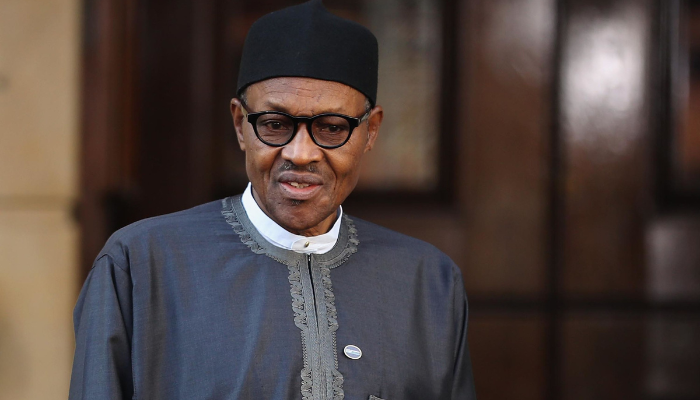
President Bola Tinubu, on Sunday, announced the passing of his predecessor, Muhammadu Buhari.
Garba Shehu, former senior special assistant to Buhari, in his X handle, disclosed that the “family of the former president has announced the passing on of the former president, Muhammadu Buhari, GCFR, this afternoon in a clinic in London.”
Buhari died in London at about 4.30 pm, following a prolonged illness.

Bayo Onanuga, President Tinubu’s spokesman, said the president had spoken with Aisha Buhari, the former president’s widow and offered his deep condolences.
He noted that President Tinubu had also ordered Vice President Kashim Shettima to proceed to the United Kingdom to accompany President Muhammadu Buhari’s body back to Nigeria.
Birth and education
Buhari was born on December 17, 1942, in Daura, Katsina State. Buhari wanted to become a medical doctor, but the only option at the time was to study Pharmacology at the Nigerian College of Arts, Science, and Technology in Zaria. He was however advised by Mamman Daura, his nephew, to join the Nigerian military and pursue higher education there. This was how he began his military career and explains his closeness with the former newspaper editor while in power.
Military career

Buhari joined the military in 1962 and underwent the officer cadet training between 1962 and 1963.
Buhari was Brigade Major/Commandant in 1970 and 1971 for the Thirty-first Infantry Brigade. He later served as the Assistant Adjutant-General, First Infantry Division Headquarters between 1971 and 1972. He was among officers who brought Murtala Muhammed to power in 1975.
He served as military governor of the old Borno and North Central State between 1975 and 1976.
He also served as the minister of Petroleum Resources under the administration of former President Olusegun Obasanjo, who later became the military head of state.
In December 1983, Muhammadu Buhari toppled the administration of former President Shehu Shagari and served as military leader, with late Tunde Idiagbon as his chief of general staff.
The regime was known for its high handedness, with the introduction of the ‘War Against Indiscipline,’ price control system, amongst others.
The regime is also remembered for its attempt to ‘smuggle’ Umaro Dikko, former transport minister, back to Nigeria from Britain, leading to a diplomatic row between Nigeria and the then British government.
The regime lasted until August 1985 when it was overthrow by former President Ibrahim Babangida.
At the return of the fourth Republic in 1999, former President Buhari contested the presidential election under the All Nigeria Peoples Party (ANPP) in 2003 and lost.
In 2007, he formed the Congress for Progressive Change (CPC), a political party, under which he contested the presidential election in 2007 and 2011, losing both elections.
In 2011, he vowed to retire from politics, over what he saw as the massive corruption and manipulations that trailed elections in Nigeria.
In 2013, however, the CPC agreed to go into alliance with other political parties such as the Action Congress (AC), the All Nigerian Peoples Party (ANPP) and the new PDP group
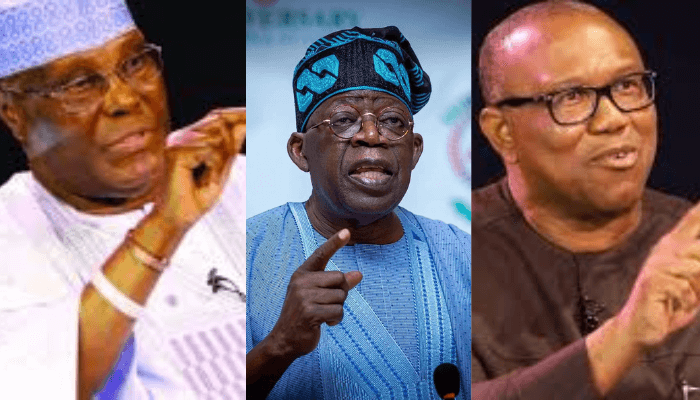
The group had notable politicians such as President Bola Tinubu,, Atiku Abubakar, Governor Rotimi Amaechi, amongst others.
The alliance saw the emergence of a formidable political force that led to the defeat of former President Goodluck Jonathan in the 2015 general election that produced the administration of former President Muhammadu Buhari.
His administration, despite its low performance, managed to win the 2019 election that returned him as president for the second term.
Former President Buhari’s presidency experienced one of the most difficult economic challenges, with the country falling into recession twice, following declining revenues from oil sales and COVID-19.
In 2018, however, the economy witnessed some levels of recovery from the recession, although many Nigerians were still living in extreme poverty.
Many were disappointed that President Buhari could not address the issue of insecurity, as the activities of the dreaded Boko Haram insurgents remained unabated.
The struggle with Boko Haram factions continued, even as Nigeria earmarked $1 billion to address the issue of military hardware.
The regime also witnessed intense farmer-herder clashes.
His administration’s war against corruption was both praised for its progress and criticised for focusing more on political opponents than on allies.
The former president will however be remembered for always keeping to time at any events and for his disciplined approach to national issues.
—