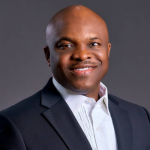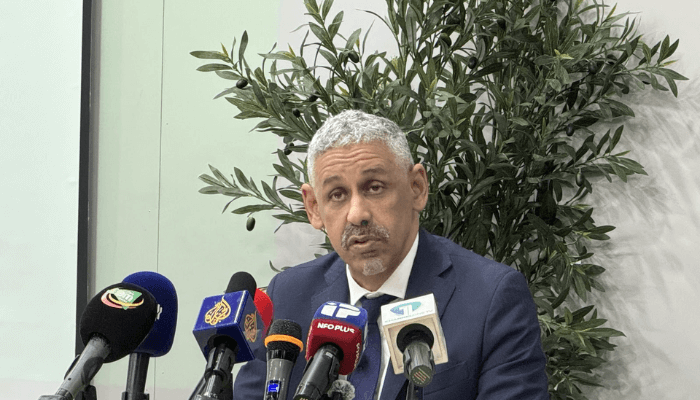
Sidi Ould Tah, a seasoned banker and head of the Arab Bank for Economic Development in Africa (BADEA) for 10 years until last month, is one of five candidates vying to replace Akinwunmi Adesina as president of the Africa Development Bank.
In this interview with BusinessDay’s Lolade Akinmurele after a press briefing in Nouakchott, the former Mauritanian minister of economy provided some insights into his vision for the continent’s most influential multilateral financing institution if elected president May 29. Excerpts:
Lolade: You are seeking to lead the African Development Bank at a pivotal moment. How confident are you of success?
Tah: I am quite optimistic. My candidacy is underpinned by decades of experience and a deep understanding of the continent’s developmental landscape. I bring both a proven track record and a compelling vision for the AfDB’s next chapter. I have profound respect for my fellow candidates. Many are close colleagues. But I believe my executive experience at BADEA, my pan-African network, and my record of reform uniquely position me to lead AfDB at this transformative juncture.

Lolade: What is your overarching vision for the AfDB?
Tah: The vision is built around four pillars. First is scaling up financing. Africa needs significantly more capital to drive sustainable development. This means making each dollar work harder, through blended finance, risk mitigation tools, and strategic partnerships.
Second pillar is reforming Africa’s financial architecture. We need greater coordination between regional financial institutions. Synergies must be cultivated to foster co-financing and harmonised interventions.
The third pillar is harnessing Africa’s demographic dividend. By 2050, one in four people globally will be African. The continent’s youth must be equipped with skills in STEM, vocational training, and sectors like agriculture, mining, and services.
Finally, the fourth pillar is developing resilient infrastructure and enhancing value addition. Africa must process its own raw materials. This requires affordable energy, efficient logistics, and supportive infrastructure.

Technology and climate resilience cut across all four areas.
Read also: Tah time: Mauritanian contender for AfDB’s top job to unveil vision
Lolade: You’ve spoken about expanding the Bank’s annual development financing from $10bn to $100bn. How do you plan to achieve this tenfold increase?
Tah: This ambition is rooted in realism and experience. During my tenure at the Arab Bank for Economic Development in Africa (BADEA), we increased assets by 75% and reduced non-performing loans from 11% to 0.5%. My strategy at AfDB involves unlocking co-financing opportunities with global financial institutions, sovereign and pension funds, and deepening Africa’s capital markets. Tapping into domestic savings, diaspora funds, and leveraging partnerships with institutions in the Global North and Middle East are also central to the plan.
Lolade: How did BADEA achieve transformational growth under your watch?
Tah: Three major factors helped me to achieve what I achieved. First was the team. A president cannot do everything or anything if he doesn’t have a good team. So, the major factor of success for BADEA was the team.
I believe that at the African Development Bank, I will retain the best talent and will also attract the best talent from the continent and outside the continent. So, I will focus on the team.
The second success factor is the support from shareholders. The African Development Bank has 81 shareholders. At the Arab Bank for Economic Development in Africa, we developed great confidence between the bank and its shareholders through a transparent relationship. And that helped us to get the full support of the shareholders, which translated into a capital increase of 376 per cent in a time when resources were very scarce.
The third factor is developing partnerships across the world, because every partnership brings additional resources, expertise, and access. So, developing partnerships around the world will definitely bring a lot of resources for the bank and enable it to achieve its mandate.
Lolade: So, as you know, Africa doesn’t trade enough with itself. You have so many instances of African countries importing products from far-flung parts of Europe that neighbouring countries can provide them. The African Continental Free Trade Agreement was supposed to address part of that, but it hasn’t really worked yet. What role should the AfDB play in strengthening intra-African trade?
Tah: The AfDB must take a leading role in actualising the African Continental Free Trade Agreement (AfCFTA). This involves funding cross-border infrastructure, dismantling non-tariff barriers, and supporting payment systems like the Pan-African Payment and Settlement System (PAPSS). We also need to work with Africa50 and regional blocs to build trade facilitation hubs and reduce transit times and costs.
Lolade: The US is the second largest shareholder of the AfDB, and when I looked at the 2026 budget proposal, President Donald Trump has cut about $555 million from the AfDB funding. The geopolitical landscape is shifting. How do you plan to safeguard the AfDB’s financial sustainability amid external shocks, such as funding cuts from the US?
Tah: In the short term, these cuts are concerning. However, they also present an opportunity to redefine partnerships. There’s growing US interest in private-sector-led investment in Africa. We must pivot towards deepening such ties and broadening our funding base beyond traditional donors.
Lolade: How does your vision for the bank align with the “Hi 5s”- the Bank’s current development priorities?
Tah: These priorities remain valid. But execution is key. My first 100 days would focus on intensive consultation with all stakeholders, governments, private sector, DFIs, to streamline implementation pathways. It’s about converting vision into measurable outcomes swiftly.
Read also: What Ould Tah’s tenure at BADEA reveals about his AfDB candidacy
Lolade: Africa’s youth bulge is both a challenge and an opportunity. How would you create jobs at scale?
Tah: Through beneficiation of minerals, agro-processing, and SME development. Africa must climb up the value chain. Supporting youth entrepreneurship, encouraging industrial clusters, and investing in digital infrastructure will also be critical.
Lolade: AfDB’s funding base has grown from $94bn in 2014 to $318bn in 2024. The bar has been set really high. Is there a chance to do even better?
Tah: My goal is to make each dollar act like ten. That involves capital recycling, securitisation, risk-sharing platforms, and crowding in private capital. At BADEA, we achieved a capital increase of 376% by building trust with shareholders and focusing on transparency and performance.
Lolade: You spoke of plans to undertake internal reforms in the Bank if you are elected president, what would these reforms entail?
Tah: I would initiate a comprehensive business process re-engineering. Bureaucratic delays undermine impact. We must make the Bank more agile, from approval timelines to disbursement cycles, so that financing addresses real-time needs.
Lolade: Sustainable borrowing is a growing concern. How would you reconcile infrastructure spending with debt sustainability?
Tah: By crowding in the private sector through PPPs. Letting private capital finance, build, and operate infrastructure helps governments avoid unsustainable debt while addressing Africa’s urgent development needs.