Nigeria’s national grid has become something of an unreliable metaphor for the country itself, functional one moment and collapsed the next.
In 2024 alone, the grid reportedly collapsed more than 10 times. By mid-2025, Nigeria had already recorded multiple partial and total system failures, plunging Lagos, Abuja, Kano, Port Harcourt and other major cities into darkness. Even in the first weeks of 2026, fluctuations in generation and transmission instability have forced load shedding across industrial clusters in Lagos, Ogun, Oyo and Kaduna states, with generation frequently falling below 4,000 megawatts (MW) for a country of over 200 million people.
To put that into perspective, South Africa, often cited as Africa’s power sector example story, generates over 40,000 MW installed capacity, while Egypt exceeds 58,000 MW. Nigeria struggles to transmit 5,000 MW reliably on most days.
The reasons for this chronic dysfunction are neither mysterious nor new.

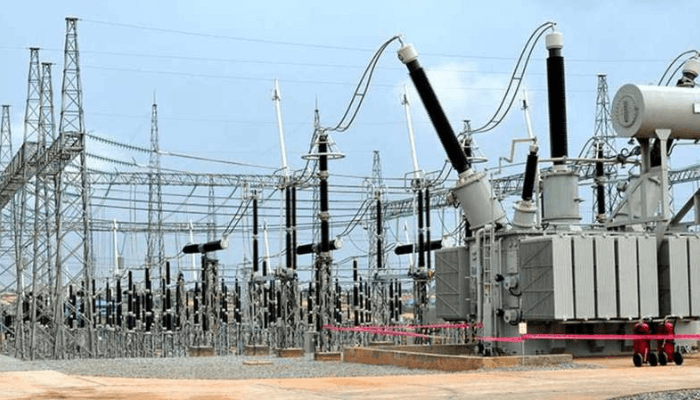
Nigeria’s power sector crisis is fundamentally a transmission problem disguised as a generation problem. While installed generation capacity stands above 13,000 MW, transmission infrastructure managed by the Transmission Company of Nigeria (TCN) can barely wheel 5,500 MW under optimal conditions. Much of the grid infrastructure dates back to the 1970s and 1980s, operating with obsolete transformers, fragile substations and overloaded transmission lines.
Each time generation rises above the grid’s tolerance threshold, the system trips, resulting in failures that plunge the entire nation into a blackout. It is sad that Nigeria produces power it cannot deliver.
This is precisely why the Presidential Power Initiative (PPI), popularly known as the Siemens deal, was conceived in 2019. Valued at approximately €2.1 billion ($2.3bn), the partnership between Nigeria and Germany’s Siemens Energy was designed to overhaul the country’s transmission and distribution backbone in three phases.
The first phase aims to raise operational transmission capacity to 7,000 MW; the second phase targets 11,000 MW, while the final phase seeks to unlock 25,000 MW of reliable electricity delivery.
However, for years, the deal languished in administrative bottlenecks, shifting political priorities, and inter-agency rivalries that slowed implementation to a crawl. Equipment procurement delays, financing uncertainties, and coordination gaps between the federal government and power sector operators ensured that what was meant to be a transformational intervention became yet another item on Nigeria’s long list of abandoned reforms.

Now, Germany has signalled that the agreement is back on track under President Bola Tinubu’s administration, which is good news, but only if Nigeria follows through logically to success.
The implications of failing to do so are enormous, as Nigeria currently loses an estimated $25 billion yearly to unreliable electricity, according to data from the World Bank and Manufacturers Association of Nigeria (MAN). Manufacturers spend up to 40 per cent of their operating costs on diesel and alternative energy sources. Small and medium enterprises, responsible for nearly 80 per cent of employment, often rely on petrol generators that increase production costs and erode competitiveness.
This explains why Nigerian-made goods struggle to compete with imports from nations with stable power supplies. It also partly accounts for the wave of factory shutdowns and relocations recorded in recent years by companies such as Procter & Gamble and GlaxoSmithKline. Meanwhile, electricity is not just a utility but also the oxygen of industrialisation.
Without reliable power, Nigeria’s ambitions for economic diversification, whether in agro-processing, digital services or manufacturing, remain theoretical. Data centres cannot operate efficiently, cold storage facilities for agriculture become prohibitively expensive, and even renewable energy integration becomes difficult without a stable transmission backbone.
Germany’s renewed commitment to the Siemens deal should therefore be viewed not merely as diplomatic cooperation but as a strategic opportunity to finally fix Nigeria’s weakest economic link.
Equally important is Germany’s framing of the global energy transition as energy addition.
For Nigeria, gas remains vital, as with over 200 trillion cubic feet of proven gas reserves, the country is uniquely positioned to adopt a hybrid energy strategy that combines gas-fired generation with renewable sources such as solar and wind. Industrial economies, from Germany itself to China, have relied on natural gas as a bridge fuel in their transition toward cleaner energy systems.
Abandoning gas prematurely in pursuit of climate beliefs would be economically suicidal for Nigeria. Instead, investments in gas infrastructure should complement grid modernisation efforts under the PPI.
But success will depend on more than signing contracts or commissioning transformers.
Institutional coordination must improve, as the Ministry of Power, TCN, distribution companies (Discos), and regulatory agencies such as NERC must align their operational timelines to ensure that upgraded transmission capacity is matched by corresponding improvements in distribution networks.
Also, financing transparency is critical, as the nation’s history of infrastructure deals is littered with projects that consumed billions of dollars without delivering commensurate value. Public disclosure of project milestones, procurement processes and implementation timelines will be essential in sustaining stakeholder confidence.
Likewise, state governments must be integrated into the reform process. With recent constitutional amendments allowing sub-national entities to participate in electricity generation and distribution, states such as Edo, Lagos, Kaduna and Rivers can play complementary roles in strengthening last-mile delivery systems.
Similarly, technical capacity must be developed locally. Siemens’ involvement should include knowledge transfer programmes that equip Nigerian engineers with the skills required to maintain and upgrade grid infrastructure independently in the future.
Nigeria cannot afford another failed power sector intervention.
The Siemens deal represents perhaps the most comprehensive attempt in decades to address the structural weaknesses of the national grid. If logically followed through to completion, it could unlock industrial growth, reduce production costs, attract foreign investment and improve the quality of life for millions of Nigerians.
But if it fails, as so many past reforms have, our nation risks remaining trapped in an endless cycle of darkness, diesel fumes and economic underperformance. This time, the grid must not collapse under the weight of missed opportunity.