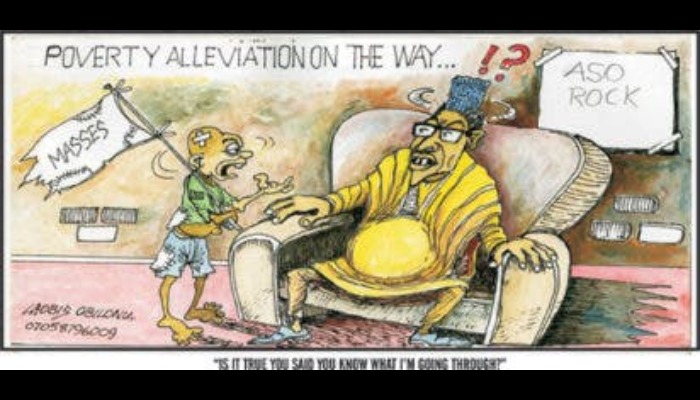
First the good news. After Nigeria’s first contraction for 25 years, in which gross domestic product shrank 1.6 per cent last year in a country used to 6 or 7 per cent annual growth, the economy is out of recession. Following five negative quarters, GDP expanded in the three months to June by 0.55 per cent year on year. It is hardly the stuff of legend but enough to draw a wobbly line under two grim years.
The oil sector returned to positive territory, expanding 1.6 per cent, although that too was less than most economists had been expecting. The question is what happens next. Can the economy build on that and snap back to the sort of growth rates to which it was accustomed? If that seems unlikely, can it at least improve the quality of growth by becoming less dependent on oil for government revenue and foreign exchange? Or does the fragility of the recovery point to deeper structural problems?
The answers to these questions depend partly on assessing whether the government of Muhammadu Buhari has done enough to change how the economy works. Lai Mohammed, information minister, insists that it has. The rebound is proof that government reforms are working, he says. Mr Mohammed says the administration has squeezed out corruption and inefficiencies, increased government spending, established a “single treasury account”, rationalised the foreign exchange markets and rejuvenated the non-oil sector.
READ ALSO:Students, Educationists Justify #ENDSARS Protesters’ Demand for Reform in Education

He highlights attempts to diversify by supporting mining, agriculture, construction and the creative industries. The government, he adds, is spending much more than the previous administration of Goodluck Jonathan on roads, housing, rail and power.
He also trumpets progress in the oil-producing Niger Delta, where sabotage has fallen significantly after talks with militants, helping oil output rebound to 1.8m barrels a day from a trough of 1.3m. Economy watchers welcome that development but fear fresh attacks if militants cannot be paid off. “What is important is the honesty and purpose of this government,” says Mr Mohammed. “The results may not come overnight, but we have definitely built a foundation.”
His upbeat assessment is not shared by all. John Ashbourne, Africa economist at Capital Economics, the research company, says the economy remains “very weak”. He has downgraded his growth forecast for 2017 from 2 per cent to just 1.2 per cent, a contraction in per capita terms given the fast-rising population. Mr Ashbourne says that, far from gaining strength, the non-oil sector slowed in the second quarter, posting growth of just 0.5 per cent.
READ ALSO:Stranded projects seen inhibiting infrastructural development in Nigeria
Yet one source of confidence among investors is the return to some kind of normality on foreign exchange markets. Throughout the recession, businesses lacked access to dollars. This was the result of a central bank rationing regime, itself the consequence of an attempt to defend an unrealistic naira exchange rate — the last thing the economy needs if it is to diversify its manufacturing and export base.

The government has gone some way towards fixing these problems, introducing an “investor and exporter window” at which businesses can bid for dollars. Turnover at that window has shot up to more than $1bn a week, helping local manufacturers seeking foreign exchange as well as foreign investors looking to cash in. That has triggered an equity rally and, more recently, greater interest in local bond markets.
Bankers say improvements to the foreign exchange regime have given impetus to previously paralysed investors. The gap between the official naira rate and the black market rate has narrowed significantly, though a more realistic exchange rate has not yet unlocked the foreign direct investment deals that some had been predicting.
READ ALSO:How structural problems squeeze millions of Nigerian SMEs
The government has also returned to international debt markets in an effort to lower borrowing costs, pushed up by high domestic interest rates. This spring the government raised $1.5bn in two separate, oversubscribed, 15-year issues. It is looking to raise at least $3bn more to replace maturing short-term local currency debt.
Still, none of this may be enough. Razia Khan, the chief Africa economist at Standard Chartered Bank, has also lowered her growth forecasts, both for this year to 1.2 per cent and for next year, when she has downgraded expectations from 4.1 to 3.5 per cent. The tax base remains narrow and Nigeria, hampered by a historically oil-strengthened naira, power shortages and a deficit of skilled workers, lacks the capacity to make even basic goods. “Even the numbers the Nigerian government are talking about are really downbeat,” says Ms Khan. “It’s really not a strong recovery at all.”
Mr Mohammed compares coming out of recession to “a man getting out of hospital: he doesn’t start doing big things straight away”. Like President Buhari, who has been in and out of hospital all year, Africa’s biggest economy is far from a rosy state of health just yet.
David Pilling