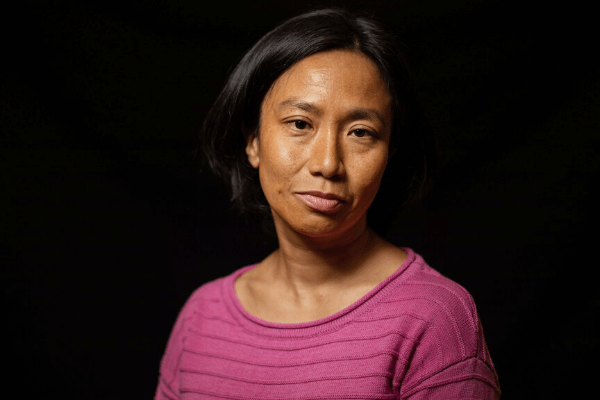
For nearly 20 years Rowena Chiu refused to talk about her experience working for Harvey Weinstein. When the Hollywood producer was accused of serial sexual aggression two years ago, few people in her life realised that she had her own story to tell. In fact, she had been silenced by a punitive non-disclosure agreement signed after she accused Mr Weinstein of sexual assault in 1998.
“When you’ve kept a secret for 20 years, the idea of speaking out is just sheer terror,” she says. “It took time to kind of unravel the story and for me to be ready.”
Emboldened by the women who have come forward as part of the #Metoo movement and aware how few were people of colour, Ms Chiu broke her NDA and revealed her identity in She Said, a book by New York Times journalists Jodi Kantor and Megan Twohey, documenting their investigation into Mr Weinstein. Now that the book has been published she is ready to share the details of what happened.
In the summer of 1998, Ms Chiu was a 24-year-old Oxford graduate with a dream role as an assistant at film distributor Miramax’s London office, then riding high on the success of hits such as Pulp Fiction. A couple of months into the job, she was asked to go to the Venice film festival. “I was thrilled,” she says. “It all seemed so exciting and glamorous.” While there, she was asked to meet Mr Weinstein in his hotel room to do some work. In the room, Ms Chiu claims Mr Weinstein made a series of sexual requests, which she refused. She alleges he then massaged her legs, took off her tights and held her on the bed, telling her it would all be over with one thrust, but she managed to get away and stop anything further from happening.

Now she has come forward, Ms Chiu is facing the possibility of a new legal fight. Although agreements used to hush up accusations of sexual misconduct have been widely criticised she is still at risk of retaliation for breaking her NDA.
Mr Weinstein’s lawyers told the Associated Press that he was “studying taking legal action” against Ms Chiu.
The use of gagging clauses in confidential financial settlements has emerged in the #Metoo era as a key method of keeping abuses by powerful figures quiet. Once used as a way to protect trade secrets, they have been co-opted to silence misconduct accusations.
Now 45 and living with her husband and children in Palo Alto, California, Ms Chiu is confident and forthright. Her reluctance to speak out was not, she says, driven by fear of legal or financial punishments but the safety of those she loves.
“People were afraid of Harvey,” she says. “[Miramax] was a culture of fear . . . his way of bargaining was: if you don’t do this for me, I can make your life really unpleasant. I know who your boyfriend is, I know who your parents are and I’ll make sure you never work again.”

When Zelda Perkins, Ms Chiu’s colleague at Miramax, broke her own NDA in an interview with the Financial Times in October 2017, Ms Chiu said nothing.
Even so, journalists called her workplace and turned up at her house. “We were being pretty hotly pursued by [reporter] Ronan Farrow,” she says. “He called all our workplaces. He called my husband at his workplace.” At this point, Ms Chiu had still not told her husband or parents about what had happened.
While it took another two years for her to speak publicly, Ms Chiu had begun to provide anonymous testimony behind the scenes. In She Said, Ms Chiu is instrumental in revealing the ways women were kept silent.
The pattern of business meetings conducted in hotel rooms will sound familiar to those who have read similar allegations from both famous actresses and employees who worked with Mr Weinstein. “It is obvious from listening to interviews done with victims that he clearly had a modus operandi,” says Ms Chiu. At the time, however, she had no way of knowing this. No formal complaints had been made public. “We were all locked in our own individual silences’.
Silence was a form of enablement for Mr Weinstein. Ms Chiu says that Ms Perkins was one of the few who stood up to him after she had confided to her what happened. “She knew Harvey all too well both in terms of witnessing his behaviour with other people and in terms of his behaviour towards her.” Together the pair sought legal advice, hoping to prevent the same thing from happening to anyone else.