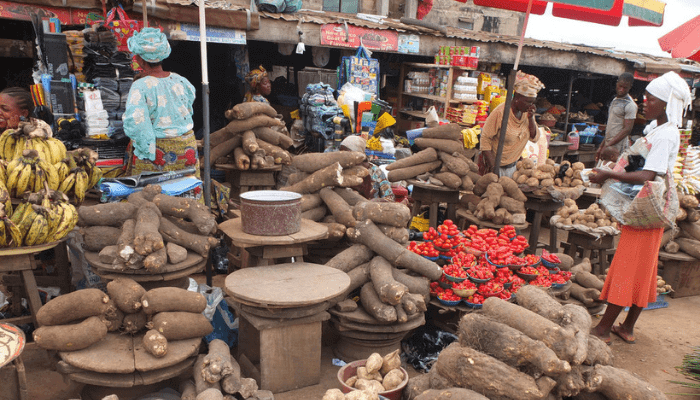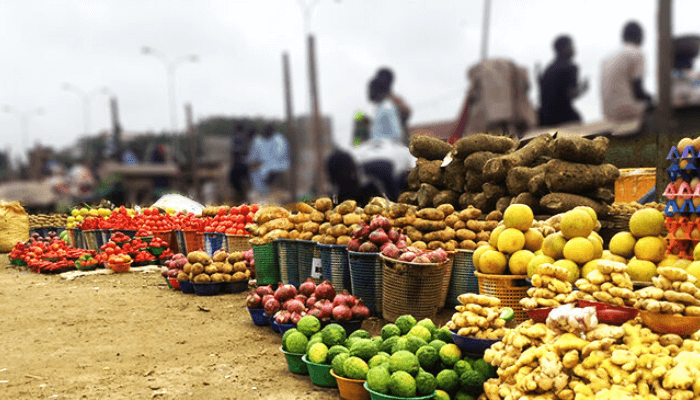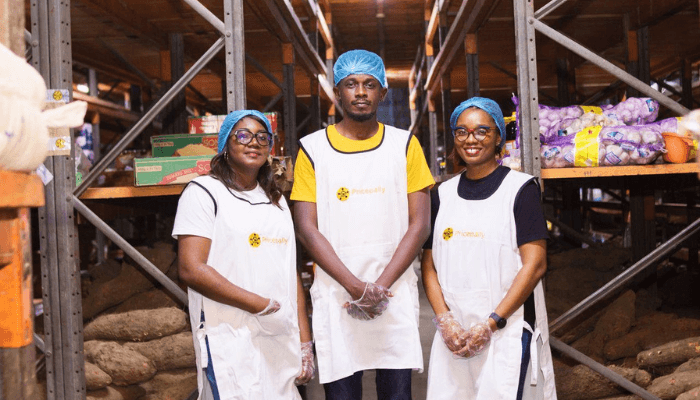
Nigeria has a huge market access gap in the food value chain that limits many people from eating what they want at the time they want.
Economic policies, insecurity, and dwindling climatic conditions have continued to drive food prices higher, leaving Nigerian farmers and consumers frustrated and at the mercy of fluctuating markets.
Farmers are faced with diverse limitations in moving produce from the farms to the markets where consumers can access them. This is a major driver of soaring food prices in Africa’s most populous nation.
However, despite these limitations, PricePally, a foodtech company is on a mission to provide Nigerians with affordable farm-fresh food items.

Founded in 2019, it ensures that Nigerians, regardless of the economic conditions, would have access to farm-fresh and quality food items at affordable prices.
Running a direct-to-consumer model, PricePally ensures that farmers get the best value for their produce and deliver it directly to their doorsteps. Its platform enables consumers to group buy or share bulk farm-fresh food items sourced directly from farmers, wholesalers and brands, making it cheaper and fresher than buying at retail in open markets.
The company runs a fair market price, ensuring that those who buy in small quantities enjoy the same price as those who buy in bulk.
According to the company’s statement: “Our goal is simple yet profound: to deliver high-quality food at fair prices with utmost convenience, ensuring that producers benefit ethically by removing middlemen who add no value. This is our vision for a sustainable food system.”
The company’s mission is to ensure that families and businesses in African cities have access to the highest quality farm-fresh food items at affordable prices, delivered with the utmost efficiency, starting with the major cities in Nigeria, including Lagos, Abuja, Port-Harcourt and Ibadan.

To achieve this mission, PricePally connects farmers with a readily available market all year round, thereby reducing food waste. It reduces food costs and promotes food security.
Nigeria reportedly loses about 40 percent of its annual food production, which approximately amounts to 100 million tonnes of food per year, capable of feeding 40 million people. This figure, though alarming, illustrates the importance of a startup like PricePally in a country like Nigeria.
Solving the headache of poor pricing for farmers
Farmers have serially lamented being underpriced for their commodities, and the biting inflation makes it even harder for them to bear.
One such farmer, Femi Banjo, chief executive officer for Olafem Farms, who now does business with PricePally, lamented how he used to get ridiculous prices for his farm produce. His delight knew no bounds when he saw what the company was offering.
“I was offered about N6,000 for 10kg of habanero pepper on my farm. I couldn’t believe it, and this is what happens in the regular market. They only buy based on quantity outside. When there is plenty of supply, they’ll give you little money,” Banjo said.

“PricePally offered me almost N30,000 for the same portion that was priced at N6,000. It’s a timely intervention and it is why you can never run at a loss with them. There is always a profit and they are always ready to buy,” he said.
Easy transportation
For Seyi Awolola, chief executive of Oled Farms, glut was his biggest concern as he and his workers were unable to move their produce around. He was at the risk of losing a lot of money before the foodtech company came into the picture.
He recounts his first experience, “We had a serious glut with tomatoes and we couldn’t move our produce. However, PricePally has given us an avenue to move our produce. They are an extra market for when there is a glut.”
“They are now the main market because they pay better and they are readily available to move our produce; they have the market. Because of this, we can produce all year round and not worry about market access,” he explained.
He added that the company is also readily available to move his produce, and this has helped him to reduce food waste.
Victor Ibe, a senior agronomist with Professional Support Farms (PSF), appreciated the company for solving its logistics challenges.
“They have helped farms with their consistent off-taking. The glut season during which there is excess supply but little demand poses a serious challenge to farmers,” he shared.
“They find it hard to break through and many produce get to waste. PricePally has made this convenient for us. We only need to get our stuff to the collation centre. They’ll do the rest.”
Product quality and convenience
Apart from the farmers, end users also expressed their delight with the e-commerce platform, as they have been able to get seamless access to farm-fresh produce.
Eniola has always been a huge fan of taking farm-fresh food items, but she would always have to travel a long distance to the market before she could get close-to-fresh produce.
Ada, just like Eniola, was also frustrated with fresh food shopping in Nigeria as frozen, preserved foods seem to have taken over.
For others, it is the combination of factors such as transportation costs, market hassles, and outrageous prices. Therefore, the intervention of PricePally is a blessing to the Nigerian food ecosystem.
Adewale Sarah took to X (formerly Twitter) to say, “Pricepally is too efficient abeg. Very fresh groceries, you will never set foot in any dirty Lagos market again.”
Another X user, with the handle FS Kehinde, “Super grateful for @PricePally. They really made life easy for my mum today.”
The Stew Index Report
Building on its five-year operations in the Nigerian food market and the understanding of the effects of socio-economic conditions (such as insecurity and inflation) on food pricing and affordability, the company launched the Stew Index Report in 2023.
The inaugural report analysed the cost of preparing stew, an everyday delicacy in Nigeria, intending to use it to provide insights into the everyday struggles of Nigerians with the cost of feeding and practical solutions to tackle food insecurity in the country.
Markets in Nigeria’s metropolitan cities, including Lagos, Abuja and Port Harcourt, were the sources of data
According to the report, the Nigerian stew is a regular soup made of pepper, tomato, scotch bonnet pepper (ata rodo), cayenne pepper (sombo), bell pepper(tatase), and animal proteins like red meat (e.g. beef and goat meat) and white meat (chicken and turkey).
Between 2022 and 2023, the cost of essential ingredients to prepare Nigeria’s most popular soup — beef stew — rose by 16.77 percent in Lagos and 20.84 percent in Abuja.
Similar hikes were recorded for chicken, turkey, and goat meat stews. Therefore, a minimum wage earner in Lagos now needs to spend 106 percent of their salary to prepare just one pot of chicken stew per week for a month.
In 2024, the high food inflation rate doubled the price of key stew ingredients, including tomatoes, onions, and proteins.
It said the cost of preparing a pot of beef stew in Lagos surged from N8,060 in 2023 to N17,817 by September 2024; cost of making chicken stew also climbed from N7,085 in 2023 to N15,034 in 2024, while turkey and goat meat stew prices spiked from N7,966 and N8,227, respectively in 2023 to N17,987 and N20,817 in 2024.
According to the report, the cause of the unprecedented price hike could be linked to economic instability, supply chain disruptions, and climate-related challenges.
The report added that the effects of extreme weather have been another factor; while heavy rainfall in April 2024 temporarily lowered some ingredient costs, subsequent transportation issues led to sharp price spikes from May onwards, pushing staple items like tomatoes to record highs.
But amidst these alarming statistics, PricePally stands out as a beacon of hope. Since its inception, it has championed a fairer food system by cutting out middlemen and connecting farmers directly with consumers.
These farmers get the value they deserve for their produce while consumers enjoy farm-fresh food at affordable prices.
Empowering farmers for sustainable food supply
With the experiences of Banjo and Awolola, it became obvious that Nigerian farmers were going through a lot and would benefit immensely from training and empowerment.
The foodtech startup then trained over 160 farmers in Southwestern Nigeria to ensure that they get more support to meet people’s demands and achieve a sustainable food supply.
The programme was held for three weeks in October 2024 across Epe, Ibadan, and Abeokuta, with attention paid to enhancing produce quality and minimising post-harvest losses through Good Agricultural Practices (GAP).
Critical areas such as farm planning, water management, post-harvest handling, and sustainable farming techniques were also touched as the farmers were equipped with tools and knowledge to ensure that their produce meet market demands while reducing waste.
The training also stressed the importance of data to predicting consumer needs and making informed decisions regarding planting, harvesting, and distribution.
Speaking on the training of Southwestern farmers, Benjamin Ogunbola, the GSMA project manager at PricePally, stressed the importance of empowering farmers to strengthen the food supply chain in Nigeria.
“Our farmers are at the core of our mission to make quality food accessible to everyone. By equipping them with the knowledge to grow, harvest, and distribute their produce effectively, we’re not only supporting their livelihoods but also improving food availability and affordability across communities,” he shared.
“This training is a crucial step toward achieving a resilient and sustainable food supply chain,” he added.
He also noted that they had organised a liaison officers training programme to enhance collaboration between farmers and the company and an expansion would be made to the northern region of the country, starting with Jos.
“Our efforts have culminated in successes such as selling over one ton of Grade-A tomatoes from a single farm within 48 hours, a testament to the efficiency of PricePally’s direct-to-consumer model.”
By bridging the gap between farmers and consumers, eliminating logistic bottlenecks, and ensuring affordability and freshness, PricePally has carved a niche for itself in a highly challenging market.
Its direct-to-consumer model and community-based buying approach have proven effective in tackling key issues like food wastage, poor pricing for farmers, and consumer access to fresh produce.
While there’s still much work to be done, PricePally’s journey so far suggests that innovative solutions can indeed transform food distribution in Nigeria while reducing food insecurity.