Recently, the Board of Directors of Flour Mills of Nigeria Plc (FMN) gave approval in principle to the plans to commence with activities of raising additional funds through a Rights Issue and Medium-Term Notes.
The company disclosed that it had registered a shelf fund raising programme in 2016 with the Securities and Exchange Commission (SEC) to raise up to N40billion in equity funds through a Rights Issue. For this development the plans are now in progress towards the possibility of commencing with the first tranche –though the exact amount to be raised will be confirmed by the board of Directors in due course.
Also, Flour Mills of Nigeria Plc revealed plans to raise N70 billion through Medium Term Notes. The company affirms that it has commenced discussions with stakeholders – Financial Advisers, Legal Advisers and Issuing Houses to determine the right time and cost for issuing such financial instruments which will eventually be duly registered with the proper financial bodies.
Before this disclosure, the company had actively been trying to improve its debt position through its N100 billion Commercial Paper (CP) issuance programme and an equity capital raise. In a bid to reduce dependence on short-term bank facilities, the miller is also working on optimizing working capital position (via increased local aggregation, improved inventory turnover).

Recall that in the first-quarter (Q1) to June 30, 2017, Flour Mills of Nigeria Plc achieved strong revenue growth from volume and product mix across all main product segments with continuous growth of Foods and BAGO (Packaging material).
Its agro-allied results were affected by the company’s new Sunti Operation and Oil & fats business. In addition, the acquisition of additional 5percent equity in ROM Oil Mills Limited underscores its continuous focus on local aggregation. This is even as the operations of ROM Oil Mills will help the Flour Mills achieve foreign exchange savings with big impact on its commitment to feeding the nation better.
In its unaudited 2017 first quarter (Q1) results for the three months period ended June 30, 2017, Flour Mills of Nigeria Plc reported group revenue of N149 billion, compared to N119 billion in Q1 2016. Also, the group Profit Before Tax (PBT) was N6billion, compared to N5.8billion in Q1 2016; while group Profit After Tax (PAT) was N4.5billion, compared to N4billion in Q1 2016.
The company, Flour Mills of Nigeria Plc recorded revenue of N105billion, compared to N90billion in Q1 2016; the company recorded continuous topline growth (25percent), from volume and product mix.
“Noting the strong revenue performance recorded in Q1’17/18 in spite of some operational challenges, we are more optimistic on topline growth in the year and revise our FY’17/18 revenue growth estimate slightly higher to 11percent (Previous: 9percent). Whilst we expect the cost pressure observed to persist, we are more confident that the miller’s revenue growth will continue to offset the higher cost pressure.

The business results for the first quarter 2017 reveals a strong performance, and this is in spite of the increasing challenges associated with doing business in the current environment, especially with the recent traffic gridlock in Apapa which no doubt has had an adverse effect on companies operations. “The Group’s topline growth comes in spite of heavy gridlock in Apapa which disrupted operations for weeks”, notes Vetiva Capital analysts.
Amid the challenges, the Flour Mills remains positive that with increased sales volumes and marketing activities that have been streamlined to boost its top line, coupled with the relative stability in the foreign exchange (FX) market, and the continuous controls on overheads and financial expenses, its second-quarters (Q2) should see an improved performance.
Amid this first-quarter performance, Flour Mills said it is more focused as effective distribution brings its results in terms of growth and costs, noting increase in administrative expenses mostly due to one-time charges.
During the first quarter of 2017, FMN continued to make inroads in the Agro-allied sectors by increasing its already substantial investments in that sector with the commission of an ultra-modern Sorghum cereal mill in Kano.
The mill which is part of a strategic investment drive in Kano, was built at a cost of about N2 billion, has a capacity of 100, 000 metric tons per annum and will help advance the Group’s drive towards establishing an ambitious Pan-Nigerian network of grains aggregation and distribution centers.
Further Investments advances were also recorded during this quarter with the increase in shareholding of ROM Oil Mills limited in Ibadan, from 90percent to 95percent. This investment is expected to improve the already existing synergy in the Group which relies on the refined oils, and by-products as key inputs in Flour Mills’ animal feeds and associated products.
For FBNQuest research analysts, their target price (TP) implies a potential upside of 21percent from current levels. As such, the analysts retained their “outperform” rating on the shares.
Flour Mills of Nigeria Plc is the market leader in food and agro-allied products in Nigeria. With a Market Capitalisation in excess of N73.14billion and shares outstanding 2,624,237,187 units, the share price stood Tuesday at N27.87. Excelsior Shipping Company Limited owns 52.18percent equity in Flour Mills of Nigeria Plc while other investors own 47.82percent.
Flour Mills of Nigeria Plc is primarily engaged in flour milling, production of pasta, noodles, edible oil and livestock feeds, farming and other agro-allied activities, distribution and sales of fertilizer, manufacturing and marketing of laminated woven polypropylene sacks and flexible packaging materials, operating terminals A and B at the Apapa Port, customs clearing, forwarding agents, shipping agents and logistics and management of third party mills. The Group derives over 90percent of its sales from its food and agro-allied businesses.
Analysts thoughts on the capital raise
“A shelf programme was registered in H2 2016 to raise N40billion in equity but was placed on hold. Perhaps the seeming improvement in the macroeconomic environment, a condition the management had said was necessary for the Rights Issue (RI), may have prompted the need to commence the exercise. That said, market condition, in our view, remains unfavourable for the RI, as the price of FLOURMILL’s stock has barely moved since the fund raising was first announced in August 2015 (charts 1 below). As such, while the stock price rallied yesterday (Monday), perhaps indicating the RI announcement appealed to investors, we would treat the latest display of intent by the management to progress with the fund raising, with caution”, said Cordros Capital research analysts.
“Plan remains to raise the N40 billion in tranches, but there are no further communication on the time, and the amount to be raised in each tranche. At FLOURMILL’s current market price, and applying the discounts on the recent Rights Issues, we assume the proposed rights will be offered between N19.04 and N24.85. This should result to the formation of additional 2 billion or 1.6 billion shares, potentially increasing FLOURMILL’s gross outstanding shares to 4.7 billion or 4.2 billion,” the analysts noted.
Cordros Capital research analysts recalled that at the analysts call following release of fQ1-2018 result, management of Flour Mills Nigeria Plc disclosed that it was in the process of refinancing some short-term facilities “(we estimate N72 billion) which matured during the period, hence the upcoming CP (N70 billion proposed, but tenors are yet to be disclosed).”
“Consequentially, from N190 billion as at June ending, gross debt should increase to N260 billion upon completion of the CP programme, and assuming existing overdraft facilities (N49 billion) are not repaid. We had revised estimate for financing cost higher to N32 billion (from N20 billion) following a quarterly record finance charge of N8.9 billion reported by the group in Q1-18 (due to high interest rate, according to management),” the analysts further noted.
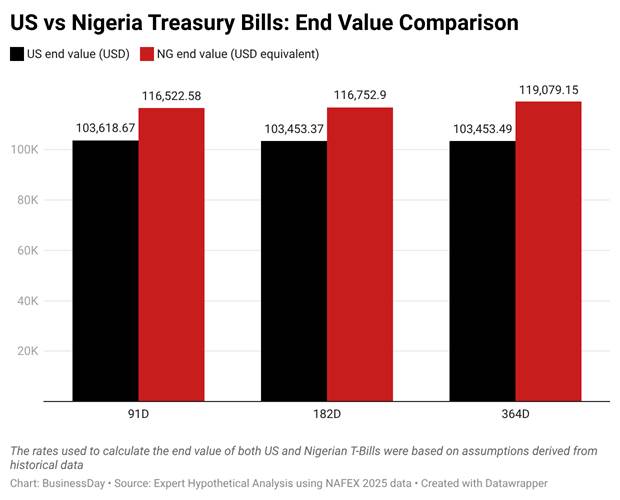
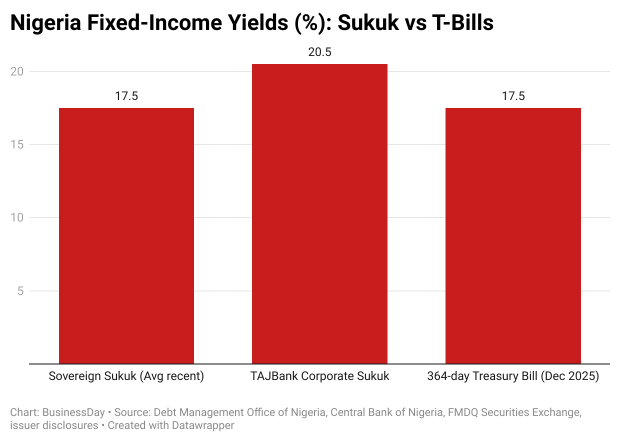
“Whilst we await the outcome of the Commercial Paper (CP), we think it is unlikely to be a cheaper alternative funding, as expected by management. Notwithstanding the recent softening of the naira yield curve and improvement in FLOURMILL’s cashflow, investors are unlikely to price the proposed offering at a rate below the cost of the matured loans (between 13-15percent), given concerns about the frequency of the group’s participation in the debt market, deteriorated solvency and liquidity ratios, yet, lack of either a coherent strategy or the will on the part of management to address the group’s debt overhang condition. Moreso, government treasury bills maturing between 90, 182, and 270 day currently yield 18.45percent, 19.75percent, and 18.75percent respectively,” Cordros Capital stated.
Iheanyi Nwachukwu