Two years after Nigeria let its currency float, the economic fallout is reshaping the education landscape. As foreign schooling slips out of reach for many, elite British boarding schools are landing on Nigerian soil and betting on the country’s vast youth market.
Nigeria’s decision to float the naira in 2023, a move that unleashed a sharp devaluation of the currency, has triggered short-term economic pain but is making the country more competitive and attractive to foreign investors, including British private schools.
The Central Bank of Nigeria (CBN) abandoned its decades-old currency peg in June 2023, allowing the naira to be priced by market forces. The move sent the local currency plunging from N471 per dollar to N750 within a month. Against the pound, the naira fell from 589.4 to 957.2.
Two years later, the currency has weakened further, trading at 1,538.50 per dollar and 1,991.30 per pound as of June 2025.


While the depreciation has pushed up the cost of living and made foreign education less accessible for many Nigerian families, it has also created new opportunities– notably for British boarding schools looking to tap into Africa’s largest youth population.
Pain for students, opportunity for investors
The sharp devaluation has made it significantly harder for Nigerian families to afford overseas education. Prospective students now struggle to meet visa requirements due to the rising cost of proof-of-funds thresholds. For those already studying abroad, the challenge of converting naira to cover tuition and living expenses has grown steeper, stretching family finances.
Once viewed as a status symbol, foreign education is fast becoming an unaffordable luxury for middle-class Nigerians. That shift is opening the door for high-end British schools to meet local demand.

Read also: Investors come calling on naira’s positive outlook
British schools plant flags in Nigeria
Several prestigious UK institutions– including Charterhouse, Rugby School, Millfield, Wellington School, and Harrow– are establishing a presence in Nigeria to serve families seeking British-standard education without the foreign exchange burden.
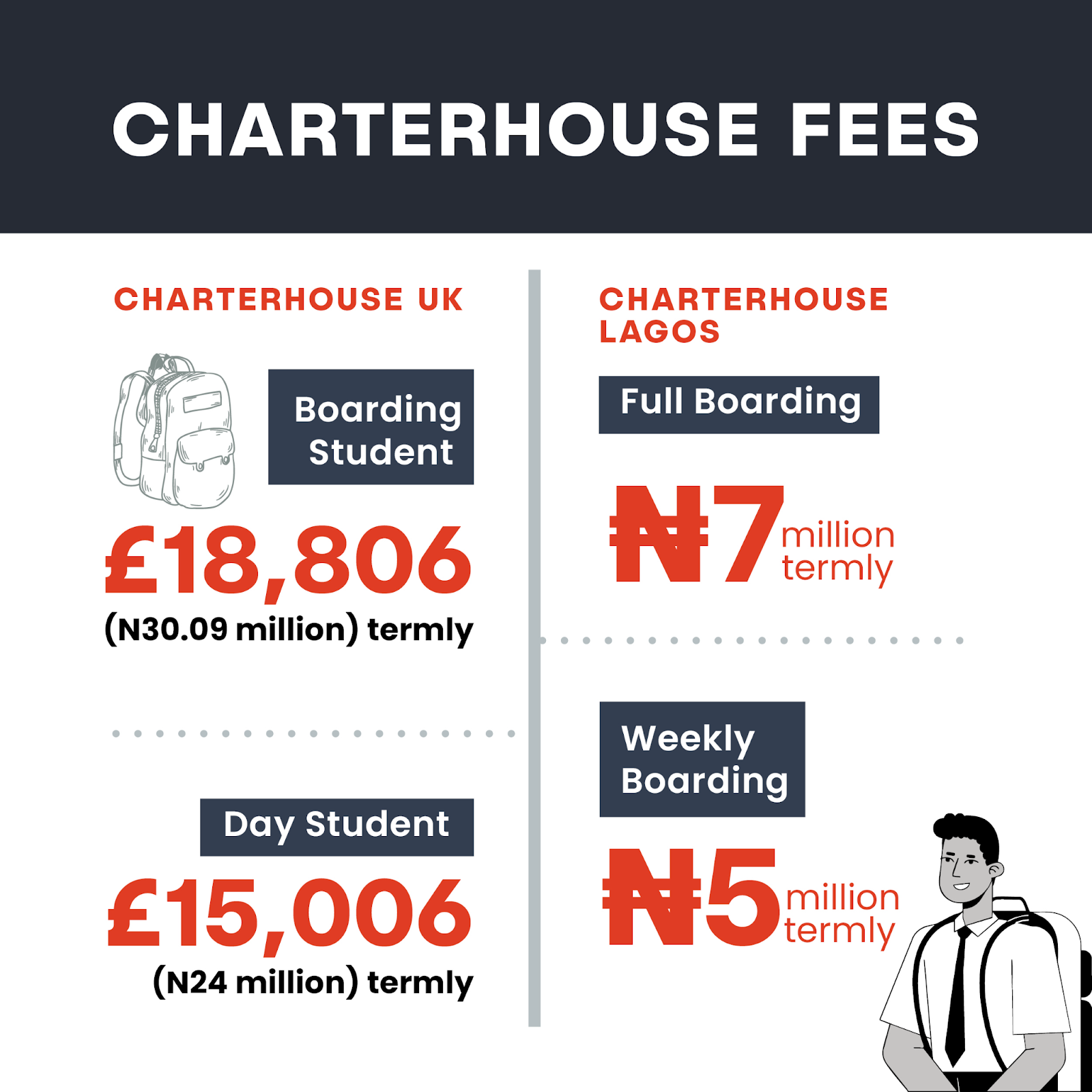
Charterhouse opened a primary school in Lagos in 2024 and is set to launch a secondary school in September. Rugby School is reportedly preparing to do the same. These institutions promise access to world-class education at a fraction of the cost of schooling abroad.
John Todd, head of Charterhouse Nigeria, said the country’s demographics and demand make it a promising market. “About 40 percent of Nigeria’s 200 million people are under the age of 14. That’s a huge market,” he said. “We’re offering a premier brand at a lower price.”
A parent whose child attends Charterhouse Lagos told BusinessDay, “It’s actually cheaper here, with the same value.”
FX liberalisation driving market stability
The liberalised exchange rate has also brought greater predictability to business operations. Friday Erhabor, a Nigerian parent, noted that the shift from multiple exchange rates to a unified market system has helped reduce volatility, which is a major consideration for foreign investors.
“Stability and predictability are what investors need to plan,” he said. “With the naira floated, travelling out for school has become more expensive. So it makes sense for foreign schools to come here instead.”
International money transfer data supports the trend. The central bank reported rising FX inflows in 2024, helped by the market-friendly posture of its current leadership and policies promoting transparency.
Experts say a stable FX regime reduces uncertainty and supports long-term investment. For British schools, that’s proving to be an incentive to expand onshore.
The local edge
The economic logic is also clear for Nigerian families. Stella Fadoju, a student studying in the UK, said attending a British curriculum school in Nigeria is now more cost-effective than going abroad.
“These schools prepare students for further education overseas,” she said. “And many of them offer connections that make UK admission and visas easier.”
She added that many of the schools serve as a pipeline to British universities, giving students a leg-up in the admissions process.
Nubi Achebo, director of academic planning at the Nigerian University of Technology and Management, said the naira float isn’t the only factor drawing foreign schools to Nigeria.
“There’s rising demand for quality education, and Nigeria’s large population and growing economy make it attractive,” he said. “The floating of the naira might have contributed, but so did the size of the market and investment opportunities.”