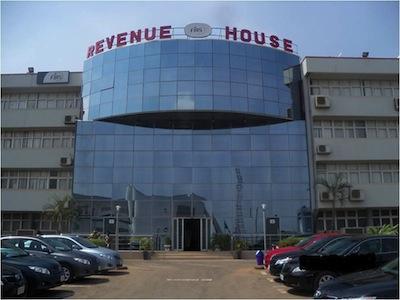
The Federal Inland Revenue Service (FIRS) has opposed the move by the Senate to amend the Company Income Tax Act (CITA), which seeks to increase pioneer status to new companies in Nigeria from five to 10 years.
The Service argued that giving further incentive to companies would lead to loss of revenue to the nation’s coffers.
At a public hearing on the Company Income Tax Act (CITA) on Monday in Abuja, Chairman FIRS Babatunde Fowler, okayed the current provision in CITA, which gives five year tax holidays to new industries.
Using the telecommunications and oil industries to buttress his argument, Fowler submitted that five-year is ‘more than sufficient’ for investors to recoup their profit.

“When one looks at the telecommunications companies that were given incentives a lot of them actually did make profit before the pioneer status of the incentives even expired.
“So, I wouldn’t like us to grant such incentives for a period of 10 years. We believe that 10 years is a very long time for any business not to generate profit. And I believe investors would have taken due recognition of their investments and the time that they expect for profit to be made.
“When MTN did come into Nigeria and had certain waivers and incentives, it was a risk. But I think it was a risk well taken. And before their pioneer status had expired, they had made more than enough profit. If you look at the oil sector currently those that were granted pioneer status they also have more profits than their investments. If this bill could have it indicated somewhere that if within a five-year period, profits are made, their pioneer status would be terminated. But for an increase five to seven years I can almost assure you that most foreign investors who cannot see the light at the end of the tunnel within five years will not come. We still believe that tax revenue is the best way to go,” Fowler told the Senate Committee on Finance, which organised the public hearing.
Also known as tax holiday, pioneer status is an incentive from Nigerian government which exempts new companies and industries from income tax. It allows them to skip tax for a period of time to enable them recoup their investments.
Section 34 (a) of the proposal states that “A new company going into business where infrastructures such as electricity, water or tarred road are not provided by the government ‘ shall be exempt from tax for the first ten years of its operation.”

According to the FIRS boss, most investors hardly invest in areas where they can’t make profit within five years of investment.
But the Institute of Chartered Accountants of Nigeria (ICAN) differed, adding that this would encourage entrepreneurs and existing companies to expand their operations.
The Institute, however, recommended that the proposal should also include existing companies going into a line of business where infrastructures are not provided by the government.
“This is a welcome development that will encourage entrepreneurs to invest and expand their operations. However, this section should be amended to include existing companies. This would encourage existing companies to expand their operations so as to benefit from the incentives when they invest in such locations.
“We recommend that the new section should read as follows: ‘A new or existing company going into business where infrastructures such as electricity, water or tarred road are not provided by the government shall be exempted from tax on its operation for the first five (5) years for existing company and ten (10) years for a new company,'” ICAN President, Isma’ila Zakari told the John Enoh-led panel.
In his opening remarks, Senate President Bukola Saraki, said the bill will not only boost employment activities in the rural area but also provide employment opportunities for the teeming unemployed youths.
“The proposed amendments will encourage investments in the industrial and mining sectors of the economy; especially in the rural areas where ordinarily it would have been unattractive to invest.
“It is expected that when the CITA Bill is passed into law, economic activities that would be generated through tax moratorium assured by this Bill, will pilot the much canvassed employment opportunities for our qualified youths; and open up communities where these companies are sited,” he said.
In August, the Nigerian government amended the list of pioneer industries and products in the country and approved tax holidays ranging from three to five years to 27 industries.
Minister of Trade and Investment, Okechukwu Enelamah who disclosed this while briefing newsmen after the weekly Federal Executive Council (FEC) had said the amendment of the list had become imperative because it was last reviewed in 2006.
He noted that the scheme is an incentive to make people enter Nigeria’s market, enter new industries, invest more for companies already existing in the country.
OWEDE AGBAJILEKE, Abuja