Fintech companies across Africa are deepening their adoption of Artificial Intelligence (AI) to improve efficiency, strengthen customer experience, and scale innovations.
The growing integration of AI reflects a broader shift in the continent’s digital economy, as firms leverage data-driven tools to enhance productivity and reduce operational risks.
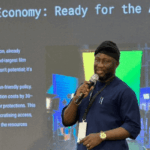
This trend was the focus of the second edition of Sundown Sessions, a knowledge forum hosted by payment infrastructure firm Kora in Lagos, where entrepreneurs and technology leaders examined how AI is reshaping business and creative ecosystems across Africa.
Experts at the event said AI has become an operational necessity rather than an experimental tool. In financial services, AI is being deployed to streamline fraud detection, automate customer support, and enhance data analysis. Similar applications are emerging in agriculture, manufacturing, and the creative industries, suggesting that the technology’s impact could extend beyond the fintech space.

During a panel on “How Will AI Reshape Business Models in Africa,” Somtochukwu Ifezue, co-founder and CEO of PiggyVest, said his company has integrated AI tools to improve internal efficiency and team learning. “AI helps us accelerate processes and make better use of data,” he said.
Onyinye Olisah, CEO of Onus Financial Services, emphasized that AI’s benefits depend on human direction. “AI is powerful, but it can only go as far as we guide it. If people stop bringing creativity or insight, then AI will replace them,” she said.
Buchi Okoro, CEO of Quidax, noted that financial firms must adopt responsible AI frameworks to protect customer information. “Data protection is central to trust in financial services. We have clear internal AI policies to ensure responsible use and safeguard user data,” he said.
Beyond fintech, panelists identified opportunities in agriculture, journalism, and manufacturing. Frank Atat, an industry practitioner, pointed to agriculture as a growing area for AI applications, citing its use in soil testing, yield prediction, and smart crop management.
Similarly, Ugodre Obi‑Chukwu, founder of Nairametrics, highlighted AI’s usefulness in the newsroom for data analysis and content drafting, while stressing the continuing role of human editors in ensuring accuracy and originality.

The creative sector is also seeing change. In a fireside chat, Ifeanyi Nwunne, creative director of I.N. Official Limited said AI has become a critical design companion in fashion.
“AI only threatens people who stop innovating. It helps us work faster and visualize ideas better,” he said.
Yinka Ash, founder of Ashcorp Group, added that human experience remains central to creativity. “AI can automate tasks, but it cannot feel,” he said. “When we use it as a partner, we compete better globally.”
In a keynote address, Iyinoluwa Aboyeji, founding partner at Future Africa, urged startups to apply AI-driven innovation beyond solely the fintech sector.
“There’s so much to build,” he said. “Digital finance, trade, and governance all depend on the digital infrastructure that connects us. Yet millions of Africans still lack access to reliable internet. That is the real challenge.”
According to McKinsey data, AI adoption in Africa’s financial services industry could increase productivity by up to 30 percent over the next decade, as automation and predictive analytics reduce fraud and improve customer acquisition.
The International Finance Corporation (IFC) also estimates that AI could add as much as $1.3 trillion to Africa’s economy by 2030 if effectively deployed across key sectors.
Dickson Nsofor, Kora’s CEO, said the company’s motivation for convening such discussions is to help shape responsible adoption.
“AI is driving a new phase of Africa’s digital growth,” he said. “Progress happens when technology meets community.”