The federal government has stopped the use of companies tax credit, known as the Road Infrastructure Development and Refurbishment Investment Tax Credit Scheme, to fund road projects, stating that the system does not align with constitutional tax administration.
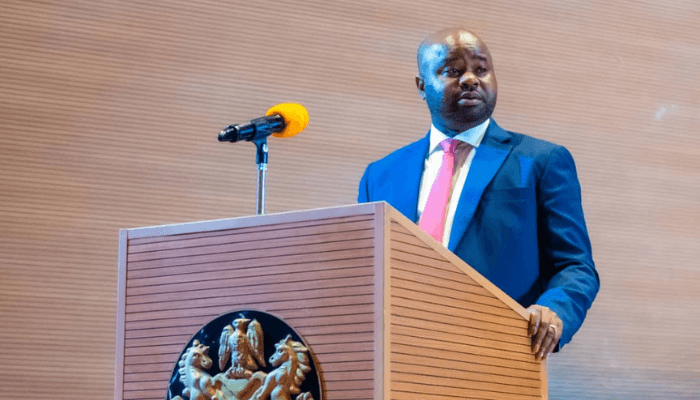
Zacch Adedeji, executive chairman, Nigeria Revenue Service (NRS), disclosed this recently in a joint sitting of the editorial boards of THISDAY and Arise News.
The tax credit allowed private companies to use their funds to build roads and then offset the costs against their future Company Income Tax (CIT) liabilities.
The scheme, which began around 2019, aims to run for 10 years, but has now been discontinued.

Read also: 69% of Nigerians do not trust Govt with tax revenue – SBM
It was reported that Nigerian National Petroleum Company Limited (NNPC) was pausing further direct funding through the scheme to focus on its core business, while other private sector companies continued their projects.
“No matter how good a programme is, the first thing that it must have is good products. The remits of the Nigeria Revenue Service, as it were then, or the Federal Inland Revenue Service, is to assess, to collect and to account for taxes,” Adedeji said, noting that appropriation is not part of the remits of the NRS or Federal Inland Revenue Service.
“So when you give tax credits for roads, it is an appropriation act, because you spent the money, but your remit is to collect and give it to the constitutional body that will sign that money, which is the Federation Account Allocation Committee (FAAC),” Adedeji said.
He added that the FIRS/NRS lacks the competence to know how a road is constructed, saying, “We lack competence, as the Nigerian Revenue Service, because we don’t know how the road is done, and that is why we stopped the use of tax credit. Whatever their taxes, let the government choose the proper appropriation.”

Media reports also showed that a lot of companies in Nigeria have utilised the Federal Government’s Road Infrastructure Development and Refurbishment Investment Tax Credit Scheme (Executive Order 007) to finance the construction and rehabilitation of federal roads in exchange for tax credits.
Companies, including the Nigerian National Petroleum Company Limited (NNPCL), Dangote Group (Dangote Cement Plc), BUA Group (BUA International Limited), MTN Nigeria Communications Plc, Nigeria LNG Limited (NLNG), Access Bank Plc, Mainstream Energy Solutions Limited, Transcorp Group, and GZI Industries, were key participants in the scheme.
Read also: Here’s why Witholding Tax was deducted from your savings interest income
As of late 2024, NNPC was one of the largest contributors, financing over 21 road projects covering over 1,800 kilometres. Projects included the Ilorin-Jebba-Mokwa/Bokani Junction road and the Lagos-Badagry expressway.
Dangote Group (Dangote Cement Plc) worked on the Apapa-Oshodi-Oworonsoki-Ojota expressway and the Obajana-Kabba road in Kogi State.
BUA Group (BUA International Limited) was involved in the construction of major roads, including the Bode-Saadu-Lafiagi road, Eyinkorin road and bridge, and the Okura Road, aiming to complete over 500km of roads by 2026.
MTN Nigeria Communications Plc engaged in the rehabilitation and reconstruction of the Enugu-Onitsha expressway.
Other participants included Lafarge Africa Plc, Unilever Nigeria Plc, and Flour Mills of Nigeria Plc.