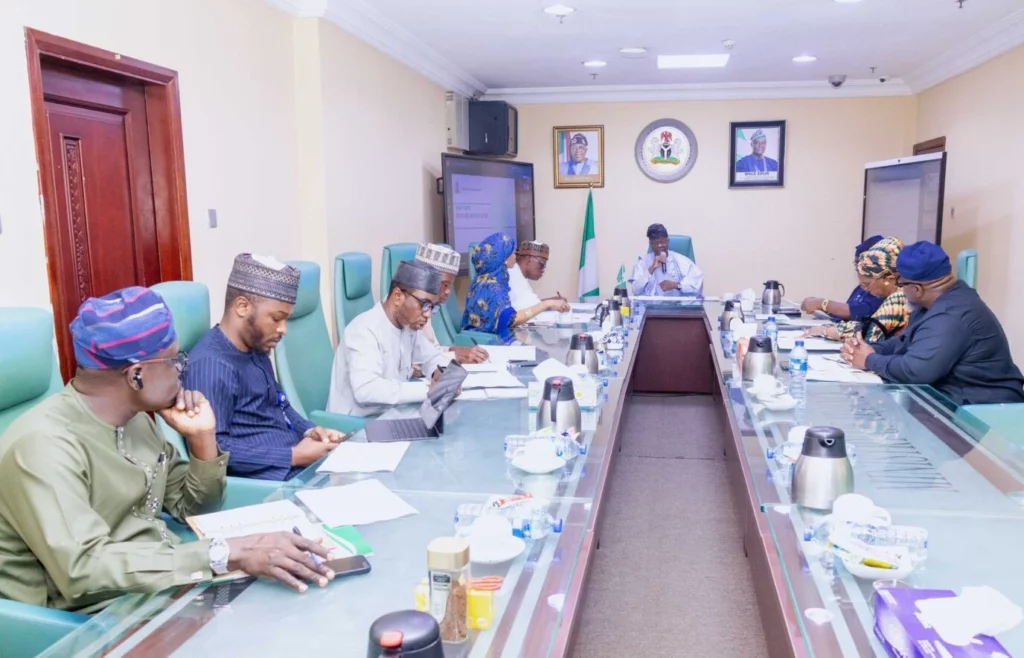
The federal government has constituted a subcommittee to evaluate the potential economic impact of the recent tariff measures announced by the United States government.
The decision came after a meeting of the Economic Management Team (EMT), chaired by Wale Edun, minister of finance and coordinating minister of the economy, according to a statement issued on Friday by Mohammed Manga, director of information and public relations at the ministry.
On April 2, US President Donald Trump announced sweeping global tariffs on all imports into the country, including Nigeria.
A few days later, Edun said Nigeria is well-positioned to withstand global trade disruptions, including the United States’ import tariffs.

Read also: Exclusive: House bill to stop age restrictions in banking employment sparks concerns
Following these developments, the Nigerian government took action. Manga explained that the EMT held a meeting earlier this week with important ministries and agencies to examine how these new trade policies might affect Nigeria’s economy and finances.
While Nigeria’s main export – crude oil – isn’t directly targeted by the new US tariffs, these policy changes have happened at the same time as falling international oil prices. This timing raises concerns about possible pressure on Nigeria’s revenue and budget.
“To support evidence-based policymaking, the EMT has established a sub-committee tasked with conducting a detailed review of the direct and indirect economic impacts of both the emerging tariff measures and the global commodity price shifts,” Manga said.
“The sub-committee includes representatives from the Ministry of Finance, Ministry of Budget and Economic Planning (including the budget office of the Federation), and the Central Bank of Nigeria (CBN).”

Manga added that the sub-committee has already held its first meeting and will present its findings to the full EMT soon.