The Federal Government has reaffirmed its commitment to strengthening health financing in Nigeria, with a target to enrol at least 44 million Nigerians into the National Health Insurance Scheme by 2030, as part of efforts to reduce the country’s heavy dependence on out-of-pocket healthcare spending.
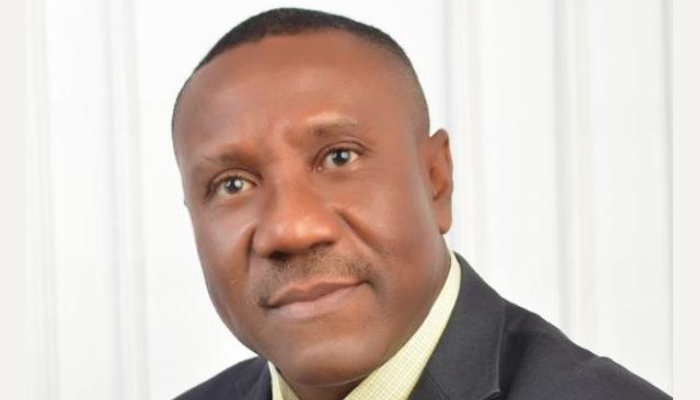
Iziaq Salako, the minister of state for health and social welfare, made this known in Abuja on Monday, at the ongoing National Health Financing Dialogue themed “Reimagining the Future of Health Financing in Nigeria.”
Salako commended the National Health Insurance Authority (NHIA) for convening the forum at a time when Nigeria’s health sector is under increasing pressure to deliver sustainable and inclusive reforms.
He noted that President Bola Tinubu had made it clear that financing health care must be rooted in sustainability, equity, and protection of the most vulnerable citizens.

“One commitment that President Tinubu has made obvious to us in the Federal Ministry of Health and Social Welfare is the need for Nigeria to strengthen health financing by boosting domestic resources and reducing dependency on external links.
“The President has continued to emphasise that a strong health system is vital for national growth, and this is why he has directed the implementation of several interconnected policies aimed at achieving universal health coverage and protecting vulnerable Nigerians”, he said.
The minister pointed out that this presidential directive is reflected in the government’s increasing budgetary allocation to the health sector.
“Nigeria’s health budget has grown significantly in recent years, moving from ₦434 billion in 2018 to ₦1.2 trillion in 2021. In 2025, the allocation rose further to ₦2.48 trillion, representing 5.2 percent of the national budget”, he stated .
While this marks a substantial nominal increase, he acknowledged that it still falls short of the 15 percent commitment made under the Abuja Declaration.

“In response to recent shocks caused by the suspension of U.S. aid, the National Assembly provided an additional ₦300 billion to the 2024 budget, further increasing the effective allocation to the sector”, he noted .
Salako added that sub national governments also stepped up their commitments, collectively raising their combined health budgets by 50 percent. As a result, Nigeria’s total health expenditure as a share of Gross Domestic Product rose from 3.4 percent in 2013 to 5.03 percent in 2024.
The minister explained that beyond budgetary increases, Nigeria’s health sector reforms are being driven by existing legislative and policy frameworks.
According to him, the National Health Insurance Authority Act of 2012, which makes health insurance mandatory for all Nigerians, has been a landmark policy.
“It established the Vulnerable Group Fund to ensure coverage for the poor and disadvantaged who cannot afford premiums.
“Similarly, the Basic Healthcare Provision Fund, created under the 2014 National Health Act, channels a portion of federal consolidated revenue into providing access to essential healthcare for the poor and vulnerable.
“This fund also serves as a key mechanism for operationalising the Vulnerable Group Fund”, he mentioned.
According to Salako, the government is already considering increasing the allocation to the Basic Healthcare Provision Fund from the current one percent of consolidated revenue to at least two percent.
He revealed that one of the core goals of the Federal Ministry of Health and Social Welfare is to enroll at least 44 million Nigerians into the National Health Insurance scheme by 2030.
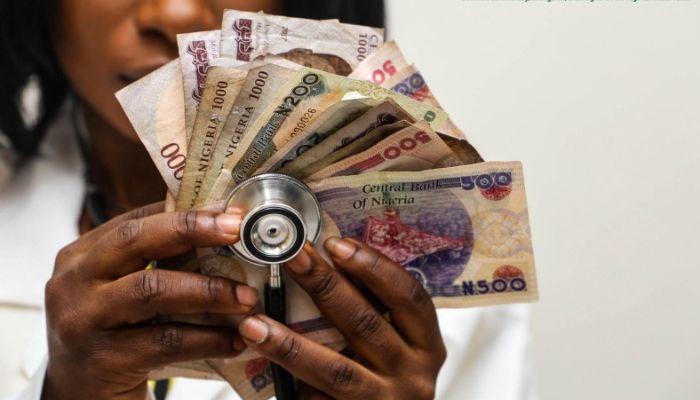
This, he said, would help drastically reduce the country’s heavy reliance on out-of-pocket spending, which currently accounts for nearly 70 percent of healthcare costs.
While outlining these reforms, the minister admitted that Nigeria still faces major challenges, including inadequate budgetary allocations, systemic inefficiencies, fragmented programming, and weak data systems.
He emphasised the need for the country to draw lessons from regional examples such as Ghana and Kenya, where political commitment, innovative funding, decentralised implementation, and community engagement have resulted in stronger health financing models.
Salako urged participants at the dialogue to engage actively in technical sessions and high-level discussions, stressing that the forum should serve as a platform for generating innovative ideas, sharing best practices, and building partnerships that would move Nigeria closer to universal health coverage.
“Our shared responsibility is to ensure that every Nigerian has access to quality healthcare without financial hardship.
“Going forward, we must be prepared to learn, adapt best practices, and strengthen our systems. It is my hope that this policy dialogue will lift up a nationally supported reform agenda that focuses on increased domestic health financing, innovative mechanisms, and transparent management of resources”, he said.
The minister expressed optimism that Nigeria’s ongoing reforms and renewed commitments would place the country on a stronger path towards sustainable health financing and improved outcomes for all citizens.
On his part, Iziaq Adekunle Salako, Coordinating Minister of State for Health and Social Welfare urged state governments and private actors to match FG’s growing investments in the health sector and to fully embrace the mandate of universal health insurance.
He explained that for over two decades, Nigeria’s health system has been dominated by out-of-pocket spending by households and communities, a structure that has left millions vulnerable to financial hardship whenever illness strikes.
“In the last two years of this administration, the Federal Government has significantly increased its contribution to health financing.
“What we now expect from this dialogue is for state governments to commit to matching up, for private sector actors to work with the National Health Insurance Authority (NHIA) to organise private spending through bigger risk pools, and for regulators to ensure the purchase of quality services for Nigerians”, Salako said.
The minister disclosed that health insurance uptake is already showing encouraging signs, stating that in just 18 months, four million Nigerians were newly enrolled under the NHIA framework.
He described this as unprecedented progress, noting that if the country had maintained such momentum over the past two decades, more than 60 million Nigerians would already be covered.
“This shows we are beginning to see a shift in direction. The challenge now is to sustain it and ensure the mandate of mandatory health insurance becomes a reality for every Nigerian.
“Employers must find ways to enrol their workers, and individuals must also find ways to join. Only then can we build a large enough risk pool to protect citizens from catastrophic health costs”, he said.
Salako stressed that one of the dialogue’s immediate objectives is to listen to perspectives from civil society organisations, the media, and other non-state actors before moving into technical sessions with policymakers and development partners.
He highlighted recent interventions targeted at vulnerable populations, such as free caesarean sections and expanded fistula care, as evidence of the administration’s resolve to protect the poorest Nigerians.
“Making obstetric complications reimbursable is one of the most dramatic interventions introduced under President Tinubu.
The resources are available, but the bigger question is how states will complement what the federal government has already put in place”, he noted.
On the issue of identity barriers to access, Salako confirmed that the NHIA has been working with relevant agencies to ensure enrollees, including pregnant women requiring emergency services can be issued National Identification Numbers (NINs) as part of the process.
This, he said, would strengthen digital health records and help ensure that no Nigerian is left behind.
The minister also outlined four key pillars guiding the reforms: strengthening governance and accountability within regulatory bodies; expanding population health outcomes through improved primary and secondary care alongside health insurance; unlocking value chains to reduce costs of essential commodities; and enhancing resilience through stronger health security mechanisms, particularly via the Nigeria Centre for Disease Control, adding that digital transformation cuts across all these pillars.
Reflecting on Nigeria’s health financing challenges, Salako admitted that the country had for too long relied on external aid and underinvested in its health system.
“Health is not cheap. If you want a strong system, you must pay for it. For decades, we have invested barely $30 per person in public health, with two-thirds of overall spending still coming directly from people’s pockets. That is like riding a bicycle and expecting the comfort of a Rolls-Royce”, he said
He emphasised the need for efficiency in mobilising and deploying available resources while pressing for greater domestic investment as the economy grows.
“As Nigeria becomes more prosperous, health spending will inevitably rise. But it must be well organised. Governments, states, the private sector, and civil society all have roles to play in building a system that delivers value, protects the vulnerable, and secures our future”, he stated.
The minister urged participants at the dialogue to contribute actionable insights that will help reshape Nigeria’s health financing landscape.
“This first day is a day to listen. We count on your ideas, your advocacy, and your watchdog role in ensuring that we collectively build the health system Nigerians deserve”, he said.
Earlier, Kelechi Ohiri, Director-General of the National Health Insurance Authority (NHIA), called for renewed collaboration across government, civil society, and the private sector to strengthen Nigeria’s health financing system and accelerate the journey toward universal health coverage (UHC).
He noted that the world is currently experiencing what he called “multiple transitions”, from changes in development assistance for health to shifting disease patterns and demographic realities.
“We are witnessing the end of an era in which official development assistance largely drove health financing. The new reality is one where countries, including Nigeria, must increasingly rely on domestic resources to fund health systems”, he said.
Read also: FG plans path to self-reliance in health financing amid aid cuts
According to him, Nigeria is simultaneously grappling with an unfinished agenda on infectious diseases, maternal and newborn health, and the rapid rise of non-communicable diseases such as diabetes and hypertension.
“Our health system does not have the luxury of choosing one transition over another. We are dealing with the double burden of disease, which requires smarter financing and stronger systems”, he warned.
Ohiri recalled the resolution on health financing adopted at the last World Health Assembly, which called on member states to increase domestic investments, reduce reliance on fragmented external aid, and establish stronger accountability mechanisms for health spending.
Nigeria, he said, not only supported the resolution but also sponsored a global side event to drive dialogue on the future of health financing.
“We are now bringing that conversation home. This dialogue is about domesticating those commitments and deciding what they mean for us as a country”, he explained.
The NHIA boss stressed that Nigeria must confront longstanding challenges of high out-of-pocket spending, weak financial protection, and fragmented coordination between federal, state, and local governments.
He argued that people, not just systems must be placed at the heart of health financing reforms.
“Nigeria is people. People must be at the centre of the health system, and people must be at the centre of what we finance”, he said.
He cited the upward revision of tariffs and service fees, nearly doubling capitation and tripling fee-for-service payments to ensure hospitals are properly reimbursed and patients can access the drugs and services covered under their plans.
He also pointed to new mandates requiring hospitals to treat patients even if referral codes from Health Maintenance Organisations (HMOs) are delayed.
“These reforms are designed to rebuild confidence in the system,” he said.
Equity, Ohiri emphasised, is at the core of the federal government’s approach, pointing to programmes providing emergency obstetric care for pregnant women and treatment for obstetric fistula, which have already benefitted thousands of women in less than a year.
He also noted that more than 2.7 million poor and vulnerable Nigerians have been enrolled under the Basic Healthcare Provision Fund, which dedicates one percent of the consolidated revenue to health financing.
While acknowledging progress, the NHIA chief said the dialogue must also explore how civil society and the media can amplify public awareness, hold government accountable, and ensure funds are used effectively.
He urged the private sector, faith-based groups, and non-profits to complement public financing by expanding access to care, especially in underserved communities.
“Government can lay out what it is doing, but this journey requires the participation of states, local governments, the private sector, and the people themselves.
“Universal health coverage will not happen by accident. It will happen because all of us commit to working together to make it a reality”, Ohiri said.