|
Getting your Trinity Audio player ready...
|
...pledges renewed effort to address security threats
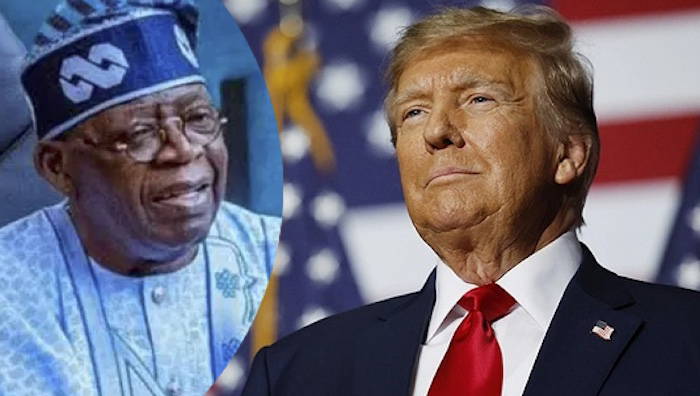
The federal government on Wednesday responded to U.S. President Donald Trump’s threat of possible military action in Nigeria, highlighting gains in its campaign against Islamist militants and reaffirming its commitment to regional security and sovereignty.
According to Mohammed Idris, minister of information and national orientation, who addressed a press conference in Abuja alongside Dele Alake, minister of solid minerals development, and other government spokespersons, “Since May 2023, our security agencies have neutralized more than 13,500 terrorists, arrested over 17,000 suspects, and rescued more than 9,800 victims abducted by terrorist elements, including women and children.”
Idris emphasised that the government remains committed to tackling terrorism across the country.

“The menace of terrorism in Nigeria does not target any single religious or ethnic group. Extremism is blind to religion, tribe, or class. It is a war against all peace-loving Nigerians,” he said.
He noted that Nigeria’s security challenges are compounded by regional instability, particularly in the Sahel, and local conflicts such as farmers-herders clashes in the North-Central region.
Idris also highlighted that President Bola Tinubu has overseen a strategic overhaul of the military and intelligence services to improve coordination, accountability, and operational effectiveness.
“The President’s directive is clear: every inch of Nigerian territory must be secured, and every citizen must live free from fear,” Idris said.
He added that, in addition to neutralising terrorists, security agencies have recovered over 5,000 military-grade rifles, intercepted more than 20 gun-running networks, and facilitated the surrender of over 124,000 insurgents and their families, who handed over more than 11,000 weapons.

Significant results were reported in specific regions. In Borno State, over 592 terrorists were neutralised in the past eight months.
In the North-West, 11,250 hostages were rescued, and high-profile terror leaders such as Ali Kachala and Boderi have been neutralised. The South-East has seen a reduction of nearly 80% in terror attacks, while operations in the North-Central have led to numerous arrests.
Read also: Trump threatens to launch military attacks in Nigeria over Christian killings
Idris also highlighted ongoing prosecutions of key terror suspects, including leaders of the ANSARU group and other perpetrators, noting that 125 terrorists have already been convicted.
The minister reaffirmed Nigeria’s openness to international cooperation, including with the United States, and cited past and ongoing support such as the delivery of Super Tucano aircraft and the planned acquisition of AH-1Z Viper attack helicopters for the Nigerian Air Force.
“Nigeria welcomes dialogue, cooperation, and support from foreign nations in addressing our shared security concerns,” Idris said, calling for engagement as the most effective way to achieve peace and stability.
He assured Nigerians that the country remains in capable hands under President Tinubu, who is committed to securing the nation, strengthening military and intelligence capabilities, and boosting the economy.
The Minister responded that, unlike the U.S. assertion, Nigeria has long been contending with security challenges affecting both Christians and Muslims, and there is no government policy aimed at exterminating any religious group.
He emphasised that the Tinubu administration is resolute in confronting terrorism and other security threats.
The minister stressed that terrorism in Nigeria does not single out any religion or ethnicity. Extremism, he said, is indiscriminate blind to faith, tribe or social class — and is a common enemy of all Nigerians who cherish peace and the nation’s unity and progress. Any suggestion that the state is deliberately ignoring attacks on a particular religion is, he added, founded on misinformation or flawed data.
He pointed out that Christians serve alongside Muslims throughout the armed forces and intelligence services, playing leading roles in the ongoing campaign against extremists and criminal networks. President Bola Ahmed Tinubu, the minister said, is committed to resolving the security crisis. Since May 2023, security operations have resulted in the neutralisation of over 13,500 terrorists, the arrest of more than 17,000 suspects now facing interrogation or prosecution, and the liberation and reintegration of over 9,800 abducted victims, including women and children.
Recent changes to the Service Chiefs and the reorganisation within the Armed Forces and security agencies, the minister explained, were intended to revitalise the country’s security architecture — bringing fresh energy, innovation and accountability to defence and intelligence. The goal is improved coordination across services, stronger results and the elimination of terrorism and violent crime nationwide. The President’s instruction, he said, is clear: “every part of Nigeria must be secured so citizens can live without fear.”
According to the minister, the military and security agencies are making measurable gains. Efforts to restrict access to small arms have led to the recovery and destruction of over 5,000 military-grade rifles and the disruption of more than 20 gun-running networks. He reported significant progress across regions — North-West, North-East, South-East and North-Central — with a marked reduction in terrorist incidents. He cited a Global Terrorism Index report from March showing attacks at their lowest level in over a decade in Nigeria.
In the past eight months alone, the military neutralised more than 592 terrorists in Borno State. Nationwide figures he repeated include over 13,500 terrorists and armed criminals neutralised, in excess of 17,000 arrests, and more than 11,200 hostages freed. He also claimed that over 124,000 insurgents and their family members have surrendered and handed over upwards of 11,000 weapons. In the North-West — especially in Zamfara and Kaduna — he said 11,250 hostages have been freed and several bandit leaders (named as Ali Kachala, Boderi and Halilu Sububu) neutralised. In August, he recounted, the military intercepted and killed more than 400 armed bandits who were preparing to attack a Zamfara village.
The minister named two internationally wanted terrorism suspects — Mahmud Muhammad Usman and Abubakar Abba — who are now being prosecuted after a high-risk, intelligence-led operation in July. Usman is accused of leading ANSARU’s sleeper cells and masterminding high-profile kidnappings and robberies used to finance terrorism; Abba is alleged to have led the “Mahmudawa” cell operating around Kainji National Park and the border with Benin.
He also noted that Khalid Al-Barnawi — accused of orchestrating the August 26, 2011 bombing of the United Nations Complex in Abuja that killed 20 and injured more than 70 — remains on trial, along with four other suspects: Mohammed Bashir Saleh, Umar Mohammed Bello (aka Datti), Mohammed Salisu and Yakubu Nuhu (aka Bello Maishayi). The minister affirmed the government’s commitment to hold those who disrupt national peace accountable under the rule of law and pledged that the authorities will not rest until the remaining violent elements are eliminated.
He reiterated Nigeria’s openness to cooperating closely with the United States and other partners to achieve the shared objective of eradicating terrorism from Nigerian soil.