… as first phase nears completion
The federal government is planning to create tolling stations and construct tourist centers along the Lagos-Calabar coastal highway in a move that’s expected to draw in investors and enhance the economy of Africa’s top oil producer.
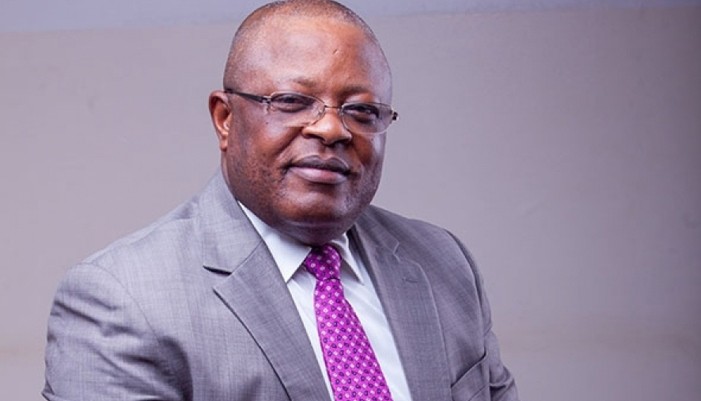
David Umahi, the minister of works, disclosed this on Wednesday while speaking to journalists during the inspection of the project that is estimated to stretch 700 kilometers and expected to be completed within eight years.
“Along the corridor, you have some lands that have been acquired for tourism, industries, factories, housing estates etc. So these are the road architectures that are going to be seen on this highway. And we also plan to have tolling units,” Umahi said.

According to him, the more than $12 billion superhighway project is also expected to be solarised for easy movement at night and security measures. It is also expected to have a flyover to avoid traffic jams.
“The greatest worry we have is people coming from their houses to join this route. It is going to be a very serious issue. So we have to design a barrier.
Read also: Lagos Calabar highway: FG targets N1.67trn revenue in 15 years
“I know that we are putting a returning wall. But it is not a complete returning wall. This is a federal superhighway.
“And it is expected that people have to join at the flyover, at the interchanges. Not you just come from your house and then you come in. That will introduce a lot of hold-up.”

The minister also disclosed that the coastal road will have Closed Circuit Television (CCTV) and rest houses, a situation that is expected to bolster security buffers and ensure rapid response in the advent of any emergency or security threats.
“And then we are going to have solar light all through the night,” the former senator said.
Umahi reassured Nigerians that it will deliver the first phase of the Coastal Highway for inauguration in May 2025 by President Bola Tinubu as it nears completion.
“Recall that we told you that in May we will be done with the 20 kilometers from Ahmadu Bello Way. And today is just the 30th of April. So, meaning that we are going to surpass 20 kilometers from this site,” Umahi said.
“Let me state that this project is over 70 percent done. And so, the contractor has now gotten funds up to 70 percent.”
According to him, the dream of the project was envisioned by President Tinubu 27 years ago, stating that his desire is about to be accomplished
He noted that the lifespan of the project is expected to exceed over 100 years and the capital is expected to be recouped in about 20 years.
Also speaking, Dany Abboud, the managing director of HITECH, assured that the project would meet the standard proposed by the federal government, noting that “we will try as much as we can to surpass it if possible.”
In their separate comments, Bede Obioha, the director of bridges and highway designs, Federal Ministry of Works and Olukorede Kesha, federal controller Works in Lagos, both expressed admiration for the quality and pace of work, which they adjudged as first of its kind in their long years of service.
Traders under Iddo Bridge to evacuate within one week amid safety concerns
The minister also issued a seven-day ultimatum to traders operating under the Iddo Bridge in Lagos, citing severe safety concerns and structural deterioration caused by their activities.
Umahi gave the directive during an on-the-spot inspection of the bridge on Wednesday, warning that no relocation plans would be made for the affected traders. He stated that such illegal activities, which include storage and sale of inflammable chemicals, has resulted in fires and structural damage to the bridge.
“They are destroying the bridge, and you are talking about moving them?. If You move them, other people will go and burn another bridge so that they will be moved.”
Read also: FG gives traders under Iddo bridge 7 days to vacate, cites safety concerns
The minister said the same evacuation order would be extended to other bridges across Lagos where similar trading activities occur.
The Iddo Bridge rehabilitation, awarded to Julius Berger in 2024 for approximately N5 billion, has encountered delays, partly due to structural impairments caused by human activities. Umahi disclosed that trucks with excess height have damaged the bridge deck due to low headroom, while activities from makeshift shops have further compromised the structure.
“A section of this bridge had a headroom of about 3.0 meters, as against the 5.6 meters minimum that is allowed,” he said. “We have a lot of big trucks hitting on the deck, which is very dangerous, and it poses a lot of problems to the structural integrity.”
Despite these constraints, Umahi affirmed that the bridge’s core structural elements remain intact. “It’s only the cover to the structural elements that are affected. The structural elements’ integrity are quite there and are very high.”
He announced that milling of the bridge deck would occur only on weekends—Fridays through Sundays—to reduce traffic disruptions. Installation of expansion joints, however, will necessitate night-time weekday closures. Umahi directed Julius Berger to submit a revised method statement and closure schedule, which will be communicated with at least seven days’ notice to the public.
The minister firmly ruled out any review of the contract sum, saying, “they must know that I’m not going to change the rates because it’s been long we mobilized them, and we expected the job to have finished.”