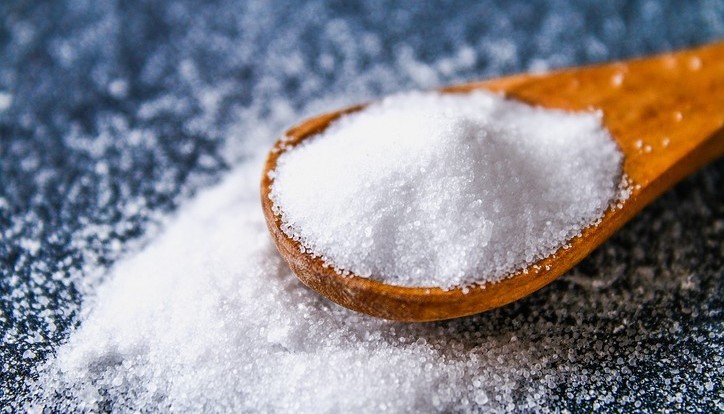
The Federal Ministry of Health and Social Welfare has intensified efforts to reduce salt consumption across Nigeria, launching a nationwide campaign aimed at tackling the rising prevalence of hypertension and cardiovascular diseases.
Hypertension is a major public health crisis in Nigeria, with an estimated prevalence ranging from 22 percent to over 40 percent among adults, totaling millions of cases. A 2020 study estimated an age-standardized prevalence of 38.1 percent, with higher rates in the South-East (52.8 percent) compared to the North-Central zone (20.9 percent). Awareness, treatment, and control rates are generally low, with some reports showing that only 29 percent are aware of their condition and as few as three percent have it controlled.
Partnering with the Centre for Communication and Social Impact (CCSI), the initiative combines grassroots market activations with social media engagement to address what health officials describe as a silent public health crisis.
Victor Osuagwu, scientific officer at the department of food and drug services of the Federal Ministry of Health and Social Welfare, during an outreach programme in Lagos, said Nigerians consume significantly more salt than the World Health Organization’s recommended daily limit of five grams about one teaspoon.

“We are trying to create awareness about the excessive intake of salt in Nigeria. Many Nigerians consume more than the WHO standard, and that has led to increasing cases of high blood pressure, stroke and other cardiovascular diseases,” Osuagwu said.
Read also: How high salt intake is quietly fuelling hypertension, deaths in Nigeria
He explained that excessive salt consumption in Nigeria is largely behavioural and culturally ingrained, making gradual, sustained intervention necessary.
“This is not something that can change overnight. It is a habit that has been imbibed from childhood. So we are taking it step by step until every Nigerian becomes aware of the dangers and knows how to reduce salt intake responsibly,” he added.
Osuagwu highlighted a knowledge gap among consumers, particularly in informal markets, where many buyers do not read product labels or understand sodium content. As a result, they unknowingly consume salt from multiple sources including seasoning cubes, processed foods and snacks on top of the salt added during cooking.

Olawale Ogulana, medical doctor, health advocate and brand ambassador for CCSI, said elevated salt intake is a major risk factor for hypertension, particularly in urban communities. “A lot of Nigerians do not know how much salt they are consuming daily. Aside from adding salt while cooking, they also use seasoning cubes and eat processed foods with high sodium content,” Ogulana said.
He clarified that the campaign does not advocate eliminating salt entirely but encourages moderation. “Salt is important for the body, but excess salt can damage the heart and kidneys, increase the risk of hypertension and lead to stroke. We are saying salt reduction, not salt elimination,” he explained.
Ogulana also encouraged Nigerians to retrain their taste preferences and adopt healthier cooking practices, including using natural spices such as ginger, garlic and onions instead of heavily processed seasonings. He emphasised the role of exercise in lowering blood pressure and improving overall cardiovascular health.
For CCSI, the campaigns communication partner, the focus is on measurable behavioural change rather than oneoff awareness drives. Anna White Agbo, Media and Program Officer at CCSI, said the organisation specialises in social and behavioural change communication and has worked with the Ministry on several health programmes.
“Our goal is not just to go out there and say something. It is to ensure that people hear the message and change their behaviour,” Agbo said, adding that the campaign has been running for over a year, initially through social media, before expanding into high density markets and communities to increase direct engagement.
Read also: Surge in hypertension, high blood pressure worrisome – Don
In Kaduna, over 220 people were directly reached during a recent activation, with indirect reach estimated at about 1,000. In Lagos, the team is targeting at least 500 people on record those who have checked their blood pressure, taken vital signs and received medical advice with hopes of reaching up to 1,000 participants if resources allow.
The campaign has also covered key locations in Abuja, as well as a major shopping mall in the Federal Capital Territory. Kano has been targeted to reach northern populations, while Lagos remains central due to its dense population.
Agbo also noted that expansion to additional states will depend on funding availability. One of the campaigns strategic strengths, she added, is its integration of digital amplification. Content generated from market outreaches is repackaged into communication materials and promoted on social media to reach a wider audience beyond physical event locations.
Health stakeholders say the initiative aligns with the federal governments broader strategy to reduce the rising burden of non-communicable diseases, which continue to exert pressure on households, productivity and the healthcare system.
By combining policy leadership, grassroots engagement and digital outreach, the Ministry and its partners say they are giving Nigerians the knowledge and tools needed to make informed dietary choices. “When people are aware, they have the power to decide. This campaign is about empowering Nigerians to take responsibility for their health,” Osuagwu said.