…minister unveils plan for soil testing labs in 774 LGAs
The federal government, through the Federal Ministry of Agriculture and Food Security (FMAFS), has partnered with the International Soil Reference and Information Centre (ISRIC) and the International Institute for Tropical Agriculture (IITA) to strengthen Nigeria’s soil information systems as part of efforts to enhance productivity and achieve national food sovereignty.
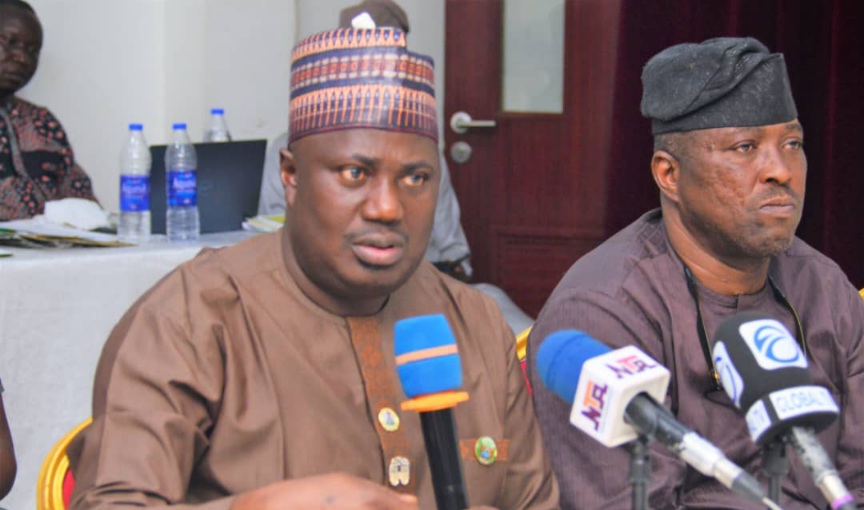
Speaking at the Nigeria Soil Information System Development Workshop held on Wednesday, in Abuja, Aliyu Sabi Abdullahi, minister of State for Agriculture and Food Security, said the initiative will empower farmers with data-driven insights to match crops with suitable soil types, optimise fertiliser application, and reduce production costs — thereby laying the groundwork for precision agriculture in Nigeria.
“Soil is the foundation of agriculture. We must take ownership of our soil and the data it produces; it’s the basis for national food security and sovereignty,” Abdullahi emphasised.

The minister explained that the scheme would promote location and crop-specific fertiliser blends, increase efficiency across the agricultural value chain, and attract private sector investment into fertiliser production.
“This scheme allows experts to analyse farm soils and guide farmers on what crops to plant and what fertiliser blends to use. The result will be higher yields, lower input costs, and improved efficiency,” he said.
He further described the initiative as a “data-driven approach” that would guide investments into high-potential value chains and reduce risks for agribusinesses, aligning with President Bola Tinubu’s vision to transform Nigeria’s food system under the mantra: “Eat what we produce and produce what we eat.”
Read also: FG validates revised gender policy to drive inclusion, productivity in agriculture
Abdullahi also revealed plans by the ministry to establish functional soil testing laboratories in all 774 local government areas across the country to enable widespread soil analysis and ensure farmers have timely access to soil health information.

In his remarks, Bernard Vanlauwe, deputy director general, IITA Regional Hub, Ibadan, said the institute would help strengthen the Nigerian Soil Information System (NISIS) using cutting-edge technologies to ensure consistency across West Africa.
Also speaking, Chrow Krushid, project manager, Soil Information System, ISRIC (Netherlands), noted that Nigeria remains one of the key focus countries under the West Africa hub and would receive technical assistance to develop digital soil maps to inform policy and investment decisions.