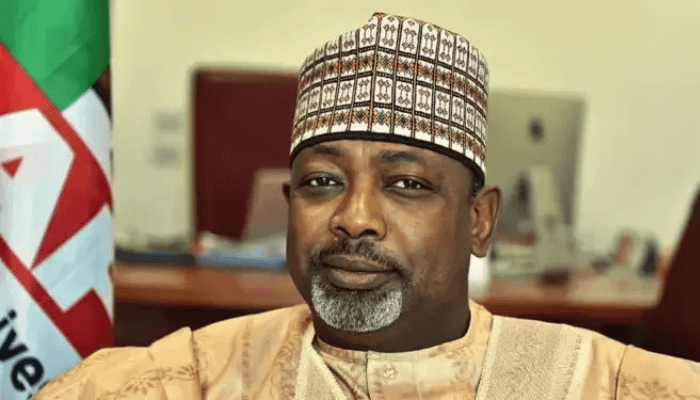
Abubakar Kyari, Minister of Agriculture and Food Security, says the Federal Government through the Ministry of Agriculture and Food Security (FMAFS), has invested over N200 billion in interventions to support farmers across the Country.
The Minister made this revelation during a courtesy visit by a Gambian delegation led by Dembal Sabally, the Minister of Agriculture, Livestock and Food Security in Abuja recently.
Read also: Nigeria’s inflation eases to 22.97% in May on steady food, utility costs
Kyari commended the Government of Gambia for seeking to partner Nigeria to improve food production and economic growth.

He noted that Nigeria’s journey to food sufficiency had been challenging, but the current administration had made significant strides.
The Minister highlighted the Government’s efforts in boosting agricultural productivity, including “The distribution of 2.15 million bags of free fertilizers to farmers”, emphasising the importance of mechanisation in agriculture to make it more attractive to youths.
Nigeria’s progress in wheat production was also noted, with the country now producing 500 metric tons of wheat up from importing seeds in 2023.
The Minister attributed this success to the development of local wheat varieties through research institutes and agencies under the Ministry.
However, Kyari acknowledged the challenges of rice production in Nigeria, including affordability and availability.

He stressed the benefits of the out-grower scheme, which provides small-scale farmers with access to financing and had turned agriculture around.
Sabally, Gambian Minister, expressed appreciation for Nigeria’s support and shared Gambia’s struggles with rice insufficiency, importing over 80% of its rice.
Read also: 5 foreign restaurant chains dominating Nigeria fast food scene—and who owns them
He noted that his team had visited Kebbi State to understudy Nigeria’s rice cultivation processes and intended to replicate the same in Gambia.
Sabally sought collaboration with Nigeria, particularly in replicating the out-grower scheme and rice production processes. He requested a Rice Ambassador to accompany them to replicate what they have learned, enabling Gambia to achieve rice self-sufficiency.