



The federal government has allocated an additional $550 million to the Nigeria’s Sovereign Wealth Fund (SWF) to improve power sector financing, bringing the total monies available to the fund to $1.55 billion.
The fresh allocation comes from the proceeds of the successful $1 billion Eurobond offer last year, set aside to fund gas to power infrastructure.
Meanwhile, out of the initial $1 billion seed capital for NSWF, 20 percent is now allocated to the Stabilisation fund, 40 percent to infrastructure and 40 percent to the future generations fund.
Minister of finance and Coordinating minister for the economy, Ngozi Okonjo-Iweala who announced this on Monday said $200 million of this money has been transferred to the infrastructure component of the NSWF to help it leverage gas to power investments with the private sector.

She said this particular fund would enable the Nigerian Sovereign Investment Authority (NSIA), managers of the NSIA to partner with the private sector and that the expectation is to leverage the $200 million to attract up to $400 million (or even close to $500 million) investments into gas to power aspect pretty soon.
But the remaining $350 million is a liquidity facility that the federal government had allocated to the Nigerian Bulk Electricity Trading company (NBET) out of the $1 billion eurobond proceed – but is now transferred to the SWF to manage on behalf of the bulk trader.
At a joint briefing yesterday, Okonjo-Iweala said this would back up the bulk trader and give confidence to the international community that it has the needed resources to be an intermediary in the power sector.
She said the new injection is an additional support of the federal government to the power sector but through the instrument of the SWF, as she believes “this is a very significant achievement.”
Uche Orji, NSIA Chief Executive Officer affirmed that the strategy that had been adopted for the infrastructure fund is to enable people co-invest and partner with the NSIA.

Orji said that the additional funding will essentially provide catalytic funding in the gas to power area for now and that there are expectations to drive more investments from other investors who will come in under the umbrella of the NSIA.
“We anticipate that we will have more investors come under the umbrella of he NSIA as we take on this additional strategy in terms of gas to power.
“Power is one of the five sub-sectors that the infrastructure fund is focused on at the monument. In power, the NSIA has a commitment from a private equip unity fund in the United States who will commit $2 for every one dollar that the SWF invests. Besides, there are many other people who have shown interest in investing with the SWF,” he said at the press conference.
He informed that the SWF had made two commitments under the infrastructure fund as at end of last year while looking to making more commitments in the first quarter of 2014.
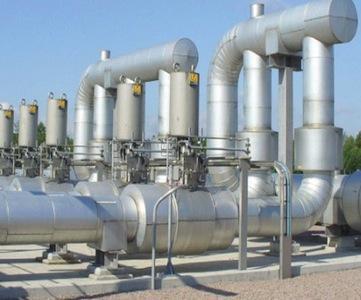
NSWF is already focused on power, health care, agriculture, toll roads and real estate for its infrastructure component – but the new funding launches it into a sixth sector, which is the gas to power infrastructure.
“But the special money that has been made available from the federal government for the gas to power infrastructure, is an additional sector that it will focused on.”
Under the real estate aspect, Orji noted that the NSIA is in advanced talks with two states with regards to mass housing, and this would be announced in due course.
But for power, he explained that the SWF will continue to look at both generation and distribution aspects as he announced that discussions are quite advanced in some of these areas, which would also be announced soon.
He said that the commitments in agriculture financing was done through a fund, as they look for specific opportunities for agriculture infrastructure which provides shared infrastructure for small stakeholder farmers and Agro processors.
Under health care, he mentioned that the SWF has signed a Memorandum of Collaboration with three medical institutions.
Speaking on the allocations of the $1 billion seed capital, Orji announced that the remaining 15 percent or $150 million unallocated fund of the SWF is now allocated to both the infrastructure and Future generations fund equally.
“So as at today, the SWF has 20 percent Stabilisation fund, 40 percent to infrastructure and 40 percent to the future generations fund.”
The stabilization fund started investing in December, while 55 percent of the future generations fund is already committed in hedge funds and equity markets.
NSIA CEO said the returns that have been generated so far are such that “things are actually looking well for that NSWF.”
By: Onyinye Nwachukwu




