



|
Getting your Trinity Audio player ready...
|
The Federal Government on Monday tasked all revenue generating agencies to put necessary measures and technologies in place for the realisation of the N5.08 trillion revenue to finance the N7.441 trillion budget for the 2017 fiscal year.
Highlights of the Federal Government’s revenue projection for the year, include: 41.7 percent from oil revenue, 15.9 percent from CIT, 15.9 percent from independent revenue sources; 11 percent from recoveries/misappropriated funds; 5.5 percent from Customs; 5.2 percent from other sources and 4.8 percent from Value Added Tax (VAT).
This is in addition to proceeds from miming, LNG dividends, federation account levies and the Federal Government’s share of signature bonus.
Udoma Udo Udoma, Minister of Budget and National Planning, who gave the charge at the presentation of breakdown of the 2017 budget signed into law by Acting President Yemi Osinbajo, on the 12th June, 2017, unveiled plans to return Nigeria to a predictable January to December fiscal year, and ensure that successive budgets are signed into law before the commencement each fiscal year.
The key assumptions and macro framework of the 2017 budget include: 2.2mbpd crude oil production; $44.5 crude oil benchmark; N305/$1 exchange rate; 15.74% inflation rate; 2.19% GDP growth rate; N107.96 trillion nominal GDP and N87.95 trillion nominal consumption rate.
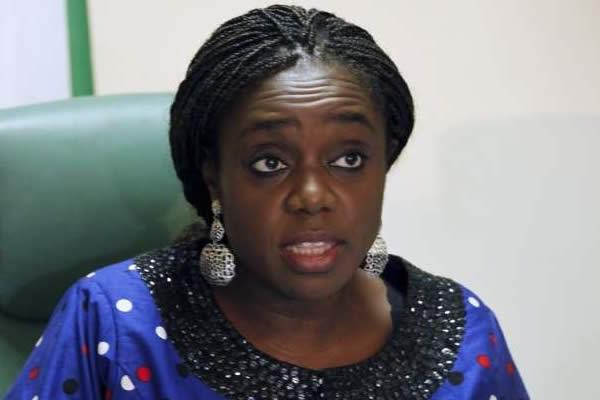
Also speaking, Kemi Adeosun, Minister of Finance, assured that the administration is set to release additional N350 billion into the economy.
Udoma assured that the N2.32 trillion deficit is to be financed through N1.25 trillion domestic borrowing and N1.06 trillion foreign borrowing; N35 billion expected revenue from sale of government property/privatisation proceeds, as well as 11 percent projected revenue from recoveries of looted/misappropriated funds and fines, which he assured is already domiciled in government’s coffers.
Adeosun explained that the 2017 budget reflects the administration’s fiscal plan to restore the economy to the path of sustainable and inclusive growth and reeled out plans to address major challenges facing the economy, through adequate budgetary provisions for capital expenditure and other sectors.
“We are challenging our revenue generating agencies, particularly the FIRS and Customs, to improve their efficiency and broaden their reach, so as to achieve the set target for them in the 2017 budget,” Udoma said.
Some of the domestic challenges facing Nigeria’s economy, include: insurgency and insecurity; crude theft and pipeline vandalisation, foreign exchange scarcity, depleting external reserves, high unemployment rate (14.2% as at Q4 2016) and inflation, which stands at 16.25% as at May 2017, among others.
Udoma observed that the 2017 budget will run till June 2018 and that with the ongoing move to return the budget life cycle to January to December, there would be the need to request for roll-over of projects to subsequent financial year, to ensure full implementation of capital component of the budget.
He also stressed the need for the Executive to seek the National Assembly’s approval for virement of funds to some priority projects already identified by the present administration.
According to him, key objectives of the 2017 budget include: focus on critical ongoing infrastructural projects such as roads, railways, power, ICT, among others, which have quick positive effects on the economy, as well SD utilisation of special economic zones and industrial parks as vehicles to accelerate domestic economic activity for innovation and wealth creation.
He further stressed government’s resolve to contribute to food security and create a platform for agro-business in the agriculture supply chain, through the Agriculture Green Alternative Plan, establishment of Social Housing Fund, worth N100 billion , as well as a seed fund out of the N1 trillion; that will deepen the mortgage system and expand its availability across all the states of the federation.
Under the recurrent expenditure (non-debt) for the year, 63 percent is for the personnel cost of Ministries, Departments and Agencies (MDAs); 11.7 percent for special intervention programmes; 7.4 percent for overheads; 9.4 percent for pensions (SWV and CRF); 2.6 percent for presidential amnesty programme; 1.3 percent for refund to special accounts, while 4.6 percent is to be transfered to the service wide vote.
For the recurrent expenditure, the Ministry of the Interior with N472.6 Education, gets the highest allocation, worth N398.69 billion, followed by Social Intervention for Social Intervention programme with N350 billion; Defence gets N330.54 billion; Health gets N252.85 billion; Youth & Sports gets N89.32 billion, while Power, Works and Housing gets N32.82 billion respectively.
From the 30 percent of the total budget for the year, Ministry of Power, Works and Housing leads the allocation chart for the 2017 budget, with a total sum of N552.71 billion, followed by Transportation sector, with N241.71 billion; Education gets N151.92 billion; Social Intervention gets N150 billion; Defence gets N139.29 billion; Water Resources gets N104.24 billion; Agriculture gets N103.79 billion; Industry, Trade and Investment gets N81.73 billion; Interior gets N63.76 billion; Health gets N55.61 billion, while Science and Technology gets N41.70 billion respectively.
In the bid to achieve the economic growth as encapsulated in the recovery and economic growth plan, he unveiled the present administration’s resolve to partner the private sector in the implementation of major economic projects and programmes, including health, roads, among others.
According to him, the sum of N46 billion seed fund was earmarked for Special Economic Zone projects to be set up in each of the six geopolitical zones to drive manufacturing/exports; N16 billion for revival of Export-Expansion Grant (EEG); N15 billion for recapitalisation of Bank of Industry (BoI) and Bank of Agriculture (BoA) as part of efforts geared towards ensuring easy access to funding of the Small and Medium Enterprises (SMEs) and Agricultural sectors.
The sum of N500 billion is also set aside for social intervention programmes including social housing fund, N-Power job creation, Government’s economic empowerment programme, Home Grown School feeding; N148 billion voted as counterpart funds on railway projects to be financed by China including Lagos-Kano, Calabar-Lagos, Kano-Kaduna, Ajaokuta-Itakpe-Warri, Kaduna-Idu, among others.
He also reiterated the administration’s readiness to offset the N40 billion service-wide provision to settle reconciled outstanding electricity bills of the Federal Government’s MDAs, as part of strategies to revamp the ailing power sector; N9 billion for joint venture investments in tertiary institutions with Nigeria Sovereign Investment Authority.
Other power sector projects include: N9 billion rural electrification projects in federal universities, N10 billion for the construction of 3,050MW Mambilla hydro power project; N10.02 billion for the completion of power evacuation facility for 400MW Kashimbila hydropower plant; additional sum of N28 billion for Federal Government National Housing Programme nationwide, among others.
KEHINDE AKINTOLA & CYNTHIA EGBOBOH





