|
Getting your Trinity Audio player ready...
|
The Federal Government and Edo State have agreed to explore joint initiatives aimed at accelerating livestock development and modernising the meat value chain in line with President Bola Ahmed Tinubu’s Renewed Hope Agenda.
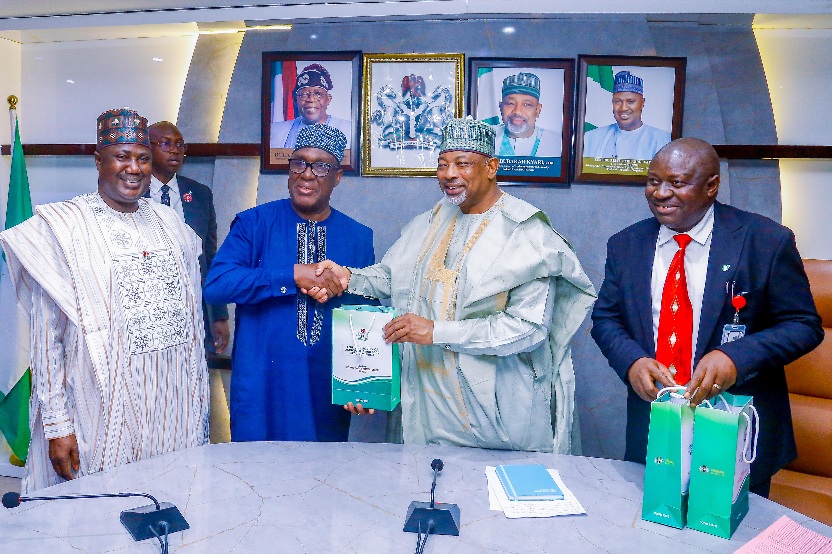
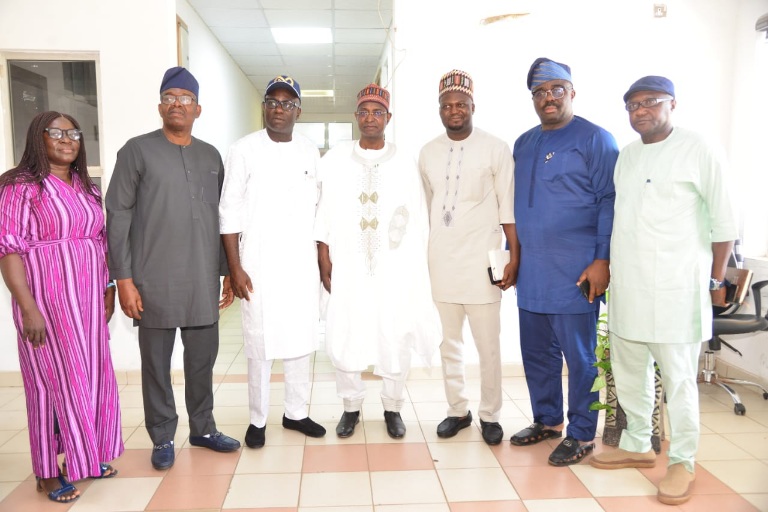
Idi Mukhtar Maiha, minister of Livestock Development, stated this when he received Ignatius Ikponmwosa Omorodion, Edo State Commissioner for Livestock Development, who led a delegation on a courtesy visit to the ministry in Abuja on Thursday.
Maiha lauded Edo State for creating a dedicated Ministry of Livestock Development, describing it as a forward-looking step that will ensure targeted investment and policy focus in the sector.
“Our priority is to modernise the entire value chain. We must move away from manual slaughter slabs to hygienic, mechanised abattoirs located within disease-free zones. This is essential for public health, food safety and job creation,” the Minister said.

He disclosed that the Federal Government would soon commence a joint inventory of livestock facilities, including ranches, abattoirs, breeding centres, and veterinary infrastructure, to guide collaborative interventions.
Maiha added that Edo has the potential to become a major livestock hub for the South-South region, given its strategic location, available grazing reserves, and market access.
He further announced plans to visit Edo State in the first quarter of 2026 to inspect facilities and meet stakeholders across the livestock value chain.
In his remarks, Omorodion reaffirmed governor Monday Okpebholo’s commitment to working closely with the Federal Government to unlock Edo’s vast livestock potential.
Read also: Nigeria eyes $1.5bn dairy market, pushes for local production drive

He said the state was already investing in modern veterinary hospitals, diagnostic laboratories, artificial insemination centres, and partnerships with development agencies to strengthen breeding, disease control, and farmer livelihoods.
The Commissioner called for Federal Government support in modernising abattoirs, reviving ranches, improving feed production, and establishing animal identification and traceability systems to boost food security and surveillance.